No KYC Casinos UK: The Complete Guide to Anonymous Gambling
Offshore licensing, crypto payments, withdrawal limits, KYC triggers, and the trade-offs UK players need to understand.

Best Non GamStop Casino UK 2026
Loading...
Table of Contents
No KYC Casinos UK: The Complete Guide to Anonymous Gambling
What No KYC Casinos Actually Offer UK Players
Every UKGC-licensed casino demands your passport before you can withdraw a penny. Upload a government-issued ID, submit a utility bill with your name and address, sometimes snap a selfie holding your documents beside your face. That is the standard verification loop at any regulated UK gambling site, and it applies whether you are withdrawing fifty pounds or five thousand. No KYC casinos operate on a fundamentally different premise: they let you sign up with an email address, deposit cryptocurrency, play, and withdraw your winnings without ever asking for a scan of your driving licence.
These platforms are not licensed by the UK Gambling Commission. They operate through offshore jurisdictions — Curaçao, Anjouan, Costa Rica — where the regulatory framework does not mandate the same identity verification pipeline that UKGC rules impose. The term "no KYC" refers to this absence of upfront Know Your Customer checks: no passport uploads, no proof-of-address documents, no affordability questionnaires. Your crypto wallet address effectively serves as your identity, and blockchain transactions replace the bank transfers that would otherwise tie your gambling activity to your personal financial records.
What "No KYC Casino" Means
A no KYC casino is an online gambling platform — typically licensed offshore — that allows players to register, deposit, play, and withdraw without submitting identity documents such as passports, driving licences, or utility bills. Registration usually requires only an email address or a direct cryptocurrency wallet connection. These casinos rely on blockchain-based payments instead of traditional banking, which eliminates the conventional identity verification chain. "No KYC" means no upfront verification — it does not guarantee that identity checks will never be requested, particularly if withdrawal thresholds or anti-money laundering triggers are reached.
Interest among UK players has accelerated sharply since the UKGC rolled out its latest round of tightened regulations. The changes that took effect in October 2025 introduced mandatory deposit limit prompts for all first-time customers, frictionless financial risk assessments piloted at lower spending thresholds, and enhanced due diligence for higher-value players. For casual gamblers, these measures added another layer of friction to an already documentation-heavy experience. For privacy-conscious players, they pushed the question further: why hand over this much personal data to place a bet?
This guide is not a list of recommended casinos. It is a technical breakdown of how no-KYC gambling works in the UK context — the mechanics, the licensing structures, the legal grey areas, the cryptocurrency infrastructure, the risks, and the trade-offs. Whether you are evaluating no-KYC platforms for the first time or comparing them against your current UKGC-licensed options, the goal here is to give you enough information to make that decision with open eyes.

How No KYC Casinos Operate
The mechanics are simpler than you'd expect — and that simplicity is the point. A traditional UKGC-licensed casino requires you to build a verified profile before you can do anything meaningful with real money. A no-KYC casino strips that process down to its bare minimum: create an account, send crypto, play. The entire model is designed to reduce the points at which your personal identity intersects with your gambling activity.
At the core of this model is a substitution. Where UKGC casinos use government-issued documents to verify who you are, no-KYC platforms use blockchain transactions to verify that you have funds. Your wallet address becomes your identifier. The casino does not need to know your name, your date of birth, or where you live — it needs to confirm that a deposit arrived from a valid wallet and that withdrawal requests go back to a wallet the account holder controls.
That said, "no KYC" is a spectrum rather than an absolute state. Most platforms in this space fall into one of three anonymity tiers. The first is email-only registration: you provide an email address and a password, nothing else. The second is wallet-only signup, where you connect a cryptocurrency wallet directly and skip even the email step — your wallet is your account. The third is a hybrid model, where the casino starts with minimal data collection but reserves the right to request documents if certain thresholds are crossed.
KYC trigger — a predefined condition (such as a withdrawal amount, deposit pattern, or account behaviour) that causes an otherwise no-verification casino to request identity documents from a player.
This last point is critical and often misunderstood. "No KYC" means no upfront verification, not necessarily zero checks ever. Offshore regulators, even the most permissive ones, still impose anti-money laundering obligations on their licensees. When a player crosses certain financial thresholds or exhibits unusual account behaviour, the casino may — and in many cases must — initiate a verification request. The difference is that this happens at the exception level rather than at the front door.
Blockchain technology makes this model viable. On-chain transactions are pseudonymous by design: anyone can verify that funds moved from address A to address B, but neither address is inherently linked to a real-world identity. This pseudonymity gives casinos enough transactional transparency to satisfy basic regulatory reporting without requiring personal documents. It is a structural shift, not a loophole.
Registration Without Documents
At a UKGC-licensed casino, the signup form is essentially a miniature identity dossier. You provide your full legal name, date of birth, home address, phone number, and often a national insurance number or partial bank details. Before you can withdraw, you upload scans of your passport or driving licence, a recent utility bill or bank statement as proof of address, and sometimes a selfie for biometric matching. This process can take anywhere from a few hours to several days depending on the operator's verification queue.
At a no-KYC casino, the registration flow looks radically different. The most common model asks for an email address and a password. Some platforms add a username. That is the entire form — no name field, no address field, no date-of-birth picker. You confirm your email, log in, and you are immediately presented with a deposit page showing cryptocurrency wallet addresses. The elapsed time from first click to funded account can be under five minutes if you already hold crypto.
Wallet-only platforms take this a step further. Instead of creating a traditional account, you connect a cryptocurrency wallet — typically through a browser extension like MetaMask — and the wallet itself becomes your login credential. There is no email, no password, no username. Your session is authenticated by your wallet signature, and your balance is a direct reflection of on-chain deposits. This model is functionally the closest thing to anonymous gambling that currently exists, though it comes with its own risks: lose access to that wallet and you lose access to your casino account permanently, with no customer support pathway to recover it.
Crypto Deposits and Withdrawals
Cryptocurrency is the infrastructure that makes the entire no-KYC model possible. Traditional payment methods — debit cards, bank transfers, e-wallets — all require identity verification at some point in the chain. Crypto payments break that link: a wallet address is a string of characters, not a name and postcode.
The deposit process is straightforward. The casino generates a unique wallet address for your account, you send funds from your personal wallet, the blockchain confirms the transaction, and your balance updates. Depending on the cryptocurrency, this takes anywhere from seconds to thirty minutes. Withdrawals follow the reverse path: you enter your external wallet address, the casino broadcasts the transaction, and the funds arrive after network confirmation. The key difference from UKGC-licensed sites is the absence of a verification hold — at a no-KYC casino, provided you are below the platform's trigger thresholds, the withdrawal moves through without a document check bottleneck.
Offshore Licensing vs UKGC: What UK Players Should Know
Not a single crypto casino has ever held a UKGC licence. Not one. This is not an accident of timing or an oversight — it is a structural impossibility under current rules. The UKGC mandates comprehensive identity verification before a player can gamble, requires operators to participate in the GamStop self-exclusion scheme, enforces affordability checks at defined spending thresholds, and demands that disputes be escalated to an approved Alternative Dispute Resolution provider such as IBAS. A casino built around anonymous crypto-only access simply cannot satisfy these conditions.
Every no-KYC casino available to UK players operates under an offshore licence. The most common jurisdictions are Curaçao, Anjouan, and Costa Rica, each with its own regulatory framework — though "framework" is a generous term for some of them. The critical question for players is not whether these licences exist, but what they actually require of the casinos that hold them.
The UKGC, whatever its critics say about friction and overreach, imposes a concrete set of player protections. Licensees must verify identity before allowing gambling. They must conduct financial vulnerability assessments. They must provide access to GamStop for self-exclusion. They must segregate or protect player funds in case of insolvency. They must submit to regulatory audits and report suspicious activity. And since the 2025 reform package, they must prompt first-time depositors to set financial limits and remind existing customers every six months to review their spending patterns.
Offshore licences impose far lighter obligations. Curaçao, historically the most popular jurisdiction for crypto casinos, has undergone significant regulatory reform with the introduction of the LOK framework in late 2024. The old sub-licence system — where four master licence holders sold access to hundreds of operators with minimal oversight — has been replaced by direct licensing under the Curaçao Gaming Authority. This is a meaningful improvement, and the new regime requires KYC procedures, AML compliance, and responsible gambling policies. But verification timelines remain less stringent, enforcement is less transparent, and player dispute mechanisms are less robust than what the UKGC mandates.
UKGC-Licensed Casinos
Identity verification required before gambling
GamStop self-exclusion mandatory for all licensees
Dispute escalation via IBAS or approved ADR
Player funds must be segregated or protected
Affordability checks at defined spending thresholds
Statutory gambling levy funds research and treatment
Online slot stake caps enforced
Offshore-Licensed Casinos
Minimal or no upfront identity verification
No connection to GamStop exclusion network
Disputes resolved through operator's own support channels
Player fund protection varies by operator and jurisdiction
No standardised affordability checks
No mandatory contribution to harm prevention research
No stake limits on casino games
Anjouan, a small island in the Comoros archipelago, has emerged as a newer alternative for operators who find even Curaçao's reformed requirements too demanding. Its licences are cheaper and faster to obtain, with fewer compliance obligations. Costa Rica occupies a different position entirely — it does not technically issue gambling licences but allows companies to incorporate and operate as data processing entities, which some casinos interpret as legal cover for offering gambling services internationally. The regulatory protections for players at Costa Rica-based operations are effectively nonexistent.

Is It Legal for UK Players to Use No KYC Casinos?
The legal position is more nuanced than either "completely legal" or "completely illegal," and understanding the distinction matters. The UK Gambling Act 2005 places the regulatory burden on operators, not on individual players. It is an offence for a company to provide gambling services to consumers in Great Britain without holding a UKGC licence. The Act targets the supply side: the casino offering the service, not the punter clicking the deposit button.
This means that when a UK player accesses an offshore no-KYC casino, the operator is the party technically violating UK law by offering unlicensed gambling services to a British market. The player is not committing an offence by placing bets. The UKGC has been clear that its enforcement priority is operators, and it has the power — strengthened in 2025 — to request that internet service providers block access to unlicensed gambling websites targeting UK consumers.
But "not illegal for players" is not the same as "fully protected." When you gamble at an offshore casino, you do so entirely at your own risk. There is no UKGC complaint process available to you. There is no ADR provider you can escalate to. If the casino withholds your winnings, closes your account, or disappears entirely, your recourse is limited to whatever customer support channel the platform offers — and the willingness of a foreign regulator, who may have minimal enforcement capacity, to intervene on your behalf. The legal grey area is real, but the practical grey area is wider: you are not breaking the law, but you are stepping outside the safety net that UK regulation was designed to provide.
What Triggers KYC Checks at Anonymous Casinos
No KYC doesn't mean no questions — ever. Even the most privacy-forward offshore casinos operate under some form of anti-money laundering obligation, and those obligations come with trigger points. When a player crosses certain thresholds, the casino's compliance team steps in with a verification request. Understanding where those lines are drawn is the difference between a smooth anonymous experience and an unexpected document demand when you are trying to cash out a significant win.
The most common trigger is withdrawal volume. Most no-KYC casinos set a cumulative withdrawal threshold — typically somewhere between 2 BTC and 5 BTC, or the fiat equivalent of roughly 5,000 to 30,000 pounds — beyond which identity documents are requested. Some platforms express this as a single transaction limit, others as a rolling monthly total. The specific number varies by operator and is almost always buried in the terms and conditions rather than displayed prominently.
Deposit patterns can also raise flags. A sudden spike in deposit frequency or amount, particularly if it deviates significantly from a player's established pattern, may trigger an internal review. This is standard AML monitoring: abrupt behavioural changes are one of the primary indicators compliance teams are trained to watch for, regardless of jurisdiction. Similarly, multiple accounts originating from the same IP address or device fingerprint will attract scrutiny at most platforms.
Fraud indicators form a third trigger category. Chargebacks, disputed transactions, mismatched wallet addresses, or deposits from wallets flagged on blockchain analytics platforms can all prompt a KYC request. Some casinos also conduct automated blockchain analysis on incoming deposits, and if the funds trace back to a mixer or a wallet associated with sanctioned activity, the platform may freeze the account pending verification.
The Curaçao Gaming Authority's reformed LOK framework, which took full effect in 2025, now requires its licensees to implement basic KYC procedures and AML monitoring. While the enforcement timelines are less aggressive than under the UKGC, the direction of travel is clear: even offshore jurisdictions are tightening their compliance expectations, which means KYC triggers at anonymous casinos are becoming more common, not less.
Do
- Read the platform's terms for specific withdrawal thresholds before depositing
- Withdraw regularly in smaller amounts rather than accumulating a large balance
- Use a consistent wallet address for deposits and withdrawals
- Keep records of your transactions in case verification is eventually requested
Don't
- Create multiple accounts on the same platform to avoid thresholds
- Deposit from wallets flagged by blockchain analytics or mixing services
- Dramatically change your deposit or withdrawal behaviour overnight
- Assume "no KYC" means you will never be asked for documents under any circumstances
Cryptocurrency Payments: The Foundation of Anonymous Gambling
Crypto isn't just a payment option at no-KYC casinos — it's the entire infrastructure. Without cryptocurrency, anonymous gambling as it currently exists would not be viable. Traditional payment methods all require identity at some point: a bank account has a name on it, a card is registered to a person, an e-wallet demands verification. Crypto bypasses this chain entirely. A wallet address is a cryptographic string, not a name and postcode, and that distinction is what makes the no-KYC model architecturally possible.
Bitcoin remains the most widely accepted cryptocurrency at anonymous casinos, though it is no longer the fastest or cheapest option. A standard BTC transaction takes ten to twenty minutes to confirm and carries a variable fee that can spike during periods of high network demand. Its advantage is ubiquity — every no-KYC casino accepts it — and familiarity, since most players entering the crypto gambling space already hold some Bitcoin. For players who prioritise speed over brand recognition, there are better choices.
Ethereum offers faster confirmation times, typically settling within two to five minutes, and its smart contract capability underpins many provably fair gaming systems. Gas fees can be unpredictable, though, and during peak network usage they can make small deposits uneconomical. Litecoin sits in a practical middle ground: faster than Bitcoin, cheaper than Ethereum, and accepted at most major no-KYC platforms. Dogecoin, originally a joke currency, has carved out a surprisingly durable niche in the gambling space thanks to negligible fees and near-instant confirmations.
Bitcoin
Confirmation: 10–20 min. Fees: variable, moderate to high. Privacy: pseudonymous, fully traceable on-chain. Acceptance: universal.
Ethereum
Confirmation: 2–5 min. Fees: variable, can spike. Privacy: pseudonymous, traceable. Acceptance: very wide, supports smart contracts.
USDT (Tron)
Confirmation: under 1 min. Fees: near zero. Privacy: pseudonymous, traceable. Acceptance: growing rapidly, value pegged to USD.
Stablecoins — particularly USDT and USDC — have become increasingly popular for gambling precisely because they eliminate the volatility problem. When you deposit one Bitcoin at a casino and its fiat value drops ten percent overnight, your gambling bankroll shrinks before you have placed a single bet. Stablecoins are pegged to the US dollar, so one USDT deposited today is still worth one dollar tomorrow. For players who treat their casino balance as a defined bankroll rather than a speculative investment, stablecoins offer a level of financial predictability that volatile assets cannot match. USDT on the Tron network is particularly favoured for its near-instant settlement and near-zero fees.
At the far end of the privacy spectrum sit coins like Monero and Zcash, which are designed from the ground up for transactional privacy. Monero transactions are obfuscated by default, making it extremely difficult to trace the sender, receiver, or amount on-chain. Zcash offers optional shielded transactions with similar properties. A smaller number of no-KYC casinos accept these privacy coins, though the list is growing. The trade-off is narrower acceptance and occasional regulatory friction — some jurisdictions view privacy coins with suspicion, and not all exchanges will process them.
Staying Safe at No Verification Casinos
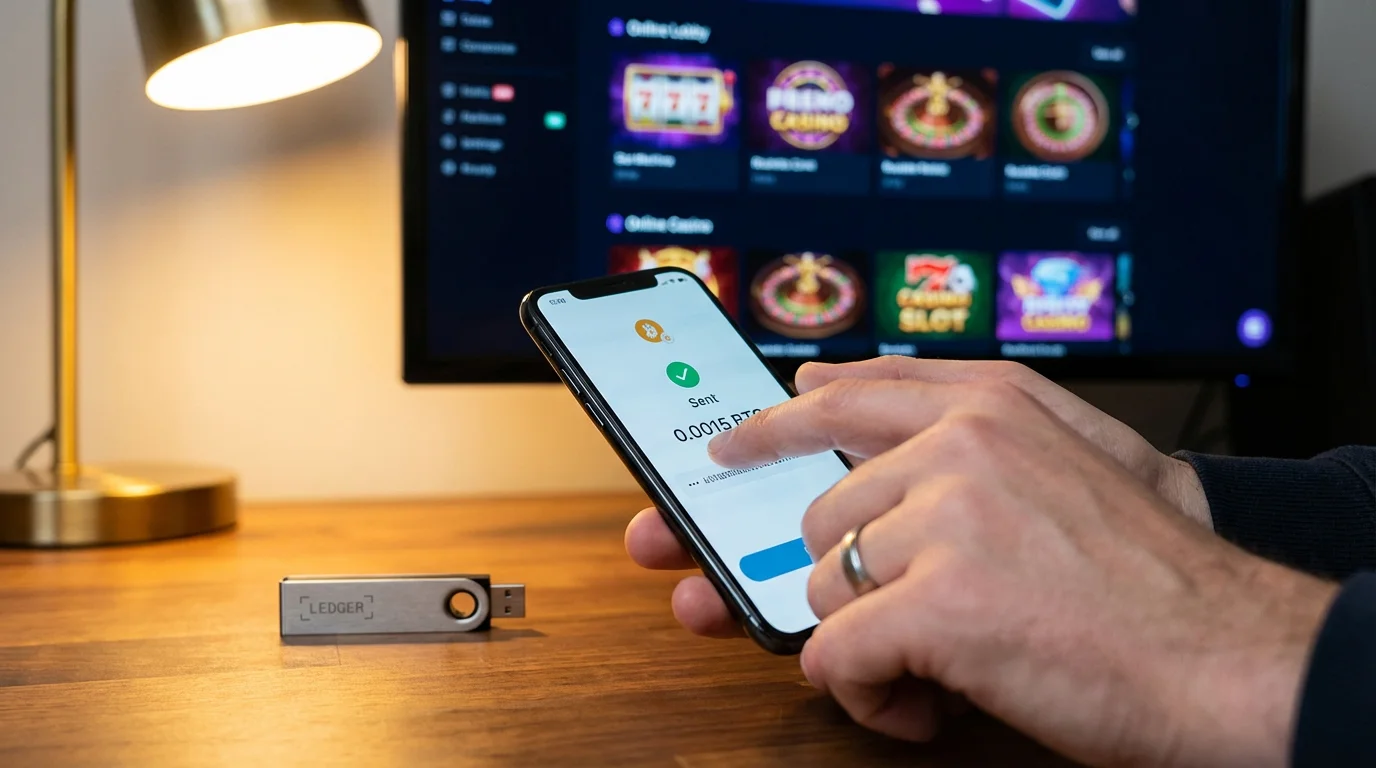
Anonymity gives you freedom — but it also means you're your own safety net. At a UKGC-licensed site, the regulator stands behind you with complaint procedures, fund protection requirements, and the power to fine or revoke licences. At an offshore no-KYC casino, those institutional safeguards either do not exist or carry far less weight. This does not mean safety is impossible — it means safety becomes your responsibility, and the preparation you do before depositing matters more than at any regulated platform.
Start with the platform's security stack. Reputable no-KYC casinos implement the same technical protections you would expect from a cryptocurrency exchange: SSL/TLS encryption across the entire site, two-factor authentication for account access, and cold storage for the majority of player-deposited funds. If the casino does not offer 2FA, that is a significant red flag. If it stores all funds in hot wallets — connected to the internet and therefore vulnerable to breaches — that is another. These are not theoretical concerns: poorly secured gambling platforms have lost player funds to hacks, and without UKGC-mandated fund protection, recovery is unlikely.
Wallet hygiene is equally important. Use a dedicated gambling wallet separate from your main cryptocurrency holdings. This limits exposure if the casino is compromised and prevents your primary wallet from being linked to gambling activity. Transfer only what you intend to play with, and withdraw winnings promptly rather than letting a balance accumulate on the platform.
Before committing real money, test the withdrawal process. Many experienced players send a small deposit, play through it, and submit a withdrawal to verify the platform actually pays out. Check how long the process takes and whether customer support is reachable. This is not foolproof — some scam operations honour small withdrawals to build trust before blocking larger ones — but it remains a useful first filter.
Before You Deposit: 6-Point Safety Checklist
- Verify the casino holds a visible licence and check it against the regulator's public registry
- Confirm 2FA is available and enable it immediately after registration
- Use a dedicated gambling wallet separate from your primary crypto holdings
- Test the withdrawal process with a small amount before committing larger funds
- Read the terms and conditions for KYC trigger thresholds and withdrawal limits
- Search for player reviews and forum discussions about payout reliability and dispute handling
Red Flags That Signal a Scam Casino
The same anonymity that protects privacy-conscious players also provides cover for operators with no intention of paying out. Scam casinos in the no-KYC space tend to follow recognisable patterns, and learning to spot them before depositing is the single most valuable safety skill you can develop.
The most common warning sign is a withdrawal trap. The casino lets you deposit and play without friction, but when you request a withdrawal, the goalposts move. You are told you need to complete a verification process that was never mentioned during registration, or that a "processing fee" must be paid before funds can be released, or that your withdrawal has been "queued" with no timeline. Legitimate no-KYC casinos process withdrawals within their stated timeframe. If you are asked to send additional crypto to "unlock" a withdrawal, you are almost certainly dealing with a scam.
Look at the licence claim carefully. A scam casino may display a Curaçao licence number that does not match any entry in the Curaçao Gaming Authority's public registry. Others claim to hold licences from jurisdictions that do not actually regulate online gambling. If the casino does not provide a verifiable licence number, or if the number it displays does not check out against the stated regulator's database, walk away.
Other warning signals include: a website that is brand new with no verifiable history, customer support that is unreachable or responds only in canned messages, games from unknown providers with no independent audit trail, an absence of any responsible gambling information, and aggressive bonus offers with vague or undisclosed wagering requirements designed to prevent you from ever cashing out. The no-KYC space has legitimate operators, but it also has a higher concentration of bad actors than the regulated market. Scepticism is not paranoia — it is due diligence.

Responsible Gambling Without UKGC Oversight
The rules change when the regulator isn't watching — but your habits shouldn't. At a UKGC-licensed casino, responsible gambling infrastructure is built into the platform by mandate: deposit limits, session timers, reality checks, cooling-off periods, and mandatory access to GamStop. At a no-KYC casino, most of these features either do not exist or are offered on a voluntary basis with no external enforcement. The responsibility for managing your gambling behaviour shifts almost entirely to you.
Some no-KYC platforms do offer basic self-management tools — deposit limits, loss limits, session duration reminders — but there is no guarantee these tools work as described, and no regulatory body auditing their implementation. The platform might let you set a weekly deposit cap, but whether it actually enforces that cap when you attempt to exceed it is a question of the operator's integrity, not their legal obligation.
The most effective responsible gambling strategy at a no-KYC casino is one you build yourself, outside the platform. Decide on a bankroll before you deposit — a fixed amount you can afford to lose completely — and do not exceed it. Use a separate wallet loaded only with that amount. Set your own time limits and honour them. If you find yourself depositing more than you planned, chasing losses, or gambling when you intended not to, those are warning signs that deserve attention regardless of the platform you are using.
GamStop, the UKGC's national self-exclusion scheme, does not cover offshore casinos. For some players, that is the appeal — access to gambling that a self-exclusion has blocked. If you are in that situation, consider honestly whether circumventing the exclusion is in your best interest. Self-exclusion exists as a tool for people who recognise they need a break. Using a no-KYC casino to bypass it does not remove the reason the exclusion was set.
Third-party tools can fill some of the gap. Software like Gamban or BetBlocker can block access to gambling websites across your devices, including offshore and unregulated platforms. These tools operate at the device or network level rather than the operator level, which means they work regardless of where the casino is licensed.
Important: Support Is Available
If gambling is affecting your wellbeing, help is available. The National Gambling Helpline, operated by GamCare, can be reached at 0808 8020 133 (freephone, available 24/7). You can also visit www.gamcare.org.uk for online chat support and self-assessment tools. For device-level blocking, Gamban and BetBlocker cover both licensed and unlicensed gambling sites.
Bonuses and Promotions at No KYC Casinos
Without UKGC bonus caps, the numbers get generous — sometimes suspiciously so. Where a regulated UK casino might offer a 100% deposit match up to 200 pounds with strictly defined terms, no-KYC casinos routinely advertise match bonuses of 150%, 200%, or even higher, with maximum amounts that can reach tens of thousands in cryptocurrency equivalent. The headline figures look extraordinary. The details, as always, are where the value is actually determined.
Welcome packages at anonymous casinos typically follow one of three structures. The simplest is a single deposit match: deposit a certain amount, receive a percentage on top. Multi-deposit packages spread the bonus across your first two, three, or four deposits, often with escalating match percentages. Some platforms also include free spins as part of the welcome offer, either attached to the deposit bonus or as a standalone component. Cashback offers, where the casino returns a percentage of net losses over a defined period, are another common format — and for many experienced players, they represent better value than a match bonus because they carry fewer strings attached.
The single most important number in any bonus offer is not the match percentage or the maximum amount — it is the wagering requirement. This is the multiplier that determines how many times you must bet the bonus amount, and sometimes the deposit amount as well, before you can withdraw any winnings. A 100% match bonus with a 40x wagering requirement means that a 100-pound deposit generates 100 pounds of bonus funds, but you must place a total of 4,000 pounds in bets before those bonus winnings become withdrawable. At no-KYC casinos, wagering requirements typically range from 25x to 45x. Some platforms push higher.
The UKGC announced in early 2025 that wagering requirements for licensed operators would be capped at ten times the bonus amount, with implementation from January. This regulation does not apply to offshore casinos, meaning the gap between UKGC-licensed bonus terms and no-KYC bonus terms is now wider than ever. A UKGC casino offering a 100% match with 10x wagering and a no-KYC casino offering a 200% match with 40x wagering may look very different on the surface, but the actual clearability of the bonus is comparable — or in some cases, the regulated offer may be easier to convert into real withdrawable funds.
Wagering Requirement Calculation: 100% Match, 35x Playthrough
Deposit: 0.01 BTC
Bonus: 0.01 BTC (100% match)
Wagering requirement: 35x the bonus amount
Total wagering needed: 0.01 BTC x 35 = 0.35 BTC
At an average slot RTP of 96%, expected loss during wagering: 0.35 BTC x 4% = 0.014 BTC
Net expected value: 0.01 BTC (bonus) minus 0.014 BTC (expected loss) = -0.004 BTC
In this scenario, the bonus has negative expected value — you are statistically likely to lose more clearing the wagering than the bonus itself is worth. This is why the wagering multiplier matters more than the headline match percentage.
Beyond welcome offers, no-KYC casinos compete on ongoing promotions: weekly reload bonuses, daily cashback, rakeback programmes that return a percentage of your total wagered amount regardless of outcome, and VIP tiers that unlock escalating perks. Rakeback, in particular, is favoured by high-volume players because it rewards activity rather than losses, making it a more predictable value stream. When evaluating any promotion, the discipline is always the same: read the terms, calculate the wagering cost, and decide whether the bonus genuinely adds value to your play or simply extends your time at the tables without improving your expected outcome.

Game Selection at Anonymous Casino Platforms
The game libraries at the best no-KYC casinos rival anything UKGC sites offer — and in some categories, they go further. Because offshore platforms are not bound by the UKGC's product restrictions, they can offer game types and features that regulated UK casinos cannot: unlimited stake slots, buy-bonus features that let you skip directly to a free spins round, and crash games that have no equivalent in the UKGC-licensed space.
Slots dominate the catalogue at most anonymous casinos, just as they do everywhere else in online gambling. The major providers are well represented: Pragmatic Play, Play'n GO, Hacksaw Gaming, Nolimit City, Push Gaming, and dozens more. Many no-KYC casinos also integrate titles from crypto-native developers who specialise in provably fair games — a system where the game outcome can be independently verified by the player using a cryptographic hash, providing mathematical proof that the result was not manipulated after the bet was placed.
Table games cover the expected range: blackjack in multiple variants, European and American roulette, baccarat, and casino poker formats. Live dealer sections, typically powered by Evolution Gaming, offer real-time streamed tables with professional dealers. The live dealer experience at a well-run no-KYC casino is virtually indistinguishable from what you would find at a licensed UK platform — Evolution's infrastructure is the same regardless of who holds the operator licence.
Crash games deserve a specific mention because they are disproportionately popular at no-KYC platforms. The format is simple: a multiplier rises from 1x, and you cash out before it "crashes." Wait longer, win more — but if the crash happens before you cash out, you lose your bet. Games like Aviator from Spribe have become staples of the anonymous casino ecosystem, appealing to players who prefer fast-paced, high-frequency gameplay to traditional slot mechanics.
The largest no-KYC casino platforms list over 5,000 individual game titles from more than 80 providers — a catalogue size that exceeds most UKGC-licensed sites, partly because offshore platforms face no restrictions on buy-bonus features or uncapped stake limits.
One area where no-KYC casinos genuinely differentiate is provably fair originals: in-house games built on blockchain technology where every outcome can be verified. These include dice games, Plinko, mines, keno, and custom crash variants. For players who value transparency in game mechanics, provably fair systems offer something that traditional RNG-certified games cannot — the ability to check, yourself, that the game played fairly on every single round.
Withdrawal Process and Limits
This is where no-KYC promises meet reality. The withdrawal process at an anonymous casino is the moment that tests whether the platform's privacy claims hold up under financial pressure. When you are depositing, the casino has every incentive to make things smooth. When you are withdrawing — especially a significant amount — that incentive flips, and the quality of the operator becomes apparent.
The standard withdrawal flow is technically straightforward. You navigate to the cashier, select your preferred cryptocurrency, enter the external wallet address you want the funds sent to, specify the amount, and confirm the request. The casino then processes the transaction, broadcasting it to the blockchain, and the funds arrive in your wallet after the requisite number of network confirmations. In a well-run operation, the entire process from request to receipt takes anywhere from five minutes to a few hours, depending on the crypto used and the casino's internal processing schedule.
Withdrawal limits are where things get more complex. Most no-KYC casinos impose daily, weekly, and monthly caps. A typical range for unverified accounts is 5,000 to 10,000 pounds equivalent per day and 20,000 to 50,000 per month, though these numbers vary significantly between platforms. Some high-roller-oriented casinos set higher limits or offer VIP-tier withdrawals with no daily cap. Crucially, the limits that apply to you before KYC and after KYC may be different — some casinos explicitly state that verified accounts enjoy higher or unlimited withdrawal thresholds, creating a deliberate incentive structure.
When withdrawals exceed the platform's KYC trigger threshold, the anonymous experience changes. You receive a notification requesting identity documents — typically a photo ID, a proof of address, and sometimes a selfie. Until the verification is completed and approved, the withdrawal is held. Processing times for KYC reviews at offshore casinos are less standardised than at UKGC-licensed sites: some platforms complete them within 24 hours, others may take a week or more, and the player has limited recourse to speed the process along.
Processing times depend on both the cryptocurrency and the casino's internal workflow. Once the platform broadcasts the transaction, blockchain confirmation follows the standard timelines for each network — minutes for ETH or TRC-20 USDT, up to half an hour for BTC. The variable you cannot control is the casino's internal processing gap: some platforms execute automatically within seconds, while others batch withdrawals at intervals, adding hours before the blockchain even enters the picture.
One practical habit that experienced no-KYC players adopt: withdraw frequently and in modest amounts. This keeps your on-platform balance low — reducing exposure if the casino encounters problems — and keeps your cumulative withdrawal total below KYC thresholds for as long as possible. It is not a guarantee of permanent anonymity, but it is the most effective way to extend it.
Frequently Asked Questions
Are no KYC casinos legal for UK players?
The UK Gambling Act 2005 places the legal obligation on operators, not players. It is an offence for a casino to offer gambling services to UK consumers without a UKGC licence, but there is no corresponding offence for individual players who access offshore platforms. You are not breaking the law by playing at a no-KYC casino. However, you are gambling outside the UKGC's regulatory protection, which means no access to GamStop, no ADR for disputes, and no mandated fund protection. The UKGC has the power to request ISP blocking of unlicensed sites targeting UK players, and its enforcement capacity was expanded in 2025.
What triggers KYC verification at a crypto casino?
The most common trigger is cumulative withdrawal volume. Most no-KYC casinos set a threshold — typically between the equivalent of 5,000 and 30,000 pounds — beyond which identity documents are requested. Other triggers include unusual deposit patterns such as sudden spikes in amount or frequency, multiple accounts from the same IP address or device, deposits traced to flagged or sanctioned wallets, and fraud indicators like chargebacks or mismatched wallet addresses. Anti-money laundering obligations apply even at offshore platforms, and Curaçao's reformed LOK regulatory framework now requires its licensees to implement basic KYC and AML monitoring procedures.
Can I withdraw without submitting ID at a no-KYC casino?
Yes, provided your withdrawal stays below the platform's KYC trigger threshold. Most no-KYC casinos process withdrawals without requesting documents up to a defined cumulative limit. Below that threshold, the withdrawal follows a standard crypto flow: you submit your wallet address, the casino broadcasts the transaction, and the funds arrive after blockchain confirmation. If you exceed the threshold, the platform will typically request identity documents before processing the withdrawal. The specific limit varies by operator and is usually detailed in the terms and conditions — always check before you deposit.
The Privacy Equation: What You Trade and What You Gain
Every choice in anonymous gambling is a trade-off — and the smartest players know exactly which ones they're making. The appeal of no-KYC casinos is real and tangible: faster registration, no document queues, no affordability questionnaires, no personal data sitting on a server waiting to be breached, and withdrawals that can reach your wallet in minutes rather than days. For players who value their privacy, who hold cryptocurrency and prefer to transact on-chain, or who simply find the UKGC's expanding verification regime disproportionate to their needs, these platforms offer something that regulated UK casinos structurally cannot.
But the gains come paired with concrete costs. You give up the UKGC's complaint infrastructure. You give up access to GamStop if self-exclusion becomes necessary. You give up the assurance that player funds are segregated and protected in insolvency. You give up the right to escalate a dispute to an independent ADR provider who can compel the casino to act. And you accept the risk that the offshore regulator standing behind your casino may not have the capacity, the mandate, or the inclination to intervene on your behalf when something goes wrong.
This is not a case for or against no-KYC casinos. It is a statement of the terms. The privacy-versus-protection axis is not abstract — it maps directly onto the operational differences between UKGC licensing and offshore licensing, between identity-verified banking and pseudonymous blockchain transactions, between a regulatory environment that puts friction in your path and one that removes it. Both models have legitimate reasons to exist. The question is which set of trade-offs aligns with your priorities, your risk tolerance, and your relationship with gambling.
The landscape itself is shifting. Curaçao's regulatory overhaul under the LOK framework is a signal that even the most permissive offshore jurisdictions are moving toward stricter compliance standards. Blockchain identity solutions — zero-knowledge proofs, decentralised identifiers — are advancing toward a future where verification and privacy may no longer be mutually exclusive. The boundary between anonymous and regulated gambling is not fixed; it is being redrawn in real time by regulators, technologists, and the market itself.
For now, the framework is clear enough. If you choose to play at a no-KYC casino, go in informed. Understand the licensing, test the withdrawal process, manage your own limits, and recognise that anonymity is a feature with a price attached. The players who navigate this space well are the ones who treat it not as a way to avoid rules, but as a different set of rules — ones they have chosen deliberately, and ones they enforce on themselves.