
USDT & USDC Casino Guide — Stablecoin Gambling Without KYC
 Available in GB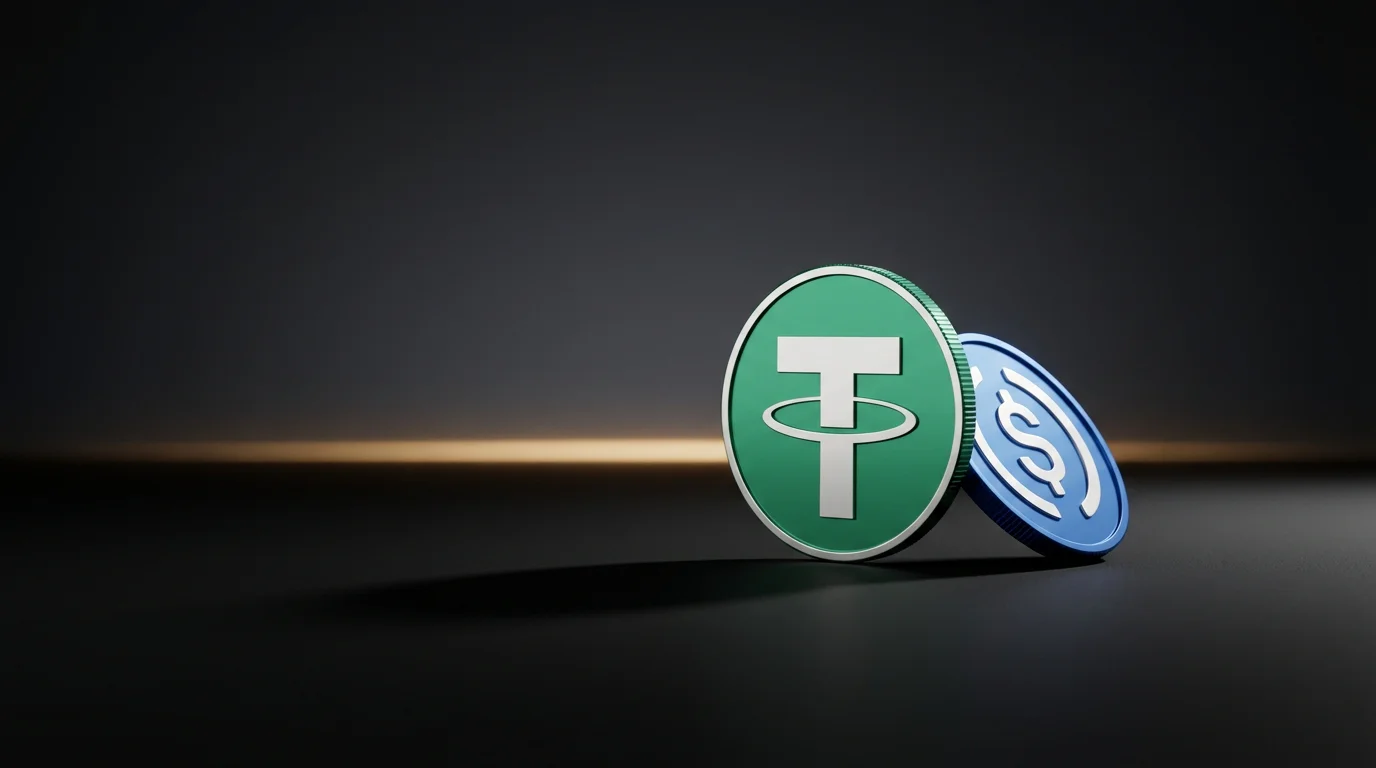
Why Stablecoins Solve the Volatility Problem
Most players don’t want their bankroll to swing 8% while they’re playing blackjack. That sentence alone explains why stablecoins have become the fastest-growing payment category at no-KYC casinos. Bitcoin and Ethereum are excellent technologies, but they are terrible at holding a predictable value over the course of a gambling session. A player who deposits 500 pounds’ worth of BTC on a Monday evening might find that same deposit worth 460 or 540 by Wednesday morning, regardless of what happened at the tables. For anyone trying to manage a bankroll with any kind of discipline, this volatility is not a feature — it is a complication.
Stablecoins eliminate the complication by pegging their value to a fiat currency, almost always the US dollar. One USDT is designed to be worth one dollar. One USDC is designed to be worth one dollar. The mechanisms behind each peg differ — and those differences matter, which we will get to — but the outcome for the player is the same: a cryptocurrency that behaves like cash. You deposit a hundred USDT at a casino, and when you withdraw a hundred USDT a week later, you still have roughly a hundred dollars’ worth of value, adjusted only for minor fluctuations in the pound-to-dollar exchange rate rather than the double-digit percentage swings common in BTC or ETH.
This stability has practical consequences that go beyond mere convenience. It makes bankroll tracking straightforward — you can set a monthly gambling budget in dollar terms and know exactly where you stand at any point. It simplifies bonus calculations, because the value of a deposit match stays constant rather than shifting with market conditions. And it removes the psychological distortion that crypto volatility introduces, where a player might chase losses at the tables because their BTC balance dropped in pound terms, or conversely might take excessive risks because an unrealised crypto gain makes them feel richer than they are. Stablecoins let you focus on the gambling without the interference of a secondary financial variable.
The adoption curve at no-KYC casinos reflects this utility. Platforms that once accepted only Bitcoin now list USDT and USDC alongside it as primary payment options. Some newer casinos have made stablecoins their default currency, denominating all balances and bets in USDT rather than requiring conversion from BTC or ETH. For UK players approaching the no-KYC market for the first time, stablecoins represent the simplest bridge between traditional currency thinking and the crypto-native payment infrastructure that these platforms run on.
USDT vs USDC — Which Stablecoin to Use
USDT (Tether) and USDC (USD Coin) are both pegged to the US dollar, both widely accepted at no-KYC casinos, and both functionally equivalent in day-to-day use. A player depositing one hundred USDT and a player depositing one hundred USDC are depositing the same value. The differences lie in the organisations behind each token, the transparency of their reserve management, and the networks on which they are most commonly transacted.
Tether is the older and larger of the two, with a market capitalisation that consistently exceeds USDC’s by a significant margin. It is the most liquid stablecoin in existence, meaning it is the easiest to buy, sell, and transfer across exchanges and wallets. At no-KYC casinos, USDT is accepted more widely than USDC — virtually every platform that supports stablecoins supports Tether, while USDC acceptance is common but not universal. Tether’s main point of criticism is its reserve transparency. The company has historically been less forthcoming about exactly what assets back each USDT token, and while it publishes periodic attestation reports, these have not always satisfied the scrutiny of regulators or independent analysts. For a casino player, this risk is mostly theoretical — Tether has maintained its peg through multiple market crises — but it exists as a background consideration.
USDC is issued by Circle and was developed with regulatory compliance as a core design principle. Circle publishes monthly attestation reports conducted by a major accounting firm, holds its reserves primarily in US Treasury bills and cash deposits at regulated financial institutions, and operates within a framework that prioritises transparency. For players who want the cleanest possible stablecoin from a governance and trust perspective, USDC is the more conservative choice. The trade-off is slightly lower availability at no-KYC casinos and somewhat less liquidity on smaller exchanges, though neither limitation is severe enough to be a practical problem for most users.
The network each stablecoin operates on matters more for casino payments than the issuer behind it. Both USDT and USDC exist on multiple blockchains — Ethereum, Tron, Solana, Arbitrum, and others. The network you choose determines the transaction speed and fee. USDT on the Tron network (TRC-20) has become the de facto standard for casino payments because of its near-instant confirmation times and fees that typically amount to less than a dollar. USDC on Ethereum mainnet, by contrast, carries gas fees that can make small transactions uneconomical. Matching the right stablecoin to the right network is a small decision that makes a measurable difference to your cost of play.
Depositing and Withdrawing Stablecoins at No KYC Casinos
The deposit process for stablecoins at a no-KYC casino follows the same pattern as any cryptocurrency deposit, with one critical additional step: selecting the correct network. When you navigate to the casino’s deposit page and choose USDT or USDC, the platform will typically present you with a choice of networks — Tron (TRC-20), Ethereum (ERC-20), Solana, BNB Smart Chain, and possibly others. You must select the same network in both the casino’s deposit interface and your wallet’s send function. Sending USDT on the Tron network to an Ethereum deposit address will result in lost funds, and no casino or blockchain can reverse that mistake. This is the single most common and most costly error that new stablecoin users make, and it is entirely preventable by verifying the network selection before confirming the transaction.
Once the network matches, the process is routine. Copy the casino’s deposit address, open your wallet, paste the address, enter the amount, and confirm. On the Tron network, the deposit will typically appear in your casino account within one to two minutes. On Ethereum mainnet, expect two to five minutes. On Solana, often under a minute. The casino may require a minimum number of network confirmations before crediting your balance, but for Tron and Solana this rarely introduces a noticeable delay.
Withdrawals follow the reverse path. Select the stablecoin and network, paste your wallet’s receiving address, enter the amount, and submit the request. Processing times depend on whether the casino uses automated or manual withdrawal processing. Automated systems, which are standard at most established no-KYC platforms, process requests within minutes. Manual processing — more common at smaller or newer casinos — can introduce delays of several hours, as a human operator must approve the transaction. Some casinos charge a flat withdrawal fee that covers the network transaction cost. Others pass the network fee through directly. In either case, the total cost of a stablecoin withdrawal on a low-fee network like Tron is typically negligible — a few pence at most.
One advantage of stablecoins for withdrawals specifically is that the amount you request is the amount you receive, in practical terms. A player withdrawing 500 USDT knows they are receiving approximately 500 dollars’ worth of value, regardless of what the broader crypto market is doing. With BTC or ETH withdrawals, the value of the withdrawal can change between the moment you submit it and the moment it arrives in your wallet, and that change can work for or against you. Stablecoins make the withdrawal a known quantity, which is especially valuable for players who are moving funds back to fiat — a 500-USDT withdrawal can be sold for approximately 500 dollars at any exchange, immediately and predictably.
Stability in an Unstable Market
Stablecoins occupy a peculiar position in the crypto casino ecosystem. They are cryptocurrencies that behave like traditional money, used at platforms designed to escape traditional financial infrastructure. The contradiction is only surface-level. What stablecoins actually represent is a best-of-both-worlds solution: the settlement speed and borderless nature of cryptocurrency, combined with the predictable value that makes financial planning possible. For a no-KYC casino player, this means access to all the advantages of crypto-native platforms — instant deposits, fast withdrawals, no banking intermediaries — without the daily anxiety of watching your balance fluctuate in response to market forces that have nothing to do with your gambling.
The growth trajectory suggests that stablecoins will eventually become the dominant payment method at no-KYC casinos, if they have not already reached that point. Bitcoin retains a loyal user base and the advantage of name recognition, but its volatility and transaction costs make it objectively less suited to frequent casino use than USDT on Tron. Ethereum faces the same cost barrier on its mainnet, though Layer 2 solutions are narrowing the gap. Stablecoins face neither of these problems. They are cheap, fast, stable, and available on the networks that players prefer for casino transactions.
For UK players specifically, stablecoins introduce one consideration worth noting: they are denominated in US dollars, not pounds. This means your casino balance and your real-world purchasing power are separated by the GBP/USD exchange rate. In practice, this is a minor variable — the pound-dollar rate moves in single-digit percentages over months, not in the double-digit swings that characterise BTC — but it is not zero. A player who deposits when the pound is strong against the dollar and withdraws when it has weakened will receive slightly fewer pounds than expected, and vice versa. For most recreational players, this currency exposure is trivial. For players moving larger amounts, it is worth tracking.
The broader point is that stablecoins have solved the specific problem they set out to solve. Crypto gambling no longer requires you to accept price volatility as the cost of admission. You can play at the same platforms, access the same games, and enjoy the same privacy and speed benefits while keeping your bankroll anchored to a known value. In a market defined by uncertainty — uncertain regulation, uncertain operator quality, uncertain game outcomes — the certainty that your hundred-dollar deposit will still be worth a hundred dollars when you are done playing is a form of stability that compounds into confidence. And confident players make better decisions.
Find more crypto payment guides at nokyccasinos-uk. Also explore our crypto payments guide.