
UK Live Roulette: Casino Checks and English-Speaking Dealers
 Available in GB
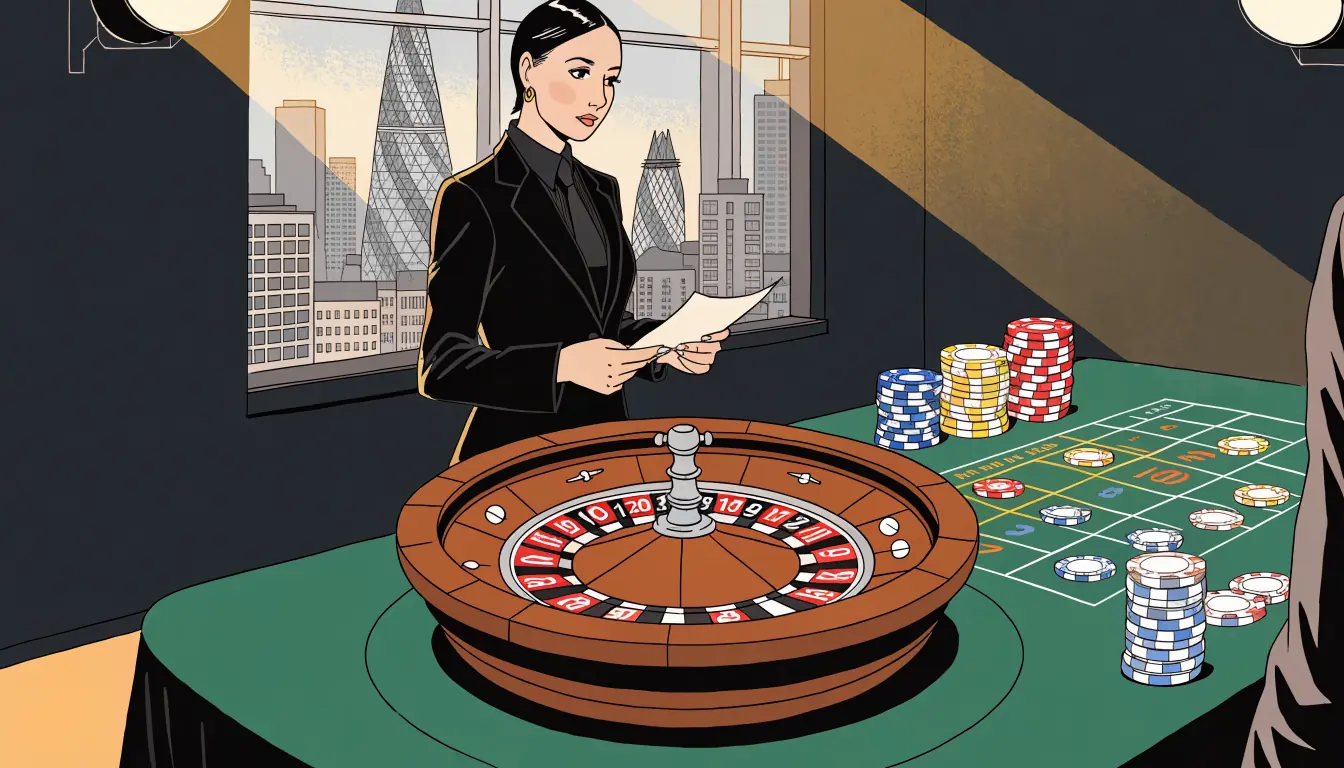
A practical look at operator authorisation, live-game providers and the checks that matter when assessing a roulette site.
What a UK Live Roulette Casino Actually Needs to Offer
When I look at a live roulette casino, I separate two things that are easy to blur together: the website taking the wager and the company supplying the live game. They may be presented as one polished service, but they do different jobs.
The operator runs the casino account, handles deposits and withdrawals, checks who is using it and provides the customer interface. The game provider supplies the live casino product itself. That can include the streamed table, the dealer presentation and the software connecting the table to the online game. Seeing a familiar provider name can tell you something about the source of the game, but it does not replace checking who operates the account.
That distinction matters when you are looking at Roulette online in the UK. A site can advertise a broad live-casino lobby, but the important question is whether the operator serving you is authorised to do so. A good-looking table is still only part of the picture.
Live Baccarat Online Casinos in the UK: What to Check
Live casino is broader than roulette
Roulette is often the game that brings people to a live casino page, especially if they want something that feels closer to a physical table than a standard computer-generated game. But a live casino is not defined by roulette alone.
Grosvenor first launched its live casino offering in 2013. The range included Roulette, Blackjack and Texas Hold’em, giving players a mixture of wheel-based and card-based casino games. That history is useful because it shows how live casino developed in the UK: not as one isolated roulette product, but as a wider table-game category.
So when you open a UK roulette casino, you may find the live section arranged around several types of game. Roulette sits alongside card games and other casino-table products, depending on what the operator has chosen to provide. I would not treat a large menu as proof that the casino is better. More titles can simply mean more things competing for your attention.
Mines Casino Game in the UK: Demo Limits
The live element also changes the way the product is presented. Instead of selecting a purely digital game and seeing only its interface, you are accessing a streamed table environment with a dealer and a game feed. That may be the reason you prefer live roulette, but it does not alter the need to check the business behind the account.
The operator matters more than the slogan
Casino pages are full of words such as “premium”, “authentic” and “immersive”. I have learned to translate those into a simpler question: who is actually offering this gambling service to me?
For remote operators serving consumers in Great Britain, the relevant licence is required regardless of where the key equipment is located. The UK Gambling Commission regulates remote gambling offered to Great Britain consumers and is the sole regulator for commercial gambling in Great Britain. It also regulates gambling activity in the United Kingdom, including online casinos.
That is the basic legal frame for a Roulette casino UK player might use. The company supplying the game and the company holding the customer account are not automatically the same business, so the operator’s regulatory position deserves attention in its own right. The Commission issues operating licences to businesses, while personal licences apply to individuals carrying out relevant roles in the industry.
Progressive Slots Online UK: How Jackpots Work
This does not mean a licence turns every roulette session into a sensible one. It means the site is operating within the local regulatory structure required for remote gambling offered to Great Britain consumers. I still regard the licence as the starting point, not a reason to believe every advertising claim.
What a credible live offering should make clear
A live roulette page should make it reasonably clear which operator you are dealing with and how the live casino fits into its wider service. You should be able to understand that you are opening an account with a casino operator, not casually joining a standalone stream from an unnamed table.
The same applies when a page presents several live products under one heading. Blackjack, Texas Hold’em and Roulette may all appear in the same lobby, but each title is still being offered through the operator’s gambling service. The range can tell you about the casino’s menu; it cannot, on its own, establish that the operator is authorised.
Providers are part of the supply chain and can help identify the source of a game, but the operator is the party responsible for the account and the wager.
I also avoid treating a provider logo as a personal recommendation. Providers are part of the supply chain. They can be relevant when identifying where a game comes from, but the operator remains the party serving the customer and accepting the wager.
A live casino should therefore offer more than a roulette window and enthusiastic copy. It should sit within a properly identified, locally licensed remote gambling service. Before I even think about the table, I want that foundation established.
And I keep the practical boundary in mind: roulette is gambling, not entertainment with a guaranteed outcome. If I choose to play, I use only money I can afford to lose. No live dealer, polished broadcast or famous casino name changes that.
Our top casino picks for the UK
- JetsetspinsBonus: 200% Bonus + 100 Free Spins + Free Royal Wheel · Payout speed: 1-3 business days
- SlotoSportBonus: 500% up to £ 10 200+ 777 FS · Payout speed: 1-3 business days
- ChanzeBonus: Slots Welcome Bonus #1 200% up to €500 · Payout speed: 1-3 business days
- Revery PlayBonus: 100% up to€1,000+ 100 FS · Payout speed: 1-3 business days
- SpinFormulaBonus: 550% Up To £15,000 + 550 FS · Payout speed: 1-3 business days
- DieselwinBonus: Welcome Pack 250% up to £4000 + 200 FS · Payout speed: 1-3 business days
Playing Roulette Online: The Slot-Stake Rule Does Not Apply
The first time I looked into roulette at an online casino, I made the same mistake many people make: I treated every casino game as if the same stake rules covered all of them. They do not. Online slots and roulette sit in different parts of the rules, so a restriction aimed at one should not automatically be transferred to the other.
That matters if you are looking for roulette at an online casino in the UK and have heard about the limits introduced for slot play. The short version is simple: the Great Britain slot-stake rule is about online slots, not every game found in a casino lobby. Roulette is not a slot, and blackjack is not a slot either.
The two slot limits
A specialist review I checked describes the Great Britain limits for online slot games as follows:
French Roulette Online Casinos in the UK
– An adult aged 25 or over may stake no more than £5 per game cycle on an online slot. – An adult aged 18 to 24 may stake no more than £2 per game cycle on an online slot.
The wording “per game cycle” is important. This is not a general daily budget, a total amount for an account, or a rule covering every wager made during a casino session. It concerns the amount that may be staked in one cycle of an online slots game.
That distinction can get blurred in casual explanations. Someone mentions the £5 or £2 figure, and it is easy to assume the same ceiling must appear when you move from a slot to a roulette table. I have made that assumption myself. It sounds tidy, but it is the wrong category.
Age still matters when you gamble online. UK online gambling is for players aged 18 and over, and an operator must verify a customer’s age before allowing a deposit. So the slot rule has two age bands for adults, while the wider question of whether you can open an account and deposit begins with being at least 18.
Roulette is treated separately from slots
The same specialist review identifies roulette and blackjack as games outside those particular slot-stake limits. In practical terms, you should not look at the £5 slot figure and assume it is the maximum amount for a roulette wager. Nor should you take the £2 figure for younger adults and apply it to every spin or table game simply because the casino offers them from the same website.
Slot-stake rule distinction
The Great Britain slot-stake rule applies specifically to online slots, not to other games like roulette or blackjack.
This is the useful distinction when you are considering an online casino with roulette. The website may display slots, live roulette, blackjack and other casino products together, but a shared menu does not mean that every product follows the same stake rule. The category of the game matters.
That does not turn roulette into an unrestricted activity. The slot cap not applying to roulette is not a recommendation to wager more, and it says nothing about what a particular table permits, accepts or displays. It only prevents one slot-specific rule from being mistaken for a universal casino rule.
A roulette player still needs to set a financial limit before depositing, use the account controls available from the operator, and gamble only what they can afford to lose. I am deliberately keeping those points separate from the slot cap because they serve a different purpose: one describes a rule for a game type, while the other helps keep a real-money session from becoming careless.
Why the wording matters
There are three different things people often mix together:
- The game category — slot, roulette or blackjack.
- The stake rule attached to that category — such as the Great Britain limits described for online slots.
- The player’s own spending control — the amount they decide they can safely afford to lose.
Only the first two explain why the slot figures do not transfer automatically to roulette. The third remains relevant regardless of which game you choose.
The phrase “game cycle” also helps avoid another misunderstanding. A slot spin is a defined cycle of play, but that does not mean a roulette wager should be described as a slot cycle or measured by the same rule. If you are moving between a roulette casino online and a slots section, pause when the wording changes. A casino’s general payment or account page may discuss deposits and limits, while the game rules deal with the individual product.
I prefer that slightly boring approach because gambling sites often place very different games side by side and present them with the same polished language. “One casino” can sound like “one set of rules”. It is not.
What this means for a roulette player
If your interest is online roulette in the UK, the practical takeaway is narrow but useful:
- Do not apply the Great Britain online-slot figures of £5 for adults aged 25 and over or £2 for adults aged 18 to 24 to roulette.
- Do not assume that a limit designed for slots also governs blackjack.
- Do check which game the rule actually describes before deciding what it means for your session.
- Keep your own spending boundary separate from any game-specific legal or regulatory limit.
- Gamble only money you can afford to lose.
Rules and guidance can change, so I would not treat an old explanation as a permanent description of the market. But the key point remains the one that caused my original confusion: finding roulette in the same online casino as slots does not make roulette a slot, and a slot-stake restriction should not be carried over by guesswork.
Checking a Roulette Casino Site Before You Sign Up
I used to treat the casino homepage as if it were a shop window: attractive table, a welcome banner, a few payment logos, job done. That was backwards. The page is designed to get you interested. The useful information is usually somewhere less glamorous.
Before creating an account with a roulette casino site, I now check the operator rather than trusting the presentation. For a UK player, that starts with the public register of the UK Gambling Commission. Remote gambling operators serving consumers in Great Britain need the relevant licence, and a legal online casino offering real-money play must have a current operating licence.
Verification steps
- Find the casino’s legal company name and domain
- Compare these details with the UK Gambling Commission register
- Verify the specific licence number on the public register
Start with the operator, not the table
Find the casino’s legal company name, trading name and website domain. They may appear in the footer, terms and conditions, or licensing page. Then compare those details with the Gambling Commission register. Do not rely on a logo, a copied licence number, or a sentence saying “fully licensed”. Search the register yourself.
The domain matters. A licence belonging to one company does not automatically prove that every website using a similar brand is covered. If the name on the account page, the terms, and the register do not line up, I would stop there.
Always verify the licence number on the public register before depositing. That single check is less exciting than scrolling through live casino banners, but it tells you far more about whether the site is appropriate for British customers.
A specific warning about LuckyPays
A specialist review checked the Gambling Commission register dated 26 September 2026 and reported no LuckyPays entry under that brand or the stated domain, including luckypays.io. Treat that as a reason to investigate carefully, not as something to brush aside because the website looks polished.
The sensible next step is to repeat the register check yourself and compare the result with the operator’s legal details. A register is not a decorative trust badge. If you cannot match the casino site to a relevant UK operating licence, do not deposit or hand over payment details while hoping the explanation will appear later.
Online casinos without ID in the UK: what to know
Inspect the account and payment process
A roulette casino site should make its basic account controls easy to find. Operators must verify a customer’s age before allowing deposits, so a site that appears ready to take money without proper age checks deserves caution.
New customers must also be prompted to set a financial limit before their first deposit, with account-level controls available afterwards. I look for these tools before registering, not after a bad session. The wording should be clear enough that you understand what the limit controls and how to change or maintain it.
Payment options matter too. UK-licensed casinos cannot accept credit cards for gambling. That includes arrangements designed to route credit-card funds through a money service business or a wallet that accepts credit-card money for gambling. A payment page encouraging that kind of funding is a serious warning sign.
I also check whether the site explains its complaints process and access to an approved Alternative Dispute Resolution service. UK Gambling Commission licensees must provide both. Responsible gambling tools, including self-exclusion, should be visible rather than hidden in a maze of account menus.
None of this identifies a “best” roulette casino site, and that is deliberate. It gives you a way to reject a questionable one before money enters the picture. I have learned that the most expensive mistake is signing up first and checking the operator later. Gamble only what you can afford to lose.
Summary
- A game label identifies the product but doesn’t confirm all table features or conditions.
- Marketing language like “premium” does not replace the need to check regulatory details.
- Always distinguish between the game provider and the actual casino operator.
Roulette at the Table: What the Game Section Can and Cannot Confirm
When I look at a roulette page, I try not to fill in the gaps with assumptions. “Roulette” tells me the casino game being discussed. It does not, by itself, tell me which table is available, how the table is presented, who operates it, or what conditions apply to playing it.
That sounds obvious, but casino pages often make a simple game name carry far too much weight. A heading may say “live roulette”, while the useful details sit somewhere else — or are not provided clearly at all. I have made the mistake of treating a polished game tile as a complete description. It is not.
What the game label tells you
A roulette casino game section can identify roulette as part of the casino’s offering. It may also separate roulette from other casino games, such as blackjack or poker. That is useful when you are trying to find the right type of table rather than browsing the entire lobby.
The label can also help you distinguish a live-dealer presentation from a digital casino game, where the result is produced within the software. Even then, the wording needs to be read carefully. “Live”, “online” and “table game” are not interchangeable descriptions, and a page should make clear what it is actually showing.
Beyond that, the name is only a starting point. It does not confirm a particular wheel arrangement, betting layout, dealing procedure, table limit, language option or streaming feature. I would not treat a picture of a wheel, a dealer’s video feed or a prominent “premium” badge as proof of any of those things.
Online American Roulette Casinos in the UK: What to Check
What needs separate confirmation
A game page and a casino page answer different questions. The game page is about roulette itself: whether the title appears in the lobby and how the operator describes it. The wider casino information deals with the business providing access, its terms, account requirements and the rules attached to participation.
That distinction matters with live roulette in the UK. A table can look familiar while the surrounding conditions differ. The page may not explain every detail in the same place, and marketing language can make a basic listing sound more distinctive than it is. I now look for an actual description instead of assuming that a named format includes features I have seen elsewhere.
The same caution applies to phrases such as “exclusive table” or “VIP roulette”. They may describe presentation or branding rather than a different casino game. Without a clear explanation, the phrase should not be used to infer special rules or a particular playing experience.
Keeping the description honest
A reliable roulette section should say what is visible and stop there. If it names roulette, call it roulette. If it identifies a live table, describe it as live. Do not quietly add rules, formats or advantages that the page has not established.
That approach may feel less exciting than sales copy, but it is more useful. You can then judge the game on the information actually supplied instead of on an imagined version of it. If you decide to play for real money, remember the basic boundary I try to keep in view: gamble only what you can afford to lose. No table description changes that.
Do
- Use money you can afford to lose
- Set financial limits before depositing
- Verify the operator via the Gambling Commission
Don’t
- Assume slot-stake limits apply to roulette
- Rely solely on provider logos for trust
- Follow winning systems that claim certainty
Choosing a Roulette Casino Without Falling for the Sales Pitch
The “best” roulette casino is rarely the one with the loudest banner. I have fallen for that before: a polished page, a generous-sounding promise, and not enough attention paid to what happened after registration. A better approach is to treat the casino as a service you are checking, not as a prize waiting to be claimed.
Start with the licence. A casino serving customers in Great Britain must hold the relevant operating licence from the UK Gambling Commission, even if its business or technical equipment is based elsewhere. Find the operator’s licence details and verify the licence number on the Commission’s public register before depositing. Do not rely on a logo, a review badge or a sentence saying “fully regulated”. Those are claims made by the site itself.
That check should come before comparing live tables, maximum wagers or any supposed advantage in the casino’s roulette section. A search for the best live roulette casino UK can produce plenty of confident recommendations, but a recommendation is not proof of current authorisation. I would rather remove an attractive-looking site from consideration than explain later why I ignored a basic regulatory check.
What to compare after the licence check
Once the operator has passed that first test, look at the practical terms that affect your decision:
- Account controls: a remote operator must prompt a new customer to set a financial limit before the first deposit and provide accessible account-level controls afterwards.
- Payment restrictions: UK-licensed casinos cannot accept credit cards for gambling. Be wary of payment routes that appear to disguise how the money is funded.
- Complaints: a UK Gambling Commission licensee must provide an internal complaints process and access to an approved Alternative Dispute Resolution service.
- Safer-gambling tools: licensed casinos must offer responsible gambling tools, including self-exclusion.
- Age checks: the operator must verify your age before allowing a deposit into a gambling account.
These details tell you more about the casino’s operating standards than a “best odds” label. They also keep separate issues separate. A table’s rules are one matter; the operator’s licence, controls and complaint route are another. Calling one casino the best casino for roulette without checking both sides is just sales language wearing a helpful hat.
Be cautious with claims about roulette numbers, a winning casino strategy or exceptional odds. None of those phrases makes an operator safer, and a high maximum wager is not automatically a benefit. It may simply make a bad session move faster.
I now judge a roulette casino by whether its claims survive basic checking: licence, limits, payment rules, complaints and self-exclusion. If they do not, the quality of the live presentation hardly matters. Before you play, decide what you can afford to lose and gamble only that amount. No “best” label changes the risk.
How to Play for Money Without Letting the Session Run Away
Playing roulette for money should start with a decision, not with the first spin. I have made that mistake myself: opened a live table while bored, treated the opening deposit as entertainment money, then kept going because stopping felt worse than continuing. That is how a short session quietly becomes something else.
Attention Do not chase losses or borrow money to continue a session. A fixed stopping point is more useful than a confident mood.
Before you play roulette at a UK casino, decide what the session is allowed to cost. Use money you can genuinely afford to lose, and treat that amount as spent once it leaves your bank account. Do not borrow for roulette, chase an earlier loss or move money across simply because the table is still running. A fixed stopping point is more useful than a confident mood.
A licensed remote operator must prompt a new customer to set a financial limit before the first deposit, with account-level controls available afterwards. Use those controls rather than relying entirely on willpower. I now set the limit before opening the live casino, when I am still thinking clearly. Once the limit is reached, the session is over. No “one last wager”.
You should also decide how long you intend to stay. Live roulette can feel less like a game and more like a room with other people in it, particularly when a dealer is speaking between rounds. That atmosphere can make continued play feel natural. It is still your money leaving the account. Take a break if you notice yourself increasing wagers, depositing again, playing faster or trying to recover a loss.
For a real-money session, check the payment method as well. UK-licensed casinos cannot accept credit cards for gambling, and credit-card funding routed through a money service business is also excluded. A wallet cannot be used where it lets credit-card funds reach gambling. These rules do not replace personal budgeting, but they remove some easy routes to spending money you have not set aside.
European Roulette Casinos in the UK: How to Choose
Age verification comes before depositing: operators must confirm that a customer is old enough, and legal online gambling is available to adults aged eighteen and over where the operator holds the required UK Gambling Commission licence. If gambling stops feeling voluntary, use the responsible-gambling tools available through the operator, including self-exclusion. GAMSTOP is another recognised self-exclusion programme for online gambling in Great Britain.
Free play can be useful for familiarising yourself with a screen, but it is not a substitute for deciding whether real-money roulette belongs in your budget. If you do play, keep the purpose modest: a defined entertainment session, with a defined end. Nothing clever.
Roulette Bonuses: Read the Conditions Before You Count the Value
A roulette casino bonus can look like extra playing money, but that is not how I treat it. The word “bonus” often means a promotional balance with strings attached, not cash you can withdraw whenever you feel like it. I have learned to read the conditions before getting excited. Saves a bad surprise.
A welcome bonus may be linked to your first deposit, while a deposit offer can require you to fund the account before anything promotional appears. A live casino bonus may have separate rules from an offer shown in the slots section. The heading alone tells you very little.
Before accepting a roulette promotion, check:
- which games qualify, and whether roulette is included at all;
- whether the offer applies to live roulette, a digital roulette game, or a named variant such as Lightning Roulette;
- whether the bonus is available to new customers only;
- whether a deposit is required;
- how long the promotional balance remains available;
- what wagering or withdrawal conditions apply;
- whether winnings from the promotion can be withdrawn immediately;
- whether the offer can be cancelled without affecting your deposited funds.
Those details matter more than the size of the headline. A roulette casino bonus UK players see on a banner may not work on every roulette table at that site. Sometimes the promotion is aimed at casino games generally, yet the terms narrow which games count. Sometimes roulette is excluded altogether. “Casino Roulette bonus” is not a precise product description.
I would also be wary of a roulette casino no deposit bonus. “No deposit” sounds like free money, but the conditions may still control eligibility, play, withdrawals and expiry. Read the full promotional page, not just the advert. If the wording is unclear, I would rather skip the offer than deposit first and argue later.
The same applies when comparing a roulette casino bonus offer with an apparently generous live casino promotion. A larger headline does not make the terms better. Nor does attaching the word “welcome” make an offer suitable for roulette.
A roulette casino bonus may have specific wagering requirements, time limits, or may exclude certain game variants like Lightning Roulette.
Only accept a promotion from a casino you have checked properly, including its current UK Gambling Commission licence on the public register. And keep the basic rule in view: gamble only what you can afford to lose. A bonus should never push you into depositing money you had not planned to risk.
Free Roulette Play as Practice, Not a Promise
Free roulette can be useful when your aim is to understand the shape of a session without putting money on the table. I have used free-play modes to get comfortable with the layout, the pace and the rather simple act of deciding when to stop. That is all I treated them as: practice.
The important word is “free”. It describes the way you play, not necessarily the quality of the experience or what happens later. A free version may not reproduce every part of a real-money table. It may be a computer game rather than a live dealer table, or it may present a different interface from the one you eventually use. So I would not assume that a free roulette option at one casino is available at another, or that a particular French roulette or Fireball Roulette title can be tried without a wager.
What practice can tell you
A no-money session can help you check practical things:
- whether the table layout makes sense to you;
- whether the controls are clear enough to use without rushing;
- whether you can follow the result and start the next round comfortably;
- whether the presentation suits you better than another format.
That can answer useful questions before you consider depositing. It cannot establish that you will enjoy playing for money, and it cannot show that a casino has a “better” edge for you. The labels attached to a game are not a promise of a particular outcome.
I also avoid treating free play as a rehearsal for profit. Virtual funds do not carry the same weight as your own money. It is easy to make larger selections, continue for longer or ignore a losing run when nothing leaves your account. My own free sessions looked disciplined right up until real money entered the picture. Different feeling entirely.
If you move from practice to gambling, pause first. Check the operator’s current UK Gambling Commission licence on the public register, use the available account controls, and set a financial limit before depositing. Operators serving Great Britain must prompt new customers to set such a limit. Keep the basic rule in view: gamble only what you can afford to lose.
Is free play a guarantee of future results?
No, free play is for practice and understanding the interface, not a rehearsal for profit.
Can I win at roulette every time?
No, anyone claiming a proven system to guarantee wins is selling a story; results are never certain.
Free roulette is therefore a way to inspect the experience, not a test that predicts results. If the practice version is boring, confusing or hard to leave, that is useful information. Stop there.
Can You Win at Roulette? Keep the Claims in Check
Yes, a roulette session can end with you ahead. That is not the same as having a reliable way to win whenever you want. I learned that distinction the expensive way: a short-term result can look like a method, especially when a few wagers land in a row.
The phrase “best way to win” sounds useful, but it often hides a promise nobody can properly make. Systems built around repeating patterns, changing stake sizes or chasing a particular sequence may feel organised. Organisation is not control. Calling a method “proven” does not make it capable of producing a guaranteed result.
The same applies online and in a casino. Live roulette, electronic roulette and a physical table may present the game differently, but a confident explanation is still only an explanation. It is not evidence that you can win every time, recover a previous loss or turn a session into dependable income. Anyone selling that certainty is selling a story.
I now separate three things before playing:
- A possible win: money may be returned during a session.
- A personal preference: you may choose a style of wagering because it suits your budget or keeps the session simple.
- A winning system: a claimed technique that supposedly removes uncertainty.
Only the first is an outcome that can happen without proving a theory. The second is a choice, not an advantage. The third deserves the most scepticism.
Be wary of claims based on a recent run of results, dramatic testimonials or instructions to increase stakes after a loss. Those details can make a method sound tested while saying nothing dependable about what happens next. I have mistaken confidence for evidence before. It is an easy trap.
A more honest approach is to decide what you are comfortable losing before you start, then treat any money returned as a result rather than proof that you have cracked roulette. Never gamble more than you can afford to lose. If the appeal depends on winning every time, postponing the session is probably the safer decision.
Lightning Roulette and Other Live Variants: Names Aren’t Evidence
“Lightning Roulette” sounds specific enough to make assumptions about it. I have made that mistake myself. A title can tell you what a product is called, but not which casino carries it, whether it is live-streamed, or what rules and features sit behind the name.
That matters when you are looking for a Lightning Roulette casino in the UK. A page may use the name in a heading while offering a different roulette product, a promotional description, or only a general live-casino category. “Live” is not proof of a particular table, provider, studio or format. The same caution applies to searches for First Person Lightning Roulette: the label alone does not establish how the game works or where it is available.
Nor should Lightning Roulette be treated as a slot simply because some pages describe it alongside slots. Roulette and slots are different game categories. A casino’s menu, help page and terms should identify the product clearly rather than leaving you to decode sales language.
The same principle applies to other named live products:
- Common Draw
- Crazy Time
- Dream Catcher
- Infinite Blackjack
- Lightning Roulette
Live Blackjack Online Casinos in the UK: What to Check
These are names, not guarantees that every UK casino offers them. I would check the operator’s current game catalogue and the individual game information before creating an account. If the page only says “live casino games” without naming the actual product, that is not enough to confirm availability.
Do not let a striking title push you into a rushed deposit. Check the operator’s UK Gambling Commission licence on the public register, and remember to gamble only what you can afford to lose. A memorable name is still just a name.
Are online casino games licensed and regulated?
Yes. Remote gambling operators serving consumers in Great Britain must hold the relevant licence, and the UK Gambling Commission regulates online casinos and remote gambling offered to those consumers.
What are the online slot stake limits in Great Britain?
The limit is £5 per game cycle for adults aged 25 and over, and £2 for adults aged 18 to 24. These limits apply to online slots, not roulette or blackjack.
Is LuckyPays licensed by the UK Gambling Commission?
The Commission’s public register dated 26 September 2026 does not identify a LuckyPays entry under its brand or stated domain, including luckypays.io, so a UK Gambling Commission licence is not verified there.