
Monopoly Live Casino in the UK: What to Check
 Available in GB
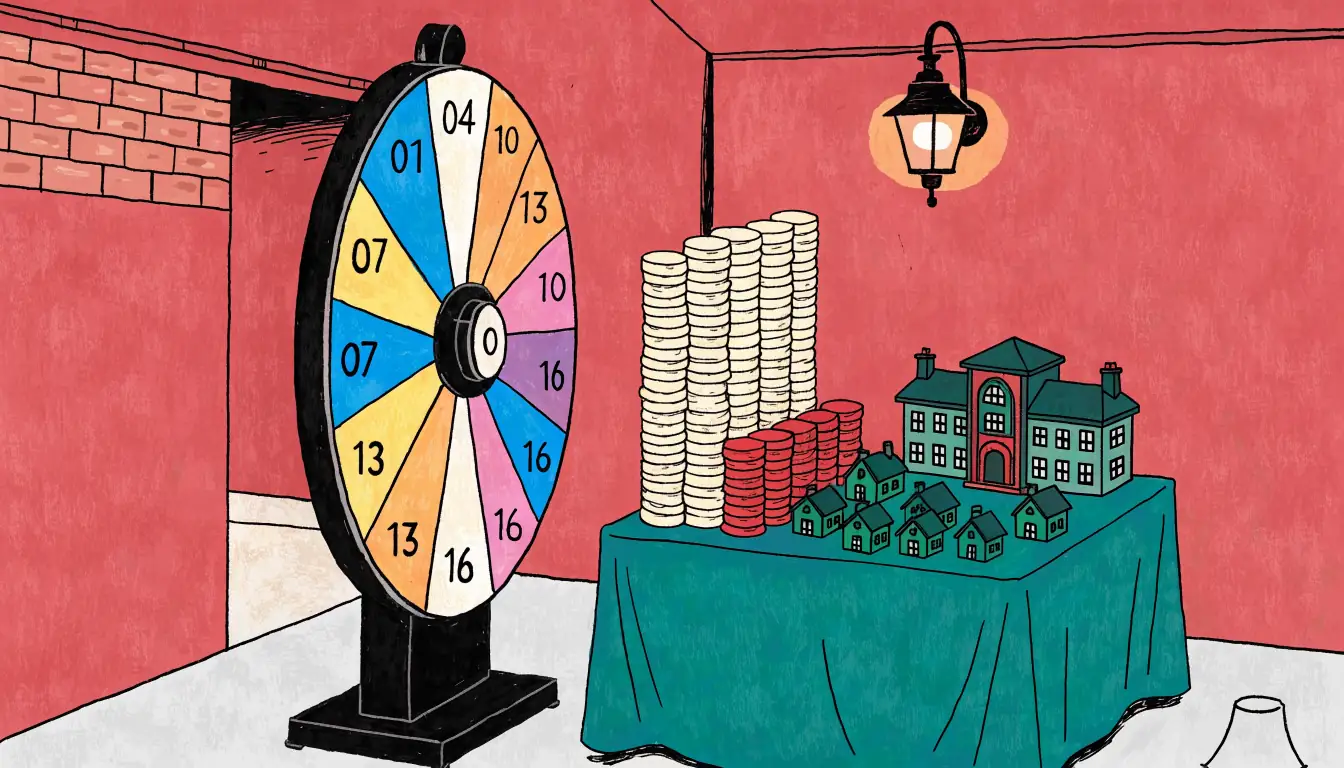
Monopoly Live is a game title, not a casino name; availability and operator checks are separate steps when choosing where to play.
What the Monopoly Live Casino Search Is Really About
The phrase “Monopoly Live casino” sounds straightforward, but it can point to two different things. You may be looking for the game itself, or you may be trying to find an online casino where the game is available. Those are related searches, but they are not the same job.
I learned that distinction the slightly expensive way. I would see a familiar game name, assume the casino page was the important part, and start judging the operator before checking whether the title was even available there. That reverses the sensible order. First identify what you want to play. Then check whether a suitable casino offers it.
Monopoly Live is the subject, not a casino name
When someone types “monopoly live casino UK 2026”, they may simply mean Monopoly Live in an online casino setting. The word “casino” describes where they expect to find it, not necessarily the name of a particular business. The same applies to phrases such as “casino live Monopoly”, “live casino Monopoly” and “Monopoly casino live”. They are awkward as written, but the intention is clear enough: find this named title in a live-casino environment.
That matters because a page about Monopoly Live should not quietly turn into a general casino advert. A casino can offer many games, but the reader arriving here has one particular title in mind. The useful starting point is therefore the game name and the practical meaning of finding it online.
The title may also be written with the words in different orders. “Monopoly live casino”, “live Monopoly casino” and “casino Monopoly live” are all pointing towards the same subject. You do not need to treat each version as a separate product. Search boxes are untidy; the reader’s aim is usually less complicated.
Casino Games: Slots, Live Tables and More
Two intentions hiding behind one phrase
There are two common reasons for looking up Monopoly Live.
The first is curiosity about the game. You may have seen it mentioned somewhere, noticed it in a casino lobby, or simply recognise the Monopoly name and want to know whether there is an online live version. In that case, the main question is about the title: what it is called, where it sits within a casino’s catalogue, and whether it is presented as a live-casino game.
The second is availability. “Online casinos with Monopoly Live” is not really asking for a description of the name. It is asking which operators make the game accessible to their customers. That is a shopping-style question, even if the product happens to be gambling. The answer depends on the casino’s current catalogue, the customer’s location, and the operator’s account rules.
Those two intentions overlap, but they should not be blurred. A description of the game does not prove that a particular casino carries it. Equally, finding a casino page that mentions the title does not tell you everything about the game itself.
What “UK” adds to the meaning
Adding “UK” or “United Kingdom” narrows the practical context. A reader searching for Monopoly Live casino UK is not merely interested in a page somewhere on the internet. They are looking at access from this market and at casinos presenting services to people here.
That makes the operator part of the question, but it still does not make the operator the subject. The wording is best understood as: “I want to find Monopoly Live in an online casino available to me in the UK.” Small difference. Important difference.
Treat the year in a search phrase as a request for current context, not as proof that any particular listing is still live.
I would also be careful with the year in the phrase “Monopoly Live casino UK 2026”. A year in a heading does not turn an old page into a current catalogue. Game availability can change, and casino websites can alter their lobbies without making the change obvious. Treat the year as a request for current context, not as proof that any particular listing is still live.
A name is not evidence of a full description
Monopoly Live is the named subject of the search, and it is being sought in a live-casino setting. That is enough to explain the reader’s starting point.
It is not a reason to fill in attractive details from memory. I have seen casino copy make a game sound familiar by adding mechanics, features, provider names or strategy suggestions that were never properly checked. Once that happens, a simple identification exercise becomes a sales pitch.
So I would separate three statements:
- Monopoly Live is the game name being sought.
- A live casino is the type of online lobby where the reader expects to find it.
- An online casino offering the game is a separate matter that needs to be checked at the operator’s site.
That separation keeps the page useful without pretending that every casino uses the same catalogue or presentation.
The sensible starting point
If you are interested in Monopoly Live, begin with the title rather than with claims about the “best” casino. Decide whether you want to understand the game, locate it in a casino lobby, or do both. The wording “online casinos with Monopoly Live UK” points most strongly to availability; “Monopoly Live casino” can be either an availability search or a request for basic information.
There is no need to force those intentions into one answer. Find the game first. Assess the casino separately. And remember the part that glossy wording tends to hide: gambling is not a way to recover money already lost. Only gamble what you can afford to lose.
Our top casino picks for the UK
- JetsetspinsBonus: 200% Bonus + 100 Free Spins + Free Royal Wheel · Payout speed: 1-3 business days
- SlotoSportBonus: 500% up to £ 10 200+ 777 FS · Payout speed: 1-3 business days
- ChanzeBonus: Slots Welcome Bonus #1 200% up to €500 · Payout speed: 1-3 business days
- Revery PlayBonus: 100% up to€1,000+ 100 FS · Payout speed: 1-3 business days
- SpinFormulaBonus: 550% Up To £15,000 + 550 FS · Payout speed: 1-3 business days
- DieselwinBonus: Welcome Pack 250% up to £4000 + 200 FS · Payout speed: 1-3 business days
The Live Casino Line-up Around the Game
The phrase “live casino” covers a wider room than one named game. When I look at a casino’s live section, I expect to see a mixture of table games, presenters, studios and branded titles. A game-show-style title may sit beside blackjack and roulette, but that does not make all of them the same kind of product.
Crazy Time Live Casino in the UK: What to Check
That distinction matters with Monopoly Live. The name suggests a recognisable board-game theme, while the surrounding live lobby may contain conventional casino tables and other entertainment-led games. If you are trying to understand what you are looking at, start with the title’s own information panel rather than assuming that every game in the same lobby comes from the same provider or uses the same format.
Providers and presentation
Live casino providers are not interchangeable labels. Evolution, Eyecon and NetEnt are names you may encounter in discussions of online casino products, but a provider name should be attached to a particular game only when the operator or game information identifies it. I have made the lazy assumption before that a familiar brand was behind everything in a lobby. It was a guess, not research.
The same applies to reviews. A review can describe the viewing experience, the available table options or the way a game is presented, but it should not quietly turn an unconfirmed provider connection into a fact. “Exclusive” is one of those advertising words that often needs translating: sometimes it means a particular presentation or placement, not that the surrounding live casino was built by one company.
Keno Online Casinos in the UK: How to Compare Sites
Familiar table games nearby
The traditional part of a live casino line-up is easier to recognise. Blackjack, Texas Hold’em and Roulette are established table-game options, and Grosvenor provides a useful UK reference point: it first introduced its live casino games in 2013 with a range that included all three. That history shows how the live-casino category developed around familiar card and casino games; it does not establish who supplies Monopoly Live.
You may also see named variants or separate products such as Infinite Blackjack and Lightning Roulette. Their titles should not be treated as a description of Monopoly Live. They are distinct products, and a casino placing them in one lobby is simply grouping its live content for browsing.
What a review can honestly tell you
A sensible review can help you separate the game’s presentation from the rest of the casino catalogue. It can identify the displayed provider, describe the published rules and explain what information is visible before you choose whether to play. It should not fill gaps with invented details about how the game works.
The Lobby
Read the game panel and check the provider attribution rather than assuming every game in a lobby shares the same origin.
My own rule is plain: read the game panel, check the provider attribution and treat broad claims about the “live casino experience” as background, not proof about one title. The lobby is a catalogue, not a guarantee that every game shares the same origin.
Playing Online: Check the Licence Before You Deposit
When I look at a casino offering a live game, I start with the licence rather than the welcome banner. A polished site can make a product look trustworthy, but design is not proof of legal status. For anyone in Great Britain, a remote operator serving local customers must hold the appropriate Gambling Commission licence, wherever the company’s equipment or offices are based.
That matters for any casino offering Monopoly Live, not just for unfamiliar brands. The UK Gambling Commission oversees commercial gambling in Great Britain and is the country’s sole regulator for that activity. Its remit includes online casinos and other forms of remote gambling, so an operator cannot avoid the requirement simply by running its website from another location.
Online casinos without ID in the UK: what to know
What to check on the register
Before creating a gambling account or depositing, use the public Gambling Commission register. Search for the operator’s legal business name, trading name and website details, then compare what appears there with the information shown on the casino’s own pages.
The important check is not merely whether a logo appears in the footer. Verify the licence number and make sure the registered details relate to the site you are considering. A badge can be copied, out of date or attached to a different company. The register is the useful reference because it lets you check the operator against the regulator’s own record.
I have made the mistake of treating a familiar-looking brand as sufficient evidence. It is an easy shortcut, especially when the site is full of live tables and reassuring language. It is still a shortcut. Check first.
The register search should answer a few basic points:
- Is the operator listed by the Gambling Commission?
- Does the licence belong to the business named in the casino’s terms?
- Does the listed website information match the address you are visiting?
- Is the licence relevant to remote gambling offered to Great Britain customers?
- Can you verify the licence number rather than relying on a displayed emblem?
If those details do not line up, stop before entering payment information. Do not assume that a casino is covered because another company in its group has a licence, or because the site mentions regulation without identifying the licensed operator.
Operator and personal licensing
The Commission grants operating licences to businesses, while people involved in operating gambling businesses may need personal licences. These are separate roles. An operator licence is the key record when you are checking whether the casino itself is authorised to provide remote gambling to customers in Great Britain.
That distinction helps cut through vague claims such as “fully licensed”. Ask: licensed business, by whom, and for what activity? For a casino site, the answer should be traceable to the Gambling Commission’s register. If the wording only refers to an overseas authority, that does not establish a UK Gambling Commission licence.
A site outside the British licensing system may still be reachable online, but accessibility is not the same as being licensed for British customers. The practical protection you are looking for comes from choosing an operator within the local regulatory framework.
Licence Check
- Search for the operator’s legal business name on the Gambling Commission register
- Verify the licence number matches the site you are visiting
- Ensure the registered details relate to the specific website you are using
- Confirm the licence is relevant to remote gambling for Great Britain customers
I also keep the money decision separate from the licence decision. A licence does not turn gambling into a safe way to make money, and it does not remove the chance of losing. Only gamble what you can afford to lose. That is not a slogan I always followed myself, and ignoring it makes every other check less useful.
Finding a Casino That Offers Monopoly Live
Finding a casino that offers Monopoly Live is partly a game-lobby exercise and partly an identity check. A site may mention the title in a banner, while the actual lobby shows something different after registration. I have learned not to treat a bright “play now” button as evidence. Marketing is cheap.
Start by checking the casino’s live-dealer or game section for the exact title. If it is not visible, contact support and ask whether Monopoly Live is available to customers in Great Britain, rather than assuming that a general live-casino page includes it. Keep the answer, especially if it names the operator behind the site.
Online Casino Tournaments UK: What to Verify
The important detail is whether the website and the business in the Gambling Commission register match. Do not rely on a badge copied into a footer. Compare the operator’s legal name, trading name and domain with the public record before opening an account or depositing.
One warning deserves to be specific. A specialist affiliate review reported that the public Gambling Commission register dated 26 September 2026 did not show a LuckyPays entry under the LuckyPays brand or its stated domain, including luckypays.io. That is a register check concerning that operator and domain, not proof that every site offering Monopoly Live has the same status. Recheck the live register yourself, because operator details can change.
If a site cannot clearly connect its advertised brand to a current record, stop there. An attractive game selection does not repair an unclear operator identity. I would also avoid sending documents or money while that point remains unresolved.
Finally, remember what the game search does not establish: availability is not a recommendation, and a listing is not a promise of a good experience. If you do play, set a firm boundary first and wager only what you can afford to lose. Plain advice, but useful.
Do
- Check the casino’s live section for the exact title
- Contact support to confirm availability in Great Britain
- Compare the operator’s legal name with the public record
Don’t
- Rely on a bright “play now” button as evidence of availability
- Trust a brand name without checking the Gambling Commission register
- Open an account before verifying the business identity
Before You Play: Demo Access, Deposits and Limits
Wanting to play Monopoly Live without putting money down first is sensible. I have made the opposite choice often enough: opened an account in a rush, treated the first deposit as “just a test”, and only thought about limits after the balance had started moving. That is backwards.
A free or demo version may be useful for learning the layout and pace of a live game, but do not assume that every casino offering the real-money version also provides a demo. The same applies to a mobile app. Some operators may let you play through a mobile browser rather than a dedicated application, while others may present the game inside their own app. The app icon itself proves very little.
Before registering, check what the site actually means by “demo”. It might be:
- a genuine play-money version with no deposit;
- a preview of the interface rather than the full game;
- a promotional route available only after creating an account;
- or simply a page describing the real-money game.
Those are different things. If the wording is vague, look for the conditions before entering payment details. A “free” label should not quietly turn into a deposit requirement.
What should happen before your first deposit
A UK-facing gambling account is not meant to be an anonymous wallet. The operator must verify your age before allowing you to deposit funds. That check can form part of registration or be completed shortly afterwards, but you should not expect to fund an account first and sort out age verification later.
You must be at least 18 to gamble online legally in the UK, and the operator needs a UK Gambling Commission licence to offer legal online gambling to UK customers. I would check those points before spending time on a bonus page, game lobby or app download. A polished design is not a substitute for an account check.
The practical details matter too. Read the identity and verification wording before depositing. If the operator asks for documents, use the secure account area described by the site rather than sending sensitive information to an address found in an advert or message. Keep your own record of deposits and withdrawals as well; it makes odd account activity easier to spot.
Deposit methods have restrictions
Credit cards cannot be used for gambling with UK-licensed casinos. That restriction also covers credit-card funding routed through a money service business. A digital wallet does not automatically avoid the rule: an operator cannot accept wallet payments where the wallet permits credit-card funds to be used for gambling.
So, before choosing a payment button, check the funding source as well as the payment brand. A wallet funded from a bank account is not the same situation as a wallet containing borrowed card funds. If a payment method is rejected, do not try to work around it with another route that still relies on credit.
Online Bingo UK: Rules, Slots and Real-Money Play
This is one reason I prefer deciding the amount and payment method before opening the game. Otherwise, the deposit screen becomes part of the excitement. That is when “I’ll only add a little” starts doing the thinking for you.
Set a financial limit first
Remote gambling operators must prompt new customers to set a financial limit before their first deposit. They must also provide account-level controls that let you manage those limits. Use them. The point is not to find the largest amount the account will accept; it is to decide what you can afford before the live presentation, music and quick decisions get involved.
Choose a limit that fits your ordinary finances, not a figure based on a win you expect to make. A limit is not a guarantee that you will stop feeling disappointed, but it creates a practical barrier between a planned session and an impulsive top-up. Check whether the control concerns deposits, losses, wagering or another measure, and note when a change takes effect. Do not assume that lowering a limit and raising it work in the same way.
If the site offers session reminders, reality checks or cooling-off controls, enable the ones you are likely to respect. They are more useful when switched on before play rather than after a losing run.
Responsible-gambling tools are there for a reason
UK-licensed casinos must provide responsible-gambling tools, including self-exclusion. Self-exclusion is a serious stop, not a setting to use while continuing to search for another account. GAMSTOP is the wider self-exclusion programme for online gambling in Great Britain, and it is worth understanding its scope before you register anywhere.
Financial Risk
Only gamble what you can afford to lose. Never use rent money, borrowed money, or credit for gambling.
You can also contact support services such as GamCare or BeGambleAware if gambling is becoming difficult to control. Gamblers Anonymous offers another route for people who want peer support. You do not need to wait until the money problem looks dramatic. Trouble sticking to a limit is already useful information.
The basic rule is still the least glamorous one: only gamble what you can afford to lose. Do not use rent money, borrowed money or credit, and do not treat a possible win as part of your budget. I have ignored that rule before. The game did not become kinder because I regretted it.
Know what “playing” involves
If you are trying a demo, use it to learn where the controls are and how a round is presented, not to rehearse a betting system. A play-money result has no cash value, and confidence built in a demo does not make real-money outcomes more predictable.
For real-money play, check the stake displayed before confirming each wager and avoid rushing because the live host or interface keeps the action moving. Online slot autoplay is banned in Britain, and online slot game cycles must last at least 2.5 seconds. Those rules concern online slots; do not assume they classify every live casino product in the same way.
Whether you use a browser or a mobile app, the safety checks stay the same: verify your age, set the financial limit, use an allowed payment method, and know how to pause or exclude the account. The screen is smaller on a phone. The consequences are not.
European Roulette Casinos in the UK: How to Choose
Choosing an Online Casino Without Falling for “Best”
“Best” is one of those casino words I no longer trust on sight. It can mean the biggest bonus, the loudest page, or simply the operator paying for the recommendation. None of that tells you whether the site is a sensible place to play Monopoly Live.
When I compare an online casino offering the game, I start with a less exciting question: can I establish who is operating it, and whether that operator is permitted to serve customers in Great Britain? A casino selling remote gambling to British consumers must hold the relevant Gambling Commission licence. The operator’s name and licence number should be identifiable, and the number should be checked against the UK Gambling Commission’s public register rather than accepted from a badge on the casino homepage.
That check is not a quality award. It does not make one operator “best”, and it does not tell you whether you will enjoy the site. It confirms an important baseline: the business is within the British regulatory system. I would not treat an attractive Monopoly Live page as a substitute for it.
What to compare after the licence check
Once the operator’s status is clear, I look at the information it gives before I create an account or transfer money. The useful questions are fairly plain:
- Is the company name easy to find in the terms and conditions?
- Are the rules for the game and account written clearly enough to understand?
- Can I find the withdrawal, verification and account-closure terms without hunting through marketing pages?
- Does the site explain how to make a complaint?
- Does it identify an approved Alternative Dispute Resolution service?
A polished interface can hide awkward terms. I have made the mistake of judging a casino by how quickly I could find the game, then discovering that the important information was buried elsewhere. Speed is not the same as transparency.
A UK Gambling Commission licensee must provide an internal complaints process and access to an approved ADR service. So if a dispute arises, I would first use the operator’s stated complaints route and keep copies of relevant messages, account details and the response. If the matter is not resolved through that process, the casino should explain how to take it to its ADR provider. I would use the route published by the operator, not an unofficial contact found in a forum post.
Treat reviews as leads, not verdicts
Reviews can help identify recurring complaints, but I read them as clues rather than proof. Look for specific descriptions of what happened, whether the operator responded, and whether the complaint was about a clear rule or an unexpected restriction. A page that repeats “trusted”, “top” and “best” without explaining how those judgements were reached tells me very little.
Evaluating Reviews
Reviews can help identify recurring complaints, but they should be read as clues rather than absolute proof. A positive comment does not guarantee a provider remains suitable today, and an isolated negative post does not establish a general pattern. Always verify information against the operator’s own terms.
Independent complaint discussions can also be outdated or incomplete. A positive comment does not prove that an operator remains suitable today, while one angry post does not establish a general pattern. I check the casino’s own terms alongside any outside account and give greater weight to information that can be verified.
The same approach applies when a site claims to be the best online casino with Monopoly Live in the UK. There is no universal winner. The right comparison depends on whether the operator is identifiable, properly licensed, open about its terms and capable of explaining its complaint and ADR arrangements.
Finally, I keep the financial decision separate from the review. Even a well-presented, licensed casino is still a gambling service, not a way to make income. Set a limit before playing and gamble only what you can afford to lose. That sentence is not glamorous. It is still the one I would rather remember.
Best Low-Volatility Slots in the UK: What to Know
Results, Trackers and the Limits of Strategy
Searches for Monopoly Live results, statistics and history often sound more precise than the information behind them. A page may show a recent outcome, a string of symbols or a colourful chart, then quietly suggest that the record can guide your next wager. I have made that mistake before: I treated a neat-looking sequence as evidence. It was only a sequence.
What a result can — and cannot — show
A result tells you what happened in a particular game cycle. That is useful if you are checking a session record, confirming that a round has finished or comparing what you saw with an operator’s displayed history. It does not, by itself, explain why that result occurred or identify what will happen next.
Be especially careful with pages offering a “tracker”. A tracker may simply collect outcomes entered by users, display recent rounds or repeat information already shown at the table. Unless you know how the data is collected and whether it is complete, it is not an independent record. Missing entries, delays and transcription mistakes can make a clean-looking table misleading.
Gambler’s Fallacy
Attention A run of similar outcomes does not make an alternative outcome "due", and a result that has not appeared recently is not automatically waiting for its turn.
The same applies to screenshots labelled as Monopoly Live results. They may show a genuine result, but one result is not proof of a trend. A run of similar outcomes does not make an alternative outcome “due”, and a result that has not appeared recently is not automatically waiting for its turn.
That is the old gambler’s fallacy in a smarter jacket.
Statistics need a clear definition
The word “stats” covers several different things. It might mean recent results, the number of times a feature has appeared in a personal record, a table of historical outcomes or a provider’s published game information. Those are not interchangeable.
Before relying on a statistic, check:
- what period or set of rounds it covers;
- whether the record is complete;
- who collected it;
- whether the figures describe past outcomes or mathematical information about the game;
- whether the page explains how errors and repeated entries are handled.
A long table can still be weak evidence if its method is unclear. I would rather have a short record with a stated source than a huge spreadsheet that nobody can explain.
Historical information needs the same treatment. A page describing how the game developed may be useful background, but a history section is not a results database. It should not be used to imply that past popularity, previous outcomes or an old format creates an advantage now. Where a site gives a launch date, provider detail or product timeline, check that the claim comes from an identifiable, appropriate source rather than from copied casino text.
Nor would I treat an unattributed “statistics” page as a reliable authority simply because it uses technical language.
Why a tracker does not become a strategy
A tracker can help you keep your own record. That is a reasonable use: write down the date, the amount you wagered, the result and how you felt about continuing. Seeing the complete session can expose a habit that was easy to ignore while the rounds were moving.
It cannot forecast the next outcome.
No record of previous rounds can make a random result more favourable by itself. Choosing a number because it has appeared often, avoiding it because it has not appeared recently, changing the wager after a loss or following a claimed “hot” pattern all rely on the same unsupported idea: that the past has created a debt which the next round must repay.
Penny Slot Machines in the UK: Stakes and Costs
A strategy guide may still help with personal discipline. You can decide in advance how much you are prepared to lose, stop when that amount is reached and avoid increasing a wager to recover a previous loss. Those are boundaries, not a method for changing the game’s probabilities. Only gamble what you can afford to lose.
I also distrust strategy pages that use “best” as if it means “most likely to win”. It may only mean the writer prefers a particular approach, or that the page is steering readers towards an offer. Read the wording closely. A claimed system is not evidence merely because it has a name, a table or a confident explanation.
Rules are not predictions
A rules page should explain how to participate, what the available choices mean and how the result is settled. That is different from a strategy page promising an edge. If you are checking the rules, use the information displayed by the operator or the game interface and make sure you understand the wager before confirming it.
Do not fill gaps with assumptions from another casino game. Roulette, blackjack and an entertainment game built around a branded board can use different rules, different terminology and different regulatory treatment. Familiarity with one table game does not establish the rules of another.
The same caution applies to stake restrictions. A specialist affiliate review says that Great Britain’s online-slot limit is £5 for a game cycle for customers aged 25 or older, while it gives £2 for those aged 18 to 24. That is a statement from that type of review, not a reason to label every online casino game a slot or to treat the figures as a universal rule for Monopoly Live.
Summary
- Results describe the past and cannot forecast future outcomes.
- A tracker is a record of data, not an independent source of truth.
- Strategy guides can assist with discipline but cannot change game probabilities.
- Always check specific product rules, as classification affects stake limits.
The same review also says those Great Britain slot limits do not cover roulette or blackjack. That distinction matters. Nothing in it establishes how Monopoly Live is classified, so I would not use the slot figures to describe the game’s own stake rules. Check the applicable information for the specific product and operator instead.
There are other practical restrictions around online slots in Britain: autoplay is banned, and the interval from one game cycle to the next must be at least 2.5 seconds. Those requirements concern online-slot play. They should not be casually presented as a description of Monopoly Live unless its classification and the relevant rules have been established.
Bonuses and “best” claims
A bonus search can lead straight into strategy language: wager more to unlock something, increase the stake after a loss or use a promotion as though it reduces the risk. I would separate the two questions. A promotion has terms; a result has an outcome. Neither changes the need to understand the wager or set a stopping point.
Likewise, “best Monopoly Live casino” is not a result, statistic or strategy. It is a judgement that needs evidence about the operator, the game’s availability, the terms and the protections offered. A badge or ranking does not prove that the site is suitable for you. Treat “best” as advertising language until the underlying details have been checked.
A sensible record of your own play
If you keep a tracker, make it boring and honest. Record the money staked, the result and whether you stopped when planned. Do not edit out losing sessions or count a bonus as profit before its terms have been met. A personal record is for recognising your behaviour, not for finding a secret pattern.
When the record starts pushing you towards chasing losses, taking money from elsewhere or extending a session simply because the next result feels overdue, stop using it and stop wagering. A spreadsheet cannot make an unaffordable loss affordable.
Mines Casino Game in the UK: Demo Limits
Results describe the past. Statistics depend on how they were collected. Strategy can set boundaries, but it cannot turn previous rounds into a forecast. That is the useful line to keep in view.
A Free Review Without the Sales Pitch
A useful Monopoly Live review should be rather less exciting than the adverts. It should tell you what has actually been checked: whether the game is available at the time of writing, which operator is presenting it, what the account terms say, and whether the site is operating within the UK regulatory framework. Anything beyond that needs care.
The word “free” causes trouble here. A free review means you can read the assessment without paying for it. It does not promise free access to the game, a risk-free version, complimentary funds or a way to turn play into income. Demo access may depend on the operator and the way the game is offered, so I would not treat its availability as automatic.
Nor would I call any casino the “best” merely because its page looks polished or because a review uses that label. A review cannot remove the basic uncertainty of wagering money. It can only help you see what you are signing up for before you decide whether to play.
My own useful test is simple: if the description hides the operator, the licence position, the relevant terms or the limits available on the account, it is closer to advertising than reviewing. “Exclusive” often means “written to make you click.” That distinction matters.
Before playing, set a financial limit you can live with and keep it in place. Use only money you can afford to lose, not money intended for rent, bills or essentials. If the session stops feeling like entertainment, stop rather than chasing the loss. A colourful presentation does not change the odds or make a losing wager harmless.
That is the honest free review: enough information to make a deliberate choice, no promise of a free game, and no sales pitch dressed up as certainty.
Are online casino games licensed and regulated?
Yes. The UK Gambling Commission regulates online gambling, and remote operators serving consumers in Great Britain must hold the relevant licence.
What are the online slot stake limits in Great Britain?
The limit is £5 per game cycle for adults aged 25 and over, and £2 per game cycle for adults aged 18 to 24. These limits do not apply to roulette or blackjack.
Is LuckyPays licensed by the UK Gambling Commission?
The public Gambling Commission register dated 26 September 2026 has no entry for LuckyPays under that brand or its stated domain, luckypays.io, so its licence is not verified by that register.