
Online Casino Game Shows in the UK: What to Check
 Available in GB
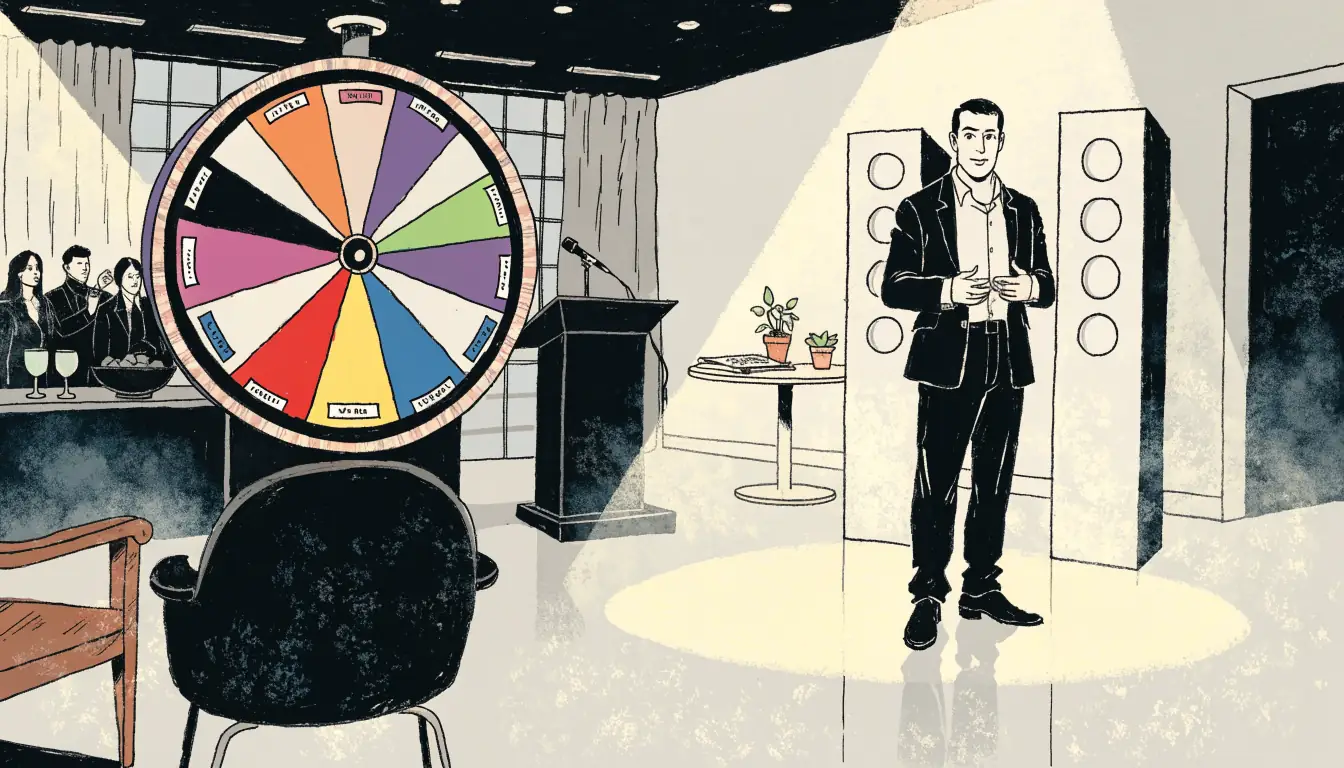
Game-show labels can cover different formats, so the title, rules, betting options and presentation matter more than the category name.
What “game show” means in a live casino
A live casino game show sits somewhere between gambling entertainment and a televised studio format. That is the useful starting point. It is not simply a casino game with a camera pointed at it, and it is not a television programme that happens to mention betting. It is a real-money casino presentation built around the feel of a show: a visible host, a studio setting, a sense of occasion, and an outcome that is part of the play.
That sounds obvious until you start browsing. The label gets used rather loosely. One site may call anything with a presenter a game show. Another may use it for a whole group of live casino titles. A third may put ordinary live tables, promotional videos and game-show-style products in the same menu. I have made the mistake of treating the label as a guarantee of a particular experience. It is not.
The phrase describes a format first. The exact game, rules, betting options, pace and presentation still depend on the individual title and the operator’s version of it.
BGaming Casinos in the UK: Why Amatic Is Not BGaming
More than a live camera feed
Traditional live casino is often understood as a remote table or studio broadcast presented to people playing from home. A live game show uses that same broad idea of a real presenter and a streamed environment, but gives the presentation a more central role.
The host is not merely there to deal, announce or explain. In a game-show format, the presenter helps create the programme-like atmosphere. There may be an introduction, recurring visual cues, a branded set, on-screen graphics and a rhythm that feels closer to entertainment television than to a quiet casino table.
That does not make the experience non-gambling. The outcome still matters to the player’s stake, and the product remains part of a casino lobby. The show-like layer changes how the game is packaged and experienced. It can make the session feel more social, more theatrical or simply more lively than a conventional digital interface.
I used to think the host was the main distinction. It is only one part of it. The stronger clue is that the whole presentation has been designed as an event rather than as a bare transaction. You are not just watching a result appear on a screen. You are entering a branded piece of live entertainment in which the presenter, studio and interface work together.
No-limit online casinos in the UK: rules explained · Barcrest Online Casinos UK: Check the Game Provider
What “live” means in this context
“Live” normally points to a real-time broadcast or hosted session rather than a purely computer-generated animation. It suggests that the visible presentation is happening through a live studio environment, with a human presenter involved in the delivery.
That word should still be read carefully. Live does not mean unscripted in every respect, and it does not mean the player is interacting with a television audience in the same way as a viewer at home. It also does not tell you how the result is produced, how quickly rounds progress or which choices are available. Those are separate characteristics.
For me, this is where the marketing language can get slippery. “Live” sounds like a complete description, but it is really only one layer. It tells you something about the presentation. It does not, by itself, tell you whether the format will suit your pace, whether you will enjoy the host-led style or whether the title resembles the sort of television game show you have in mind.
Amatic Slots at UK Online Casinos: What to Know
A live casino game show can therefore be thought of as a hosted, real-time casino experience with a show-oriented presentation. That definition is broad enough to cover the category without pretending that every title works in the same way.
The entertainment layer
The word “show” matters because it changes the mood. A standard casino interface tends to put the game itself in the foreground. You see the controls, the balance and the result. A show-led interface can put more attention on the studio, the presenter and the unfolding presentation.
That may appeal if you find ordinary casino screens flat or repetitive. The host gives the session a human presence. The set and graphics provide a stronger identity. The pacing may feel more like an organised broadcast than a sequence of isolated clicks.
But entertainment value is personal. I have enjoyed a lively presentation on one evening and found the same style distracting on another. If you prefer quiet concentration, chatter and visual effects may become irritation rather than added value. If you want something that feels closer to a television programme, the same features may be exactly why you are looking.
Market
United Kingdom
Language
English
Format
Live casino game show
Core Element
Hosted studio presentation
This is why I would not call a title one of the best live casino game shows simply because it looks expensive or has a memorable set. Production polish and personal fit are different things. “Best” is doing a lot of work in that phrase.
Not the same as a slot with a theme
Casino game shows are also easy to confuse with themed online slots. Both may use bright graphics, music, characters and a television-inspired name. The resemblance ends there.
A slot is generally presented as a digital game interface. A live casino game show is presented as a hosted entertainment experience. The visual style may overlap, but the category is not defined by colourful artwork, a celebrity-like presenter in an advertisement or a theme borrowed from television.
The difference is about the mode of presentation. A game-show format puts a live studio and host-led delivery at the centre. A themed slot may borrow the language of a quiz, a contest or a television set without becoming a live show.
That distinction matters when you are browsing an online casino. A tile that says “game show” may lead to a hosted live product, while a title with show-business styling may simply be a conventional digital game. The name and artwork are clues, not a full explanation.
How the player fits into the format
In a conventional television game show, the viewer watches contestants compete for a result. In an online casino game show, the player is not necessarily a contestant standing in a studio. The person at home joins through the casino interface and takes part according to the title’s own structure.
Amatic Online Casinos in the UK: How Access Works
That creates a hybrid experience. You are watching a broadcast, but you are not only watching. You are also using a gambling product. The host addresses the audience, the studio creates the atmosphere and the interface connects your session to the game.
The balance between watching and participating can vary. Some people want the show around the gambling activity; others care mostly about the result and would rather not wait through presentation. Neither response is wrong. It is just a question of what you expect when you choose a live game show casino section instead of a standard game lobby.
I have also found that the word “interactive” can raise expectations too quickly. A player may be able to use an interface and follow a hosted session, but that does not mean the player controls the presenter, the studio or every part of the outcome. Interaction should be understood in the practical casino sense: you enter the session, make the choices the title permits and follow what happens on screen.
A category, not a promise of one style
There is no single visual template that every online casino live game show must follow. One may feel glossy and television-like. Another may be more compact and functional. One may put a host and studio front and centre. Another may rely more heavily on graphics and a structured broadcast layout.
The category can include different moods:
- a bright, energetic presentation;
- a formal studio style;
- a more conversational host-led session;
- a fast-moving broadcast feel;
- a format designed to look like a familiar television event.
Those descriptions are about tone, not rules. They do not tell you what happens during play or what kind of result the title produces. They simply explain why two products placed under the same heading may feel very different.
This is one reason I resist ranking live casino game shows from the title alone. A name can suggest excitement, but the actual experience depends on the whole presentation. The host’s style, the visual design, the speed of the session and the amount of information on screen all affect whether the format works for you.
What the label does not tell you
The phrase “live casino game show” does not automatically describe:
- the rules of a particular title;
- the available betting choices;
- the way an outcome is determined;
- the speed or length of a round;
- the identity or style of the presenter;
- whether the experience is suitable for your preferred device;
- whether a particular casino currently carries it.
Those details belong to the individual product and its current presentation. Treating the category name as though it answers all of them is how I ended up assuming too much from a promotional banner.
The label is useful for finding the kind of entertainment you want. It is not a substitute for reading the title’s own information. If you want a hosted studio experience, the category points you in the right direction. It does not remove the need to understand what you are opening.
Why people look for this format
The appeal is usually not mysterious. Some players want a change from silent interfaces and repeating digital animations. They like the feeling of joining a broadcast, seeing a real presenter and having a stronger sense of occasion. Others enjoy the social atmosphere, even when they are playing alone at home.
There is also a simple novelty factor. A casino game show looks and feels different from a standard lobby tile. The set, music and presenter can make the session feel like an event rather than another anonymous screen.
DO
- Check the individual casino lobby for current availability.
- Verify the operator holds a valid UKGC operating licence.
- Read the specific account and bonus terms before depositing.
DON’T
- Assume a title is available just because it is mentioned in a review.
- Confuse a game supplier’s licence with an operator’s licence.
- Treat a promotional banner as a guarantee of a particular experience.
That novelty cuts both ways. A lively presentation can keep your attention, but it can also encourage you to stay longer than intended. Entertainment is still entertainment, and the casino setting still matters. I have learned not to confuse a more engaging presentation with a better decision. A show can be enjoyable without being a reason to increase a stake or continue after I meant to stop.
Finding the right meaning in “best”
When people ask for the best online casino game shows in the UK, they may mean several different things. They might want the most polished studio production, the most entertaining host, the clearest interface or simply a title that feels different from ordinary casino games.
Those are not interchangeable standards. A product can look impressive and still be a poor fit for someone who dislikes fast presentation. Another can feel straightforward and be more enjoyable because it does not compete for attention with unnecessary spectacle.
New online casino sites UK: licensing and Amatic games
I would define “best” here as the strongest match between the show format and what you actually want from a live casino session. That keeps the term grounded. It avoids pretending that one title can be the universal winner for every player.
The category itself is therefore fairly simple to recognise: live casino entertainment shaped like a hosted show, with a studio-led presentation around the gambling experience. Everything beyond that belongs to the particular title. That boundary is worth keeping clear, because the phrase can tell you what kind of atmosphere to expect without telling you the entire experience in advance.
How to think about UK casinos offering live shows
A casino operator and a casino game are not the same thing. That sounds obvious, but it is where many “best” lists go off the rails.
An operator runs the gambling account. It handles registration, deposits, withdrawals, identity checks, customer support, account limits and the terms attached to promotions. The games are supplied separately, either by the operator itself or by outside studios and technology companies. A casino can therefore advertise a broad catalogue without having made every title, filmed every show or controlled every part of the underlying platform.
The operator vs the supplier
An operator runs the gambling account, handles deposits, withdrawals, and customer support. A supplier or studio provides the games, software, or production. The two are separate entities, and a supplier’s presence does not guarantee an operator’s current offering.
That distinction matters when you are looking for live game shows. A page may mention an operator, a studio, a brand or a particular title, but those names do not all describe the same role. One may be the company accepting your stake, another may provide the entertainment, and a third may supply the technical system that connects the two. “Available at this casino” is a statement about the operator’s current offering, not proof that the operator created the show.
I used to treat a casino lobby as a permanent catalogue. It is not. Listings change, regional access can differ, and a title shown in an article may not appear in the operator’s own service when you check it. A confident name is still only a claim unless it describes what the casino is actually making available to its customers at that time.
What the operator is responsible for
When you open a real-money account, your relationship is with the casino operator rather than with each individual game supplier. That is the useful dividing line.
The operator is the party connected with:
- the gambling account;
- deposits and withdrawals;
- the conditions attached to bonuses;
- customer support and complaints;
- identity and age checks;
- safer-gambling tools;
- the terms under which remote gambling is offered.
A live show may be produced elsewhere, but that does not move those account responsibilities to the presenter, studio or software supplier. If a payment is delayed or an account question needs answering, the supplier’s logo on the game screen is not a substitute for the operator’s support route.
This also prevents a common bit of advertising fog. Words such as “exclusive”, “official” or “premium” can make a listing sound more settled than it is. They do not by themselves establish that a show is available to every customer, that it can be played for real money, or that it is offered throughout the United Kingdom. A catalogue description needs to be read as a description of the operator’s service, not as a guarantee about every title associated with the wider live-casino industry.
The reverse is true as well. If an operator has a live-casino section, that does not mean every form of live entertainment is present there. A casino may offer live tables, streamed content or other products without offering live game-show programming. The category name alone does not fill in the catalogue.
Why a supplier’s presence proves less than people think
Game providers and studios are often easier to identify than the operators that currently carry their work. Their websites, press material and older reviews may remain visible long after a casino has changed its lobby. That creates a tempting but unreliable chain of reasoning:
- a supplier produces a live title;
- a casino has worked with that supplier;
- therefore the casino offers that title now.
The first two points do not establish the third. Distribution depends on commercial arrangements, technical integration and the operator’s current decisions. A supplier can have a large portfolio while only some of it is enabled for a particular casino, account type or jurisdiction.
So when you see a list of online casinos with live game shows, separate the claims. Is it saying that the operator has live entertainment of some kind? Is it naming a provider? Is it claiming that a particular show can be opened and played for real money by a customer in Great Britain? Those are different statements, and they need different evidence.
I have made the mistake of reading a provider directory as though it were a shopping list. It saves time until you reach the cashier and discover that the title is not in the lobby. Then the shortcut becomes the whole problem.
“Best” depends on more than a title list
The phrase “best live game show casino” sounds like a ranking, but the ranking needs a clear basis. A long lobby is not automatically better than a short one. Nor does a recognisable brand prove that the relevant entertainment is available to you.
A serious comparison would need to distinguish at least four things:
- whether the operator serves customers in Great Britain;
- whether it holds the appropriate UKGC licence;
- whether the relevant live-show content is currently offered;
- whether the operator’s own terms describe how that content is supplied.
Without those distinctions, a list can mix licensed operators, overseas businesses, providers and individual games as though they were interchangeable. They are not.
There is also a difference between saying that an operator has a live-casino area and saying that it offers live game shows. The first is a broad description of a product category. The second is a narrower claim about the entertainment actually available. A casino may use one label for several types of live content, while another may divide its lobby into more specific sections. The wording on the page is not enough on its own; the actual catalogue and terms carry more weight.
That is why I would not call a named UK casino a confirmed destination for live game shows merely because it appears beside those words in a review or directory. The operator must be connected with the offer itself, not just mentioned in the same article. If that connection cannot be established, the honest description is narrower: the operator is a casino brand discussed in relation to live entertainment, not a confirmed place to play a particular show.
Regulatory Responsibility
For customers in Great Britain, the UK Gambling Commission oversees commercial gambling. An operator serving British customers for real-money remote gambling must hold the relevant UKGC operating licence, regardless of where the game studio is located.
The UK licensing point
For customers in Great Britain, the regulatory question belongs to the operator. The UK Gambling Commission oversees commercial gambling in Great Britain and covers remote gambling offered to consumers there. This remains the case even when important equipment, software or business operations are located elsewhere.
The Commission is the single regulator for commercial gambling in Great Britain. It grants operating permissions to businesses and personal permissions to individuals who work in regulated gambling roles. Those are different forms of authorisation, and a personal licence is not a replacement for the operator’s operating licence.
In practical terms, a casino serving British customers for real-money remote gambling needs the relevant UKGC operating licence. The location of a studio, server or game supplier does not remove that requirement. Nor does a provider’s relationship with an operator turn the provider into the casino where your account is held.
This is the point at which “UK casino” should mean more than a familiar name, a pound symbol or a page written in British English. The operator serving the customer is the important entity. Its licence status is not transferred from a supplier simply because that supplier’s games appear in the lobby.
The same caution applies to offshore services. An overseas casino may be accessible from the United Kingdom, but operating outside the UKGC system does not make it a UK-licensed operator. A foreign licence and a UKGC licence are not two descriptions of the same protection. They belong to different regulatory frameworks.
The Gambling Act 2005 provides the main statutory framework for gambling in England, Wales and Scotland. Northern Ireland is outside that Act’s scope. For the British remote market, however, the central practical distinction remains straightforward: an operator selling remote gambling to consumers in Great Britain needs the appropriate Gambling Commission authorisation.
Do not confuse availability with regulation
A show can be technically reachable without the operator being a UKGC-licensed casino. That is why availability and legality should not be treated as synonyms.
Availability vs Legality
Attention Accessible web pages or interfaces do not guarantee that a business is a UKGC-licensed operator or that it is legally authorised to accept your stake in Great Britain.
“Accessible” only describes whether a web page or game interface can be reached. It does not tell you which business accepts the stake, which regulator supervises that business, or which complaints route applies. A title appearing on a foreign site does not make that site part of the British regulated market.
Nor does a UKGC licence for a software business automatically authorise a separate casino to take deposits. The licence must belong to the business carrying out the regulated operator activity. That is the difference between the company supplying technology and the company running the customer account.
This may sound like paperwork, but it affects the whole experience. The operator’s licence is tied to the service offered to the player. The game supplier’s identity helps explain where the content comes from, but it does not answer who is responsible for the account.
How to read a casino’s live-show claim
When a casino says it offers live entertainment, I would break the statement into smaller questions instead of accepting the headline.
First, who is the operator? Is the page describing the business that accepts the customer’s stake, or is it presenting a provider’s catalogue?
Second, what exactly is being offered? “Live casino” can be a broad menu label. It should not automatically be read as a promise of game-show content.
Third, is the claim current? Older reviews and static comparison pages may continue to name a title after an operator has altered its catalogue. A current operator page is more relevant to present availability, although even that should be read alongside its terms.
IGT Online Casinos in the UK: What the Evidence Shows
Fourth, does the offer apply to customers in Great Britain? A title may be promoted internationally while the local version of the service differs. The operator serving the customer is the one that matters.
Finally, is the business authorised for the British market? A polished lobby does not answer that question. The regulatory identity of the operator has to be considered separately from the entertainment brand.
That checklist is less exciting than a glowing ranking, but it has saved me from confusing a provider page with a casino page. Small win. Still a win.
What can and cannot be said about UK options
There is a difference between describing the market and endorsing a particular operator. The market includes casinos that may use live entertainment, suppliers that may distribute content and websites that publish lists of possible destinations. That does not turn every named casino into a verified UK home for live game shows.
A careful description therefore avoids presenting a fixed list of “best” operators unless each entry has been checked as a current, UK-facing offer. It also avoids treating a supplier’s catalogue as proof of consumer access. The fact that a business can provide games to operators says something about its role in the chain; it does not establish which casino currently carries a particular live show.
For you, the useful question is not simply, “Which casino has the biggest live section?” It is, “Which licensed operator is actually offering the type of live entertainment I want, in the market where my account is held?” That wording keeps the operator, the product and the jurisdiction in their proper places.
Main Conclusions
- A live casino game show is defined by its hosted, studio-led presentation rather than just the game itself.
- Always distinguish between the game provider, the operator, and the regulatory licence.
- Verify current availability in the actual casino lobby rather than relying on external lists or reviews.
- Ensure the operator is UKGC-licensed before engaging in real-money play.
I would also be wary of a page that uses the word “UK” only in its heading. A British audience, British currency and a UK-themed promotion do not replace the operator’s regulatory status. The relevant service must be offered by a business authorised for remote gambling in Great Britain.
This is not an argument that every live-show listing is wrong. It is an argument for reading the listing precisely. A casino may genuinely offer live entertainment, but a general claim should not be expanded into a specific claim about every show, every customer or every part of the United Kingdom.
The clean way to compare operators
The cleanest comparison keeps three labels separate:
- operator — the business holding the customer account and offering remote gambling;
- supplier or studio — the business providing games, software or production;
- show or game — the individual entertainment product made available through the operator.
Once those labels are separated, the usual advertising shortcuts become easier to spot. A supplier name is not an operator name. A game name is not a licence. A live-casino menu is not proof of live game-show availability. And a casino being visible online is not proof that it is authorised to serve Great Britain.
For this subject, restraint is more useful than a long list. A current UKGC-licensed operator may offer live shows, but that offer must be established at operator level. Until then, it is safer to describe the relationship between the business and the entertainment without turning an association into a recommendation.
Crazy Time and Funky Time: what this plan can verify
Crazy Time and Funky Time are the two names most likely to bring a reader to this part of the subject. They are often placed beside phrases such as “live casino game show”, which tells you how people are trying to classify them. It does not, by itself, establish what either title does, how it is played, who supplies it, or where it can be found.
That distinction matters. A familiar title can make a page feel more definite than it really is. I have made that mistake myself: I saw a game name repeated across several casino pages and treated the repetition as proof that the same product, terms and access applied everywhere. It was only proof that the name was being used.
What the name Crazy Time can — and cannot — tell you
A page headed around Crazy Time may be referring to a live casino game show, but the title alone does not settle the details behind that label. It does not confirm the game’s format, the role of a presenter, the available choices, the betting process, the outcome system or the way any return is calculated.
Wazdan vs Amatic Slots in UK Casinos
Nor does the name show that the title is present in a particular British casino lobby. Casino operators decide which content they display and under what terms. A title may be mentioned editorially, appear in a promotional page, or be listed in a lobby at a particular time. Those are different things, and the name should not be treated as a permanent availability statement.
The same caution applies to a page that calls itself a guide to a “Crazy Time game show casino”. That wording may describe a casino where somebody expects the title to be available, rather than proving that a player can open it, deposit for it or use it under the terms suggested by the page. Marketing language is cheap. The useful part is the operator’s current presentation and the conditions attached to the account.
Funky Time needs the same treatment
Funky Time should not be treated as a variation of Crazy Time merely because the names are often discussed together. A shared page, category or search result does not establish that the two titles have the same structure, supplier, presentation, betting options or availability.
It is also risky to fill in the gaps from the name itself. “Funky” may sound like a promise about style or atmosphere, but a title is not a technical specification. It does not confirm whether the experience is live, how it is hosted, what a round contains, or which devices support it.
Crazy Time and Funky Time
Two specific game titles often associated with the live casino game show category, though their availability and mechanics depend on the specific operator and studio providing them.
That may sound overly careful until money is involved. Once a reader moves from curiosity to a real-money account, an assumed feature becomes an assumed condition. If the title is not displayed, is unavailable in the reader’s jurisdiction, or appears under different account terms, the page that encouraged the assumption has not helped much.
Do not confuse a provider with a casino
There is another easy mix-up here. A game title and a casino brand are not interchangeable. The company associated with a game may supply software to operators without accepting player deposits, settling withdrawals or handling customer complaints. The operator is the party presenting the account and its terms.
Amatic Industries illustrates the broader point. It holds a UK Gambling Software (Remote) licence and supplies games to British operators, but it does not run consumer-facing casinos or take bets directly from British players. Its catalogue contains video slots and random-number-generator table games, not live-dealer games. That information does not establish any connection between Amatic and Crazy Time or Funky Time; it simply shows why a provider’s licence should not be read as proof that a particular title is available at a casino.
A licence attached to one business therefore cannot be used as a shortcut for a different business or a different game. Names need to stay in their proper boxes.
A sensible way to read pages about these titles
When a page presents Crazy Time or Funky Time as a live casino game show, read the wording narrowly. A category label tells you how the page is positioning the title. It does not automatically confirm the title’s rules, current British availability or the operator’s account conditions.
The useful distinction is simple:
- Title: the name being discussed.
- Provider: the business that may supply software.
- Operator: the casino company that opens the player account and sets its available content and terms.
- Licence: authorisation held by a particular business for a particular role.
I keep those four separate now. It prevents a casino advertisement from doing the thinking for me.
So, in the context of Crazy Time and Funky Time, the responsible statement is a limited one: both names belong in a discussion of live casino game-show searches, but their names alone justify no further claim. They should not be presented as proof of identical mechanics, a shared supplier, a guaranteed live presentation or availability at a named UK casino. The title is a starting point, not evidence of the whole product.
Live casino game shows: what to check before you play
The first thing I check is what the phrase actually covers. A live casino game show can sound like a neat product category, but the label alone tells you very little about the game, the operator, or the conditions attached to it. A bright studio, a presenter and a wheel-shaped logo do not prove that the same title is available everywhere, or that two casinos present it under identical terms.
That is where I have made mistakes before. I saw a game promoted in one lobby and assumed it would be waiting for me at another. It was not. So before treating any live game show casino as a possible place to play, I would check the individual lobby rather than relying on a banner, an old review or a list copied from somewhere else.
Check the casino, not just the title
A game provider and a casino operator are different businesses. The operator is the party dealing with your account, deposits, withdrawals, bonuses and customer support. A provider’s name appearing in marketing does not, by itself, confirm that a particular game show is available to British customers.
Before You Play
- Search for the exact title in the casino’s current live section.
- Verify the operator holds a valid UKGC operating licence.
- Check that the game can be opened from a British account.
- Read the specific bonus and wagering conditions.
- Confirm any necessary financial or age verification is complete.
For real-money remote gambling in Great Britain, the operator must hold a current UK Gambling Commission operating licence. That is a more useful check than a logo on a landing page. The Commission regulates remote gambling offered to Great Britain consumers even when key equipment is located elsewhere, and it issues operating licences to businesses as well as personal licences to relevant individuals.
I would verify the operator in the Gambling Commission Public Register before depositing. I would also check that the licence covers the activity being offered, rather than assuming that any reference to regulation means the same thing. Offshore casinos sit outside the UKGC system. They may be accessible, but that does not give them UK consumer protections, GamStop access or the UKGC complaints route.
Not glamorous. Still important.
Confirm what is available now
Availability can change. A page may mention a live game show while the casino’s current lobby does not carry it, or the title may be restricted by location, account status or product category. A review can also outlive the offer it describes.
My practical check would be simple:
- open the casino’s current games or live section;
- search for the exact title shown in the promotion;
- read the game information and any participation conditions;
- confirm that the game can be opened from a British account before adding funds;
- ask customer support if the listing is unclear.
I would not treat a search result, an advert or a third-party list as proof of present availability. Nor would I assume that a name such as “live game show” identifies one fixed format with identical rules everywhere. The title and the presentation need checking at the operator itself.
The same applies to mobile access. A page loading in a browser does not tell you whether the account, game or payment route is suitable for you. I would test the information pages first and avoid making a deposit simply to discover a restriction later.
Read the account and bonus conditions
Promotional wording often puts the headline first and the conditions somewhere less memorable. I have learned to read the bonus terms before deciding whether an offer is worth the trouble. Pay attention to which games qualify, whether the offer applies to live products, how winnings are treated and what happens if you withdraw early.
For customers in Great Britain, the Gambling Commission’s wagering cap on bonus funds is 10×. That does not mean every offer is attractive or identical. A lower requirement, a cash promotion or no promotion at all may still have different eligibility rules. A claim that a reward is “cash” should be checked in the actual terms, not accepted because the advert uses friendly wording.
Do not mix up a game’s availability with a bonus’s eligibility. They are separate questions. You may be able to play a title without being able to use a particular promotion on it.
Betsoft online casinos UK: licence and bonus checks
Set controls before depositing
UKGC-licensed operators must prompt customers to set a financial limit before the first deposit, and reductions to that limit must be applied immediately. I would treat that prompt as part of the decision, not as a box to click through while thinking about the game.
GamStop has been mandatory for all Great Britain-licensed online operators since 31 March 2020. If you are registered with GamStop, an operator covered by the scheme should not be treated as an alternative route around that exclusion.
Credit cards cannot be used for remote gambling payments, including credit-card-funded e-wallet top-ups. Operators must also verify a customer’s age before allowing deposits and check the customer’s name, address and date of birth before the first deposit. Those checks can feel inconvenient, but an operator that skips them is not offering the sort of British account I would trust with money.
Keep the conclusion modest
There is no honest shortcut from the words “live casino game show” to a recommendation. The sensible next step is to identify the exact title, confirm its current listing with a UKGC-licensed operator and read the terms that apply to your account. If any of those pieces are unclear, I would leave the deposit alone until they are clear.
A polished studio is not evidence. A familiar brand is not evidence. The current operator page, licence position and account conditions are what matter.
Are Amatic games licensed and legal to play in the UK?
Yes—Amatic holds a UK Gambling Commission remote software licence, and its games are distributed to UK players through UKGC-licensed operators. Play through a licensed operator, which is responsible for your bets and payouts.
Are Amatic casinos safe and regulated in the UK?
Amatic does not run consumer-facing casinos; the casino operator takes your deposits and handles payouts. Choose a UKGC-licensed operator, which is regulated for its online gambling activity.
What are the wagering requirements at Amatic casino bonuses in the UK?
At UK-licensed online casinos, wagering requirements on bonus funds are capped at 10× from 19 December 2025. The operator sets the bonus terms within that limit.
Which licensed UK casinos carry Amatic slots?
Amatic slots are listed at Betfred, Jackpotjoy, William Hill, kwiff, PokerStars, Ladbrokes, Paddy Power, Unibet, Virgin Games, Casumo, Sky Vegas, 32Red, 888casino, Bet365, Betway, Betvictor and Betfair. Check the operator’s current game list, as availability can vary.
Our top casino picks for the UK
- JetsetspinsBonus: 200% Bonus + 100 Free Spins + Free Royal Wheel · Payout speed: 1-3 business days
- SlotoSportBonus: 500% up to £ 10 200+ 777 FS · Payout speed: 1-3 business days
- ChanzeBonus: Slots Welcome Bonus #1 200% up to €500 · Payout speed: 1-3 business days
- Revery PlayBonus: 100% up to€1,000+ 100 FS · Payout speed: 1-3 business days
- SpinFormulaBonus: 550% Up To £15,000 + 550 FS · Payout speed: 1-3 business days
- DieselwinBonus: Welcome Pack 250% up to £4000 + 200 FS · Payout speed: 1-3 business days