
2FA at No KYC Casinos — Why It Matters More Without KYC
 Available in GB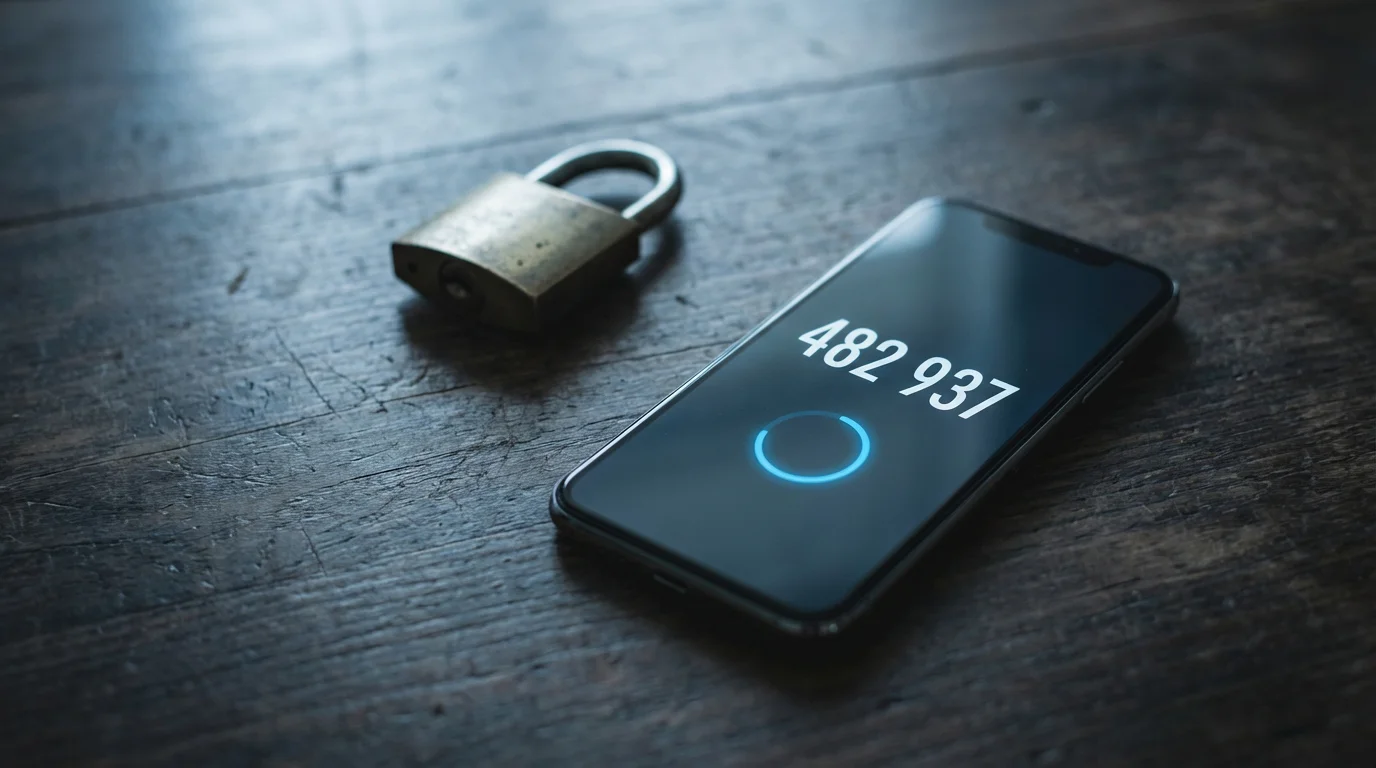
Why 2FA Is Non-Negotiable at Anonymous Platforms
At a UKGC-licensed casino, a compromised account is a recoverable problem. You contact customer support, verify your identity with the same documents you used to register, and the operator restores your access. The identity verification infrastructure that some players find burdensome during signup becomes a safety net when something goes wrong. At a no-KYC casino, that safety net does not exist. The platform does not know your name, does not have your passport on file, and has no mechanism to confirm that the person claiming to be the account holder is actually them. If someone gains access to your account, they can change the email address, withdraw your balance to their own wallet, and leave you with no way to prove the account was yours in the first place.
Two-factor authentication prevents this scenario by adding a second layer of verification to every login and — at well-configured platforms — to every withdrawal. Even if an attacker obtains your username and password through phishing, data breaches, credential stuffing, or any other method, they cannot access your account without the second factor: a time-sensitive code generated by an app on your physical device. Unless they also have your phone in their hands, they are locked out.
The stakes are higher at anonymous casinos because the attack surface is wider and the recovery options are narrower. Password reuse is endemic — most people use the same password across multiple services, and data breaches expose those credentials regularly. At a casino where your account is linked to your verified identity, a compromised password is a serious inconvenience. At a casino where your account is linked to nothing but an email and a crypto wallet, a compromised password is a direct path to losing every penny in your balance. Two-factor authentication is the single most effective countermeasure, and treating it as optional at a no-KYC casino is the security equivalent of leaving your front door unlocked in a neighbourhood where the police do not patrol.
Types of 2FA and How to Set Them Up
The standard form of 2FA at no-KYC casinos is TOTP — Time-based One-Time Password — generated by an authenticator app on your smartphone. Google Authenticator and Authy are the two most widely used apps. Both are free, both work with any casino that supports TOTP-based 2FA, and both generate a new six-digit code every thirty seconds that is valid only for that brief window. The code is derived from a shared secret — a key that the casino provides during setup and that the app stores locally on your device — combined with the current time, which means the same code cannot be used twice.
Setting up TOTP 2FA follows the same process at virtually every platform. Navigate to your account’s security settings, select the option to enable two-factor authentication, and the casino will display a QR code. Open your authenticator app, scan the QR code, and the app will begin generating codes for that account. The casino will then ask you to enter the current code to confirm the setup is working. Once confirmed, every future login and (ideally) every withdrawal will require both your password and the current code from your authenticator app.
The critical difference between Google Authenticator and Authy is backup capability. Google Authenticator historically stored its keys only on the device where it was installed (though Google has since added optional cloud sync). If your phone is lost, stolen, or factory-reset without a backup, your 2FA codes are gone — and with them, access to every account protected by those codes. Authy offers encrypted cloud backup, which means your keys are synced across devices and can be restored on a new phone. For casino use, Authy’s backup functionality provides a meaningful safety margin. A lost phone is stressful enough without also losing access to your gambling accounts and the balances they hold.
SMS-based 2FA — where the verification code is sent to your phone number via text message — is less common at no-KYC casinos because many players do not provide a phone number during registration. Where it is offered, it should be treated as a weaker alternative to TOTP. SIM-swap attacks, where a criminal convinces your mobile carrier to transfer your number to a new SIM card, can intercept SMS codes entirely. TOTP codes are generated locally on your device and are immune to this attack vector.
What to Do If You Lose 2FA Access
Losing access to your 2FA app is a scenario that every player should prepare for before it happens, because once it has happened, the options narrow considerably. The standard recovery mechanism at most no-KYC casinos involves backup codes — a set of one-time-use codes provided during the initial 2FA setup, specifically intended for situations where the authenticator app is unavailable. If the casino offered backup codes and you saved them, you can use one to log in and then reconfigure 2FA with your new device.
If you did not save the backup codes — and a regrettable number of players do not — the recovery process depends entirely on the casino’s customer support. At a platform with responsive support and reasonable security procedures, you may be able to regain access by verifying your identity through alternative means: confirming the email address on the account, providing details of recent transactions, or identifying the wallet address associated with the account. Some casinos require a waiting period before disabling 2FA on a locked account, as a security measure against social engineering attacks where someone impersonates the account holder.
At less cooperative platforms, or at casinos with minimal customer support infrastructure, a lost 2FA can mean permanent loss of access to the account and its balance. This is the harshest consequence of the anonymity model: without verified identity documents on file, the casino has no reliable way to confirm that the person requesting 2FA removal is the legitimate account holder rather than an attacker trying to gain access. Some platforms resolve this by asking for a deposit from the wallet address on record — a transaction that only the account holder could initiate — but this approach is not universal.
The prevention is straightforward and far easier than any cure. Save your backup codes in a secure physical location — the same approach you would use for a crypto wallet seed phrase. If using Google Authenticator, screenshot the QR code during setup and store it securely (recognising that a digital copy introduces its own risks). If using Authy, enable the encrypted backup feature and remember the backup password. These are two-minute precautions that protect against a problem that can otherwise cost you access to real money.
One Extra Step, One Fewer Nightmare
Enabling 2FA adds approximately three seconds to every login: the time it takes to open your authenticator app, read the code, and type it into the casino’s login field. That is the entire cost. Three seconds, repeated however many times you log in per week. The benefit is comprehensive protection against the most common form of account compromise in online gambling — credential theft — which at a no-KYC casino is functionally irreversible because the platform cannot verify your identity to restore access.
The players who lose money to account compromise at anonymous casinos share a common profile: they used a weak or reused password, they did not enable 2FA, and they discovered the problem only when their balance was zero and their withdrawal address had been changed. Every element of this scenario is preventable. A unique, strong password eliminates credential stuffing. 2FA eliminates the risk from password leaks. Saved backup codes eliminate the risk of being locked out by your own security measures. The entire chain of protection takes ten minutes to establish and costs nothing.
At a no-KYC casino, you are your own security department. There is no fraud team monitoring for suspicious logins. There is no identity-based account recovery process. There is no regulator requiring the operator to implement minimum security standards on your behalf. The tools to protect your account exist — 2FA being the most important among them — but using them is your responsibility. The casino will offer the feature. Whether you enable it is up to you. And if you choose not to, the consequences of that choice are also entirely yours.