Privacy Coins for Casino Gambling — Monero, Zcash & More
Best Non GamStop Casino UK 2026
Loading...
What Privacy Coins Are and How They Differ from Bitcoin
Bitcoin is pseudonymous, not anonymous. Every Bitcoin transaction is recorded on a public blockchain that anyone can inspect. Your wallet address does not display your name, but the entire history of transactions to and from that address is visible to the world — every deposit to a casino, every withdrawal, every transfer between your own wallets. Blockchain analytics firms have built an industry around connecting these pseudonymous addresses to real-world identities, and they are remarkably effective at it. For a player who values privacy, Bitcoin provides convenience but not confidentiality.
Privacy coins are cryptocurrencies designed to solve this specific limitation. They use cryptographic techniques to obscure transaction details — the sender, the receiver, the amount, or some combination of all three — so that even someone with full access to the blockchain cannot determine who sent what to whom. The transactions are still recorded and validated by the network, but the information they contain is encrypted or obfuscated in ways that make tracing impractical or impossible.
The technology varies between different privacy coins, but the objective is consistent: to make cryptocurrency transactions as private as a cash payment. When you hand someone a twenty-pound note, there is no public ledger recording the transfer. No analytics firm can trace the note’s history of previous holders. The transaction is between the two parties involved and no one else. Privacy coins aim to replicate this quality in a digital context, and for casino gambling — an activity where many people prefer not to leave a traceable financial record — the appeal is self-evident.
The distinction between Bitcoin’s pseudonymity and a privacy coin’s anonymity is not academic. A Bitcoin deposit to a no-KYC casino creates a permanent, public link between your wallet and a known gambling address. A privacy coin deposit, by design, does not. For players who want the strongest possible separation between their financial identity and their gambling activity, this difference is the reason privacy coins exist.
Monero, Zcash and the Anonymity Spectrum
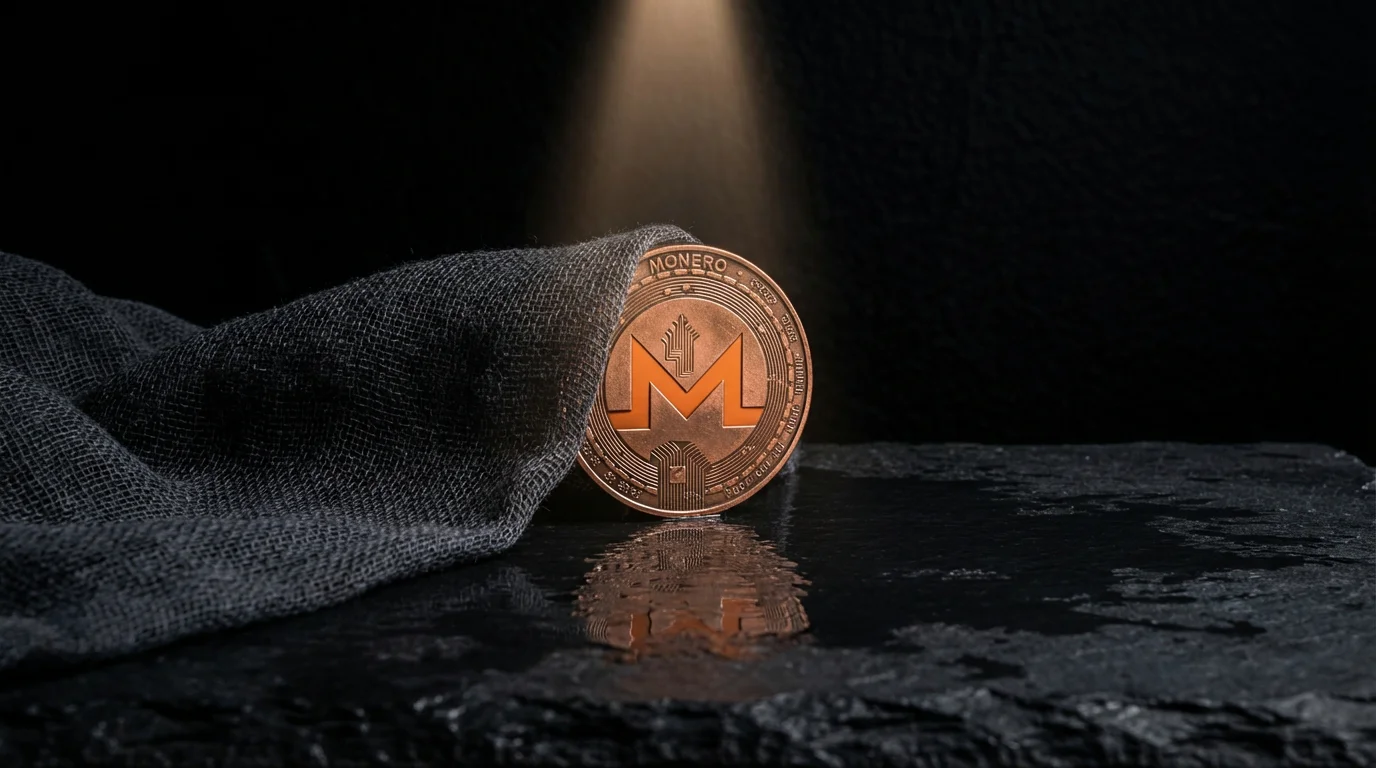
Monero (XMR) is the most widely recognised privacy coin and the one most commonly accepted at no-KYC casinos. Its privacy model is mandatory — every transaction on the Monero network is private by default. There is no option to make a transparent transaction. The technology uses three complementary mechanisms: ring signatures, which mix the sender’s transaction with several others to obscure its origin; stealth addresses, which generate a unique one-time address for every transaction so the recipient’s public address never appears on the blockchain; and RingCT (Ring Confidential Transactions), which hides the transaction amount. Together, these features make Monero transactions effectively untraceable. Not theoretically untraceable in the way that a Bitcoin tumbler makes tracing harder — practically untraceable, to the point where even well-funded analytics operations have acknowledged difficulty in reliably deanonymising Monero transactions.
Zcash (ZEC) takes a different approach. It uses a cryptographic technique called zero-knowledge proofs — specifically, zk-SNARKs — to allow the network to verify that a transaction is valid without revealing any of the transaction’s details. The mathematics behind this are dense, but the outcome is elegant: the blockchain confirms that the sender has sufficient funds and that the transaction follows the network’s rules, without recording who sent what to whom. Unlike Monero, Zcash offers privacy as an option rather than a default. Transactions can be “shielded” (private) or “transparent” (public, like Bitcoin). This dual capability has made Zcash more palatable to regulators but has also diluted its privacy reputation, because the majority of Zcash transactions historically use the transparent mode, reducing the overall anonymity pool.
Other privacy-focused cryptocurrencies exist but have significantly less presence in the casino space. Dash once positioned itself as a privacy coin through its PrivateSend mixing feature, but has since distanced itself from that branding. Firo (formerly Zcoin) and ARRR (Pirate Chain) offer strong privacy features but lack the adoption and liquidity needed for practical casino use. For all intents and purposes, the privacy coin choice at no-KYC casinos comes down to Monero or Zcash, and between the two, Monero’s mandatory privacy model and wider casino acceptance make it the default for players who prioritise anonymity above all else.
Which No KYC Casinos Accept Privacy Coins
Privacy coin acceptance at no-KYC casinos is more limited than Bitcoin or stablecoin acceptance, and the reasons for this are worth understanding. From the casino’s perspective, accepting Monero or Zcash introduces a compliance tension. On one hand, these platforms market themselves on privacy and anonymity — values that align perfectly with privacy coins. On the other hand, their licensing conditions (even the permissive ones from Curaçao) require some level of AML compliance, and accepting a currency specifically designed to resist transaction tracing makes that compliance more difficult. The casino cannot screen incoming Monero deposits against blockchain analytics databases the way it can with Bitcoin, because the transaction data is not visible.
The result is a tiered landscape. The largest and most compliance-conscious no-KYC casinos tend to accept Bitcoin, Ethereum, Litecoin, and stablecoins but exclude privacy coins, reasoning that the AML risk outweighs the user demand. Mid-tier platforms often accept Monero alongside their standard crypto options, treating it as one payment method among many without special prominence. A smaller number of platforms position themselves explicitly as privacy-focused and make Monero acceptance a central part of their identity, sometimes accepting XMR exclusively or offering reduced fees for privacy coin deposits.
For players seeking privacy coin casinos, the search is straightforward but requires verification. Look for platforms that list Monero or Zcash on their payment pages — not in a marketing blog post, but in the actual deposit interface where you can generate a receiving address. Confirm that the listed wallet address is functional by cross-referencing it against the relevant blockchain explorer (bearing in mind that Monero’s privacy features mean you will not see transaction details, but you can verify that the address format is valid). And apply the same due diligence you would to any no-KYC casino: check the licensing, search for player reviews, and test with a small deposit before committing significant funds.
One practical consideration: if you deposit with Monero and the casino converts your deposit to an internal balance denominated in USD or BTC, the privacy advantage of the deposit is partially preserved — the casino does not know where the funds came from — but the internal records still track your play and withdrawal history. True end-to-end privacy would require depositing in Monero and withdrawing in Monero, keeping the entire transaction cycle within the privacy coin ecosystem. If the casino converts your deposit and then pays your withdrawal in a transparent cryptocurrency, the outbound transaction is publicly visible even though the inbound one was not.
Maximum Privacy — Maximum Responsibility
Privacy coins represent the furthest point on the anonymity spectrum that is practically available to no-KYC casino players. A Monero deposit to an anonymous casino, from a self-custodial wallet, made over a VPN, represents a level of financial privacy that is difficult to achieve through any other means. For players who have a legitimate and considered reason to want that level of privacy — and there are many such reasons, from data protection concerns to a principled belief in financial autonomy — privacy coins deliver on their promise.
The responsibility that accompanies this privacy is proportional to its strength. With Monero, there is no blockchain trail to help you recover stolen funds. There is no transparent transaction history that a support team can reference if a dispute arises. If you send XMR to the wrong address, the funds are gone — and because the transaction is untraceable, there is no way to prove where they went. The finality that makes privacy coins private also makes them unforgiving of mistakes.
The regulatory landscape for privacy coins is also shifting in a direction that players should monitor. Several major exchanges have delisted Monero and Zcash in recent years, citing regulatory pressure around AML compliance. If this trend continues, the on-ramps for acquiring privacy coins may become fewer and less convenient, and the number of casinos willing to accept them may contract rather than grow. This does not mean privacy coins will disappear — the technology is decentralised and cannot be shut down by any single authority — but the practical ease of using them for casino gambling could diminish over time.
For the player evaluating whether privacy coins are worth the additional complexity, the question comes down to how much privacy you actually need. If your primary concern is avoiding document uploads and enjoying fast crypto transactions, Bitcoin or stablecoins at a standard no-KYC casino provide ample privacy for that purpose. If your concern extends to ensuring that your gambling transactions are untraceable on the blockchain, privacy coins are the only option that addresses it. The choice is personal, and it should be made with full awareness of what the extra privacy costs in terms of platform availability, transaction flexibility, and the irreversibility of any mistake.