
Online Casino Games for Real Cash in the UK
 Available in GB
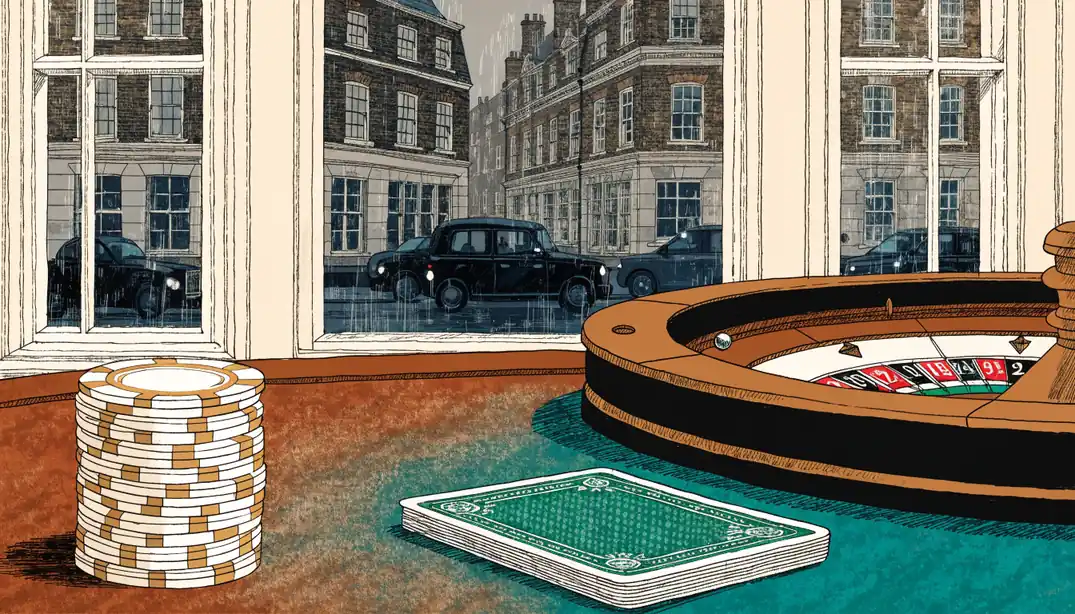
A practical guide to licensing, payout claims, mobile rules, bonus conditions and withdrawals for UK real-money casino games.
Real-money games start with a licensed operator
When I see “real cash” attached to an online casino game, I read it literally. You are not just testing a demo, collecting points or playing with money that exists only inside the game. You are using an account connected to actual funds, and any result is meant to affect that balance.
That makes the operator more important than the wording used on the game page. Before looking at reels, tables or advertised prizes, I want to know whether the business is allowed to offer remote gambling where I live. For customers in England, Scotland and Wales, the relevant authority is the UK Gambling Commission.
Operators offering real-money gambling to customers in those three countries must hold the appropriate UK Gambling Commission licence. The same requirement applies to remote operators serving consumers in Great Britain. It does not depend on whether the company’s offices, servers or other equipment are located in Britain. Selling online casino play into the British market is what matters.
That is the starting line.
What real-money play means in practice
A real-money casino account lets you put funds into gambling activity rather than keeping everything in a no-cost version of a game. You might describe that as playing casino games for real cash, but the important point is not the phrase. It is the operator’s responsibility for offering the service lawfully to the market.
The licence requirement applies across the usual online casino format: a website or app where customers can access casino games remotely. If the operator is serving people in England, Scotland or Wales, it needs the relevant UKGC authorisation for that activity.
I used to treat the game itself as the main decision. If the screen looked polished and the lobby appeared busy, I assumed the rest would take care of itself. That was backwards. The software may be the part you notice first, but the operator is the party handling your account and offering the gambling service. The legal permission comes before the entertainment.
Not glamorous. Still essential.
Online Casino Tournaments UK: What to Verify
Great Britain is not the whole UK for this rule
There is an easy wording trap here. England, Scotland and Wales are covered by the Gambling Act framework used for Great Britain. Northern Ireland has a separate regulatory arrangement, so the Great Britain licensing position cannot simply be applied there in the same way.
That distinction matters if you use “UK” as a shortcut for every part of the country. A statement about a UKGC licence for a customer in England, Scotland or Wales is addressing the Great Britain market. It should not be stretched into a claim that Northern Ireland follows an identical system.
For the main audience looking for online casino games for real cash in England, Scotland or Wales, the practical rule is straightforward: the operator needs the relevant UK Gambling Commission licence to offer that remote gambling service.
A licence is the first filter, not a winning promise
A current licence does not turn a game into a guaranteed source of income. It does not make a losing spin profitable, and it does not change the underlying chance in a casino game. Real-money play still means that funds can be lost.
What the licence does is establish that the operator belongs in the regulatory framework for the market it is serving. That is a different question from whether you personally like the games, whether a promotion suits you or whether a particular result will occur. I keep those questions separate because advertising often blends them together under phrases such as “real cash payouts” or “games that pay”.
The phrase may describe the possibility of receiving winnings, but it is not evidence that you will win. The operator’s licensing position is a matter of eligibility to provide the service; it is not a forecast of your results.
Before opening a real-cash account
I would make the check in this order:
- Confirm that you are dealing with an operator offering services to the correct part of the UK.
- For England, Scotland or Wales, look for the relevant UK Gambling Commission licensing position.
- Treat “real cash” as a description of the account’s stakes and potential winnings, not as a promise of a return.
- Decide how much money you can afford to put at risk before making a deposit.
That last step is mine, not the operator’s. Promotional language can make a casino game sound like an opportunity rather than gambling. I have fallen for that change in tone before. Calling a game “exciting”, “rewarding” or “high paying” does not alter the basic arrangement: money goes into a gambling account, the outcome is uncertain, and a legal operator must have the proper permission to serve customers in Great Britain.
So if you are looking for casino games with real cash involved, begin with the business providing them. England, Scotland and Wales require the relevant UKGC licence for real-money remote gambling. Everything else comes after that.
Our top casino picks for the UK
- JetsetspinsBonus: 200% Bonus + 100 Free Spins + Free Royal Wheel · Payout speed: 1-3 business days
- SlotoSportBonus: 500% up to £ 10 200+ 777 FS · Payout speed: 1-3 business days
- ChanzeBonus: Slots Welcome Bonus #1 200% up to €500 · Payout speed: 1-3 business days
- Revery PlayBonus: 100% up to€1,000+ 100 FS · Payout speed: 1-3 business days
- SpinFormulaBonus: 550% Up To £15,000 + 550 FS · Payout speed: 1-3 business days
- DieselwinBonus: Welcome Pack 250% up to £4000 + 200 FS · Payout speed: 1-3 business days
What “paying” slots can—and can’t—tell you
I have made the same mistake as plenty of other players: I watched a slot produce a run of losing spins, decided it must be “due”, and carried on playing as if the next result owed me something. It did not. A slot has no memory of my previous spins, and it does not keep a running tab of what I have lost.
A slot has no memory of previous spins. Each result is a separate event and is not influenced by whether a machine is perceived to be ‘due’ to pay.
That matters when you see phrases such as “slots that pay real cash” or “online casino games that pay real cash”. The wording sounds useful, but it can hide a very simple misunderstanding. A slot can award cash when its outcome matches a winning combination. That does not mean it is a machine that has been identified as likely to pay next.
A previous spin does not set up the next one
Each spin is a separate event. The result of the spin before it has no bearing on the result that follows. A win does not make another win more likely, and a losing streak does not make a win more likely either.
That is the bit I used to argue with in my head. After several losses, it felt wrong to stop because I thought the slot had to “give something back”. But that feeling was only me looking for a pattern. The slot was not balancing the account. It was not aware of the earlier results.
Five-Reel Slots in the UK: Features and Play
The same applies after a large win. It is easy to imagine that a good result means the game has become “cold”, or that a small win is a sign that a bigger one is coming. Neither conclusion follows from the previous spin. The next outcome is not improved by what happened before it.
No debt is being repaid.
What “paying” really describes
When people talk about a slot that pays, they may be referring to different things without separating them.
They might mean that a winning combination can produce a cash prize. They might be describing a personal run of results. Or they might be repeating promotional language that makes a game sound more generous than the available information actually shows.
Those meanings are not interchangeable. A slot having paid someone does not establish that it will pay you. A game producing a win during one session does not prove that it is about to produce another. Even a player who has had a positive result cannot use that result to predict the next spin.
This is why I am wary of labels such as “high-paying” when they are presented as if they were a forecast. At most, the phrase may describe past experience or a general claim about the game. It cannot turn an uncertain outcome into an expected one.
DO
- Check the UKGC register for the legal company name.
- Verify the total spin cost including all active paylines.
- Confirm the operator is licensed for Great Britain.
DON’T
- Assume a “high-paying” label is a forecast of results.
- Treat a winning streak as evidence of a pattern.
- Rely solely on marketing terms like “best” or “trusted”.
Every player faces the same next-spin uncertainty
The important point is not that every player will receive the same results. They will not. The point is that previous spins do not give one player an advantage on the next outcome. Every player has an equal chance of winning.
That does not mean every spin has to produce the same type of result, nor does it mean wins and losses will appear in a neat pattern. Random results can look clustered. You can see several losses together, several small wins close to one another, or a bigger prize appearing after a quiet stretch. A cluster can look meaningful when you are watching it unfold, but it does not provide a reliable signal about what comes next.
I have learned to treat a pattern as something I noticed, not something the game promised. That small distinction stops a lot of bad decisions.
Why “due to pay” is the wrong test
The question “which online slots pay real cash?” is understandable, but “due to pay” is not a sound way to judge one. No slot should be presented as certain, or even expected, to pay because it has not paid recently.
A losing sequence does not improve the next spin’s prospects. A recent win does not cancel them out. The outcome remains separate from the history displayed on the screen.
That also means changing your stake because a game feels overdue does not alter the underlying situation. You may put more money into a spin, but the earlier results have not become evidence that a win is approaching. The emotional urge can be strong; the reasoning behind it is not.
Online American Roulette Casinos in the UK: What to Check
The screen can make the sequence feel personal. It is not.
Be careful with “real cash” language
“Real cash” tells you what is at stake, not whether a slot is likely to produce a winning result. The phrase can distinguish real-money play from a demonstration mode or a game played without money, but it says nothing about the timing of a win.
The same caution applies to descriptions of slot machines, casino apps and online slot games. Moving a game onto a phone does not make its outcomes more predictable. Calling a product an app does not turn a past result into a forecast. A cash prize remains a possible outcome, not a promise attached to the next spin.
I now read “paying” as a description that needs unpacking. Is it talking about a past experience, a general promotional impression, or simply the fact that the game can award cash? Until that is clear, the phrase tells me very little.
The practical way to read a claim
When you see a claim about slots that pay, strip it back to what it can actually support:
- A previous win shows that a win occurred previously.
- A previous loss shows that a loss occurred previously.
- A run of either result does not predict the next outcome.
- A label such as “paying” is not proof that a slot is due to pay.
- Real-cash play means the result can affect your money, but it does not make a winning result more likely.
That is less exciting than believing I had found a machine ready to turn around my session. It is also more honest. A slot may pay on the next spin, or it may not. Nothing about the spins already completed settles that question.
Check the licence, not just the casino’s claims
A casino can call itself “trusted”, “secure” or “one of the best” without that wording proving anything. When I’m checking a real-cash online casino, I start with the regulator’s record rather than the banner on the homepage. Marketing describes the operator. The register shows whether the business has the relevant permission.
For customers in England, Scotland and Wales, the key authority is the UK Gambling Commission. It is the sole regulator for commercial gambling in Great Britain, including remote gambling offered online. That responsibility applies even when the operator’s main equipment, company offices or other technical infrastructure are located elsewhere. Where the service is aimed at consumers in Great Britain, the regulatory question is still relevant to the British market.
Essential Check
An operating licence is a matter of eligibility to provide a service, not a guarantee of winning.
That matters when you are looking for online casinos that pay real cash or real-cash slots online. A payment claim is not a substitute for an operating licence. The Commission issues operating licences to businesses, while personal licences apply to individuals who carry out specified roles in the industry. For a player, the business licence is the important starting point: does the operator behind the site appear in the official record, and does the entry cover the activity being offered?
I used to treat a licence badge as the answer. It is not. A badge can be old, misleading or disconnected from the exact brand you are visiting. Open the regulator’s register independently, search the legal company name as well as the trading name, and compare the details with the casino’s stated domain. Small mismatches deserve attention. So does a result that belongs to a different company.
What the register can show
The register is not a ranking of the best online casinos that pay real cash. It does not tell you which slot you will enjoy, whether a withdrawal will suit your circumstances or whether a promotional offer is worthwhile. Its job is narrower: it records the regulatory position of businesses operating in the relevant market.
Live Dream Catcher Casino in the UK: What to Check
A register entry can identify the licence holder and show the status of an operating licence. For instance, the UK Gambling Commission register dated 26 September 2026 lists Grace Media (Gibraltar) Limited under account 57869. Its entry shows Remote Casino licence 057869-R-334655-009 as Active and Current. That is a regulatory record about the named company; it is not an endorsement of every casino brand, game or offer connected with it.
LuckyPays needs a more careful description. A specialist affiliate review reported that the UK Gambling Commission register dated 26 September 2026 did not identify LuckyPays under that brand or its stated domain, including luckypays.io. Treat that as a dated finding to verify, not as a permanent description of the market. Operator names, ownership details and licensing records can change. I would repeat the search directly in the Commission’s database before depositing, rather than relying on that review or on the site’s own wording.
The distinction is important because “not found under this search” and “definitely unlicensed in every possible form” are not automatically the same sentence. Search variations can matter: the brand may differ from the legal entity, and a domain may not be the name attached to the licence. That is why I check several identifiers and read the result rather than stopping at a single search.
Attention Northern Ireland operates under a separate regulatory arrangement from the UK Gambling Commission framework used in Great Britain.
Great Britain is not Northern Ireland
The Great Britain framework covers England, Scotland and Wales. Northern Ireland has a separate regulatory arrangement, so the same UK Gambling Commission licence position does not apply there in the same way. A statement about a Great Britain licence should not be presented as a complete answer for someone located in Northern Ireland.
That geographic detail is easy to miss when a site uses “UK” in its advertising. Before considering real cash casino slots or other online play, establish which part of the country the service is addressing and which regulator’s framework applies. A familiar logo, a polished website and confident language are all secondary.
The register is the boring step. It is also the useful one.
Payout talk is not a promise of a win
When people talk about real cash payout slots, they often focus on the size of a possible prize and skip the part that controls what each spin costs: the paylines. I made that mistake myself. I saw a slot showing several winning lines, assumed activating all of them was the sensible option, and only later noticed how quickly the total stake was adding up.
A payline is a route across the reels. A winning combination has to land along one of the lines that is active for that spin. Depending on the game, lines may run straight across, zigzag, or follow another displayed pattern. The important point is simple: an inactive line cannot produce a win for that spin.
Online Bingo UK: Rules, Slots and Real-Money Play
Activating more paylines gives you more possible routes for a winning combination. That increases the chance of hitting one, because more lines are being checked when the reels stop. It does not turn a losing result into a guaranteed payout, and it does not make a slot a dependable way to win real cash online.
The cost rises with the lines
The stake shown beside the spin button is the figure to watch. If the game charges the same amount per line, adding lines increases the total cost of each spin. A larger number of active paylines can therefore mean more chances of a winning combination, but every result is also being played for more money.
That trade-off is easy to miss when a game presents the extra lines as an upgrade. The display may highlight the potential for more combinations, while the total stake sits in a less noticeable corner. Before playing real cash payout slots online, I check both figures: how many lines are active and what the complete spin costs.
It is also worth separating the number of paylines from the value of a prize. More active lines do not automatically mean that every win is larger. The payout depends on the combination and the game’s paytable, while the line setting determines which routes are included in the spin. Read the paytable rather than treating a bright “big win” message as information.
Understanding Paylines
A payline is a specific route across the reels. A winning combination must land along an active line to produce a prize. Activating more lines increases the number of checked routes but also increases the total stake required for the spin.
A setting, not a winning strategy
There is no special line setting that can promise a winning slot result. Choosing fewer lines keeps the cost of a spin lower, but it also leaves fewer routes active. Choosing more lines raises the cost while giving more combinations a chance to land on an active route. Neither choice removes the uncertainty of the result.
That matters when a page describes a game as a “real cash winning slot”. The phrase says more about promotion than about what your next spin will do. Even a slot advertised as a real cash payout casino favourite still uses the same basic trade-off between coverage and cost.
My practical rule is not exciting: open the paytable, set the lines deliberately, and look at the full stake before pressing spin. If the amount feels too high for repeated play, reduce the setting or leave the game alone. More lines can change the chance of a winning combination. They cannot promise that the next spin will pay.
“Best” casino claims need checking
“Best” is a marketing label, not a finding. I have learned that the awkward way: a page can put best real cash casino in a large heading while giving you no clear reason to believe the operator is suitable for your real-money play. The wording may describe an advertising position rather than anything independently tested.
The same applies to phrases such as “top real cash online casinos”, “legal real cash casinos” or “best mobile casino”. They sound reassuring because they compress several separate questions into one neat answer. Who runs the site? Which business accepts your deposit? Does the claimed brand match the domain you are visiting? Is the regulatory position current? What happens when the marketing page and the operator’s own details do not line up?
Mines Casino Game in the UK: Demo Limits
Those questions matter more than the label. A casino may look polished on a phone, offer a wide choice of games and describe itself as a real cash casino online. None of that, by itself, establishes that it is the right place for you to play. “Best” tells you what somebody wants you to think. It does not show how the conclusion was reached.
I also would not treat a review badge as a substitute for checking the underlying operator. A ranking may be built around commercial relationships, editorial preferences or information that changes after publication. That does not automatically make the page useless, but it does mean you should separate its opinion from the status of the business being promoted.
LuckyPays gives a useful example of why this step cannot be skipped. A specialist affiliate review discussed the brand, but the UK Gambling Commission register checked on 26 September 2026 did not return LuckyPays under that name or the stated luckypays.io domain. That is a register result tied to a particular date, not a permanent verdict about how the brand may present itself later. Still, it is a reason to stop before depositing and reconcile the advertising claim with the official record.
I would write down the exact brand and web address shown at registration, then compare those details with the regulator’s entry rather than searching only for a familiar slogan. If the names do not match, do not fill the gap with assumptions. A “UK licensed real cash casino” claim needs to correspond to the operator you are actually dealing with, not merely to a loosely connected company or review page.
The same test applies whether you are looking on a desktop, Android device or mobile browser. A mobile layout can make a promotional claim easier to follow, but it cannot make an unclear claim more reliable. Convenient presentation is not evidence.
Mobile play often removes the enforced 2.5-second delay between spins, which can change the rhythm of your session but does not affect the underlying odds.
So when a page calls itself one of the best real cash online casinos UK players can use, I treat that as the beginning of checking, not the result. Marketing first. Evidence afterwards.
What a real-cash slot machine changes—and what it doesn’t
A real-cash slot machine changes one obvious thing: the figures on the screen represent money that belongs to you. A spin is no longer just a free demonstration or a play-money round. You choose a stake, press the button, and the result can add to or subtract from your balance.
That makes the size of each stake worth checking before you play. In Britain, online slot stakes have age-based limits. Customers aged 25 and over can stake no more than £5 per game cycle. Players aged 18 to 24 have a lower maximum of £2 per game cycle. A specialist review reports this split, but I would still check the operator’s own displayed terms before depositing because rules and platform settings can change.
The same limits apply whether you are using a desktop site, a phone or a casino app. Calling something a real-cash slot app does not remove the stake restriction. Nor does a game being presented as a way to win real cash allow the operator to set a higher amount. The format changes; the maximum stake does not.
There is also a practical difference between seeing a stake limit and understanding what it means. The limit is a ceiling, not a recommended amount. You do not have to play at £5, or at £2, simply because the game permits it. I have made the mistake of treating the available maximum as a normal setting. It is not. A smaller stake still gives you access to the same basic game, while keeping each individual spin from taking the largest permitted amount.
European Roulette Casinos in the UK: How to Choose
What the limit does not change is the nature of the result. Playing a slot for real cash does not make a winning combination more likely, and it does not turn a losing sequence into a recovery opportunity. The stake changes the amount at risk on that spin; it does not give you control over the outcome.
This is where promotional wording can blur the issue. “Win real cash” describes the possibility of a cash balance changing after play, not a promise that the machine will produce a profit. “Best real-cash slot apps” is also a label, not evidence that an app suits your budget or that its games will pay you. I look first at the stake shown before confirming a spin, then at whether that amount is one I am genuinely comfortable losing.
For iPhone casino play, the same question applies: what is the cost of one game cycle? The device is irrelevant to the basic money decision. Real-cash play means keeping track of the stake, rather than focusing only on the prize displayed on the screen.
That is the part I now check first. Not the banner.
Mobile slots: check the rules before you play
Playing on a phone does not turn a slot into a different kind of game. The important change is more basic: the enforced 2.5-second delay between spins is gone, according to a specialist review. You may therefore find that the game lets you start the next spin without that mandatory pause.
Bonus Terms Checklist
- Check if you qualify as a new customer
- Verify which payment methods are eligible
- Note the wagering requirements multiplier
- Confirm the expiry date of the bonus funds
- Check for any cash-out ceilings on winnings
That sounds minor until you have played on a small screen. A forced wait used to interrupt the rhythm of the game; without it, the buttons can feel more immediate. That is all the change establishes, though. It does not tell you that a particular mobile slot is better, more reliable or more likely to produce a win.
No magic in the handset.
I have made this mistake myself: I saw “mobile casino” and assumed the label meant a carefully selected app, smoother performance and a better way to play. It can simply mean that a website opens in your phone’s browser. The phrase says nothing by itself about the games available, how they behave on your device or whether an individual product deserves to be called the best real-cash mobile slot.
So treat claims about a “best” mobile casino or a standout real-cash slot with some suspicion. A proper comparison would need identifiable products and evidence about their mobile performance. Without that, a list of supposedly top apps would be decoration rather than useful guidance.
The removal of the delay also makes your own pace more important. When each spin can follow the previous one immediately, it is easier to lose track of how quickly you are playing. I know that feeling: the screen is quiet, the buttons are convenient, and a short session stretches before you notice. The phone has not improved the odds; it has only removed one interruption.
Crazy Time Live Casino in the UK: What to Check
Before opening a mobile casino, check what you are actually being offered. Is it a browser-based game or a dedicated app? Does the game load properly on your device? Can you see the stake and result clearly before starting another spin? Those are practical checks, not evidence that one product is the best.
The one confirmed rule change is the disappearance of the enforced 2.5-second spin delay. It should not be stretched into a claim about faster wins, superior mobile games or a “best real cash casino app”. For now, the sensible conclusion is narrower: mobile play may feel less interrupted, while the quality of any specific game still needs separate checking.
No-deposit bonuses come with conditions
A “no-deposit” or “real cash” welcome bonus can sound like free money, but the important part is usually in the terms. Before accepting an offer, I would check who qualifies, which payment methods count, how long the promotion lasts, what wagering requirements apply and whether a cash-out ceiling affects any winnings.
Eligibility is rarely universal. A specialist review describes welcome deals as being restricted to new customers, with one offer allowed per household. It also notes that some payment methods, including e-wallets, may be excluded. That means opening an account is not enough by itself: the promotion may depend on how you fund it, or whether somebody at your address has already claimed the same deal.
Expiry is another easy detail to miss. The same type of review places bonus funds and free spins within a stated validity period of 7 to 30 days. Once that period ends, unused promotional value may disappear. I have learned to look for the expiry rule before starting the bonus, not after spending time trying to unlock it.
Final Summary
- Always verify the operator’s licence via the official UKGC register.
- Treat “real cash” as a description of stakes, not a promise of returns.
- Respect age-based stake limits (£5 for 25+, £2 for 18-24).
- Read the full terms and conditions of any bonus before playing.
Wagering requirements change the arithmetic. A £10 bonus with a 20x requirement would mean £10 × 20 = £200 in required stakes before a withdrawal could be requested under that example. However, a 20x requirement would exceed the applicable British maximum for wagering requirements, so it should not be treated as an acceptable current offer for this market. The calculation is still useful: the multiplier applies to the stated bonus amount, not to the amount you hope to withdraw.
Game contribution can also matter. A specialist review says slots may count in full towards the requirement, while live tables and blackjack can count for less or not count at all. Finally, free-spin promotions may cap the amount that can be withdrawn from resulting wins. “Win real cash” therefore needs a second look: the cash-out rule may limit the result even when the spins produce a profit.
Depositing and getting your money back
When I look at real-money casino play, I separate two jobs: putting funds in and getting an approved withdrawal out. They are not always handled at the same speed. A deposit can appear quickly while a cash-out still waits for account checks or operator processing.
For a first deposit, use a payment method in your own name and keep the confirmation. Before playing real cash slots, I would also set a deposit limit that fits what I can afford to lose. Credit cards are not accepted for gambling, and using an e-wallet funded by a credit card does not get around that restriction. Simple rule.
The method matters when you want your money back. A specialist review identifies PayPal, open banking services and debit cards connected to fast payout systems as generally the quickest options for withdrawals. That is a comparison point, not a promise: the casino still has to approve the request, and the payment provider can add its own processing stage.
I made the mistake of treating a familiar logo as proof that a cash-out would be instant. It is not. Read the cashier page before depositing and check whether the same method supports withdrawals, whether the account must be verified first, and whether any fees are shown. Do not assume that a method available for deposits will be available for collecting winnings.
Three-Reel Slots in the UK: How They Play
This matters even when you are looking for a real-cash casino with no deposit. “No deposit” describes an offer, not a special withdrawal route. Any funds you receive still need to follow the operator’s payment and account procedures. Keep records of deposits, withdrawals and confirmations so that a missing payment is easier to trace through the operator’s complaints process.
Rated slots still have age-based stake limits
I understand why you might look for highly rated slots that offer real-cash prizes. A label such as “top-rated” sounds like a shortcut: pick the strongest-looking game, play for cash and let the reels do the rest. I have made that mistake myself. A rating is only a label, though; it does not change the stake rules that apply to online slots.
For real-money play in Britain, the maximum stake depends on the player’s age. Customers aged 25 and over can stake no more than £5 per online slot game cycle. Customers aged 18 to 24 face a lower maximum of £2 per game cycle.
That matters when you compare games or set up a session. The limit applies to the cycle itself, not just to the amount you happen to win. Choosing a highly rated title does not allow a larger stake, and looking for a slot that “pays real cash” does not remove the age-based restriction.
The same point applies to searches for free slots with cash prizes. “Free” may describe how you enter or play a promotion, but it is not a reason to assume that every feature, prize condition or stake setting works the same way as ordinary play. Read the terms attached to the offer before treating any winnings as withdrawable cash.
I would therefore check two separate things: whether the game is being played for real cash, and which age bracket applies to the account. The rating comes after that.
Small detail. Big difference.
How can you check whether an online casino is licensed in the UK?
For England, Scotland or Wales, check the UK Gambling Commission register for the operator and its relevant licence. Northern Ireland has a separate regulatory framework.
Which payment methods are generally quickest for withdrawals?
PayPal, open banking services and debit cards linked to fast payout systems are generally among the quickest options.
What is a wagering requirement?
It is the amount you must wager before you can cash out bonus winnings. For example, a £10 bonus with a 20x requirement means you must wager £200.
Which payment types are listed?
The listed payment types are PayPal, open banking services and debit cards linked to fast payout systems.