
Safe Online Casinos in the UK: Licence Checks
 Available in GB
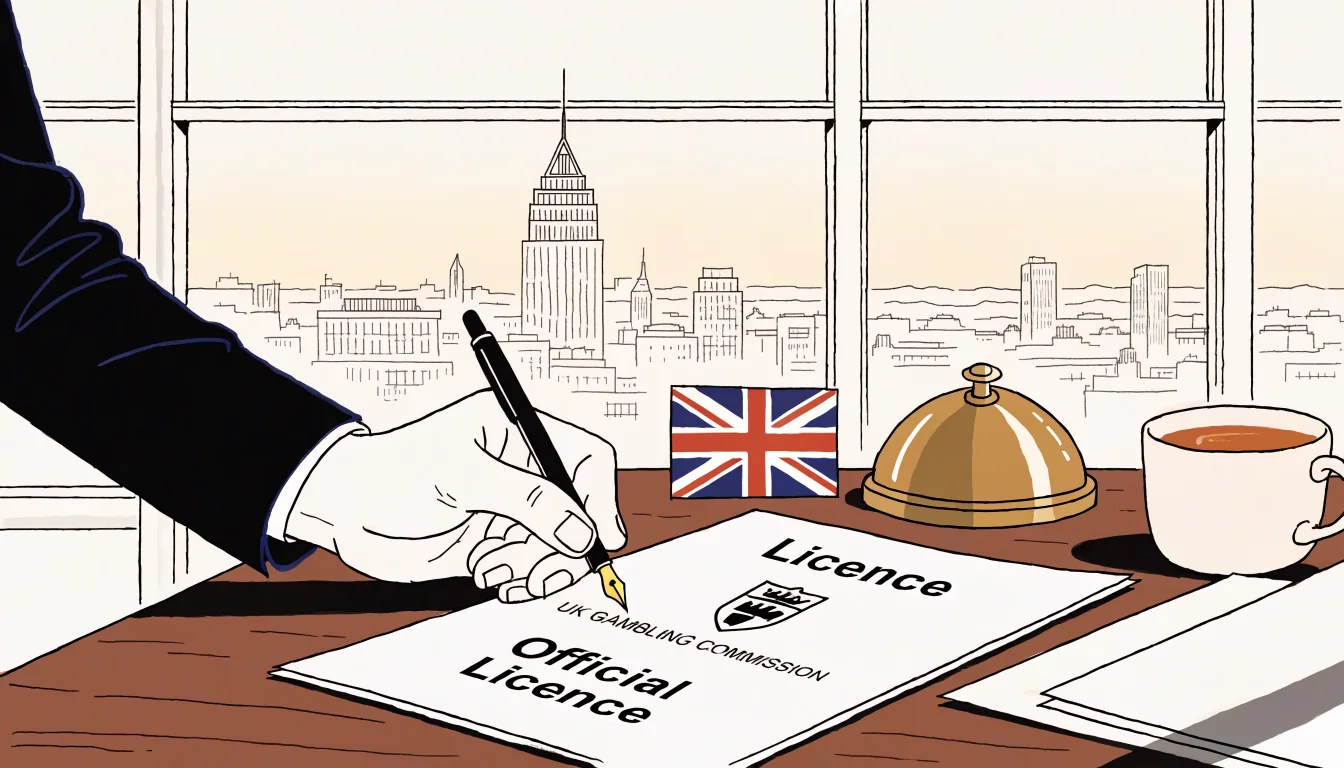
A practical look at UKGC oversight, operator checks, verification, payment routes, bonus terms and tools for managing play.
Start With the Licence, Not the Badge
When I check a casino that accepts players in Great Britain, I start with the UKGC licence. Not the welcome banner, not the “trusted” badge beside the logo, and not a row of familiar payment symbols. Those can all be placed on a page. The licence is the part that can be checked independently.
The UK Gambling Commission regulates operators serving British players. A casino must hold a UKGC licence to operate legally for UK players. That makes the licence the baseline for anyone looking for safe UK online casinos, rather than a decorative sign that a website has chosen for itself.
I learned this the slightly annoying way. A site can look polished while giving you very little useful information about the business behind it. The page may say “licensed” in large type, but that statement is not enough. You need to identify the operator and find the corresponding entry in the Commission’s public register.
What the UKGC licence tells you
A current UKGC licence means the operator is within the British regulatory system. That matters because you are not relying only on the casino’s own description of how it works. The operator has to be identifiable to the regulator, and the licence can be checked against an official record.
Merkur Casino Online UK: Games, Bonuses and Checks
There is also a practical protection that is easy to overlook. UKGC-licensed operators must keep player funds separate from their operating capital. In plain English, money held for customers is not supposed to be treated as the same pot as the company’s everyday business funds. That does not turn gambling into a risk-free activity, but it is a meaningful difference when judging licensed online casinos in the UK.
I would not stretch this into a promise that every licensed site will handle every situation perfectly. A licence is a starting point, not a guarantee of your personal result. Still, without it, a casino serving British players is missing the basic legal foundation required in this market.
How I check the register
I use the UK Gambling Commission’s official public register rather than trusting a badge supplied by the casino. The process is simple, but it rewards patience:
- Find the operator’s licence information on the casino website.
- Note the licence number, trading name and legal business name.
- Open the Commission’s public register through the official regulator link.
- Search for the operator and compare the details shown there.
- Check the exact website domain associated with the entry.
- Make sure the licence is current and relates to the service you are actually using.
The comparison matters. A casino may display a genuine company name while sending you to a different domain. Another site might use a brand name that does not match the legal business listed by the regulator. Those details are not minor wording differences when money is involved.
I look for three things to line up: the exact domain, the trading name and the legal business. If one of them does not match the register, I stop and investigate instead of assuming that the badge covers the whole operation. A licence belonging to one business does not automatically validate another website using similar branding.
There should also be a working link to the regulator’s official registry beside the licence information. I treat a dead link, a vague reference to regulation or a licence number that cannot be found as a reason not to proceed. “Official-looking” is not the same as verifiable.
Why the badge comes second
Badges are useful only if they lead you back to something you can confirm. On their own, they are marketing. The same goes for phrases such as “safe casino”, “secure operator” or “trusted UK site”. They describe an impression, not an established fact.
When I was less careful, I read those labels as if they had already done the checking for me. They had not. A casino can write reassuring copy about security while leaving the actual operator difficult to identify. That is precisely when I want less copy and more evidence.
For someone comparing safe casino sites in the UK, the first filter is therefore not the size of the bonus or the appearance of the homepage. It is whether the business serving you can be matched to a current UKGC licence entry. That applies whether you are comparing familiar names, newer UK safe casino sites or a page recommended by someone else.
DO
- Verify the operator’s licence via the UKGC public register
- Ensure the domain, trading name, and legal business name match exactly
- Use the official regulator link provided near the licence info
DON’T
- Trust a decorative badge without independent verification
- Assume a brand name automatically validates a website
- Proceed if there is a mismatch between the domain and the register
If the entry is clear and the website details match, you have established the legal starting point. If you cannot find the operator, or the register details do not correspond to the site in front of you, do not assume the difference is harmless. I would not deposit while that basic identity check remains unresolved.
One final point: this page may receive a commission if you register with a partner casino through one of its links. That does not replace your own check. I would still open the regulator’s register and compare the details myself before treating any operator as one of the safer online casinos for British players.
Start with the record, then judge the presentation. That order has saved me trouble.
What “Safe” Needs to Mean in 2026
“Safe” is one of those casino words that looks useful until you ask what it actually proves. A shield icon, a polished homepage and a statement saying “fully protected” can all be put on a page without showing who is legally responsible for the gambling service. I have trusted presentation before. It was a poor shortcut.
For a safe online casino in the UK, the starting point is a current UKGC licence that can be checked independently. Do not treat the logo in the footer as evidence by itself. Open the UK Gambling Commission’s public register, find the operator’s licence entry and cross-reference the licence number. That extra step matters because a site can display a generic licence claim without making clear which business holds it.
Match the site to the register
The details need to line up, not merely resemble one another. Compare all three of these points:
- the exact website domain you are visiting;
- the trading name shown on the casino site;
- the legal business named in the UKGC register.
A reliable online casino should also provide a working link to the regulator’s official registry next to its licence information. Follow it rather than assuming the link leads to the right record. If the register identifies one domain but you have landed on another, stop before creating an account or depositing. A similar brand name is not enough.
This is where many “safe casino UK” claims become less convincing. The wording may refer to a group, a software provider or a company somewhere in the site’s terms, while the actual gambling domain is left unclear. The important question is not whether the page looks established. It is whether the precise service in front of you can be tied to the licensed legal business.
I also check the spelling carefully. A small difference in the domain, a redirected address or a trading name that does not appear in the record can change what you are dealing with. The register is the useful reference because it identifies the operator, rather than repeating the operator’s own description of itself.
Age checks are part of safety
A licensed platform must verify your age before allowing you to deposit funds into a gambling account. Age verification is also required before you can access gambling-related content, including free demos. That can feel stricter than expected when no money is involved, but it is still part of the controlled experience.
A licensed platform must verify your age before you can access gambling-related content, including free demos.
So, if a casino lets anyone move straight into gambling content without an age check, I would not describe that as a harmless convenience. It suggests the site is not applying the standard expected of a licensed operator. A proper check is not a decorative warning on the homepage; it is a control applied before access.
The same principle applies on mobile. A site being presented as a “safe mobile casino UK” option does not create a separate safety category. The domain, trading name, legal business and licence still need to match when the page is opened on a phone. A mobile layout can hide footer details more effectively than a desktop page, so I make a point of opening the account, terms or licence information and checking the operator identity there.
Safety can include financial scrutiny
UKGC-licensed platforms can also apply enhanced affordability checks. These checks are triggered at spend thresholds that are not disclosed in advance, and customers who meet the relevant criteria may be asked to provide income verification.
That request is not automatically a sign that something has gone wrong. It is part of the operator’s regulatory controls. The sensible response is to read what is being requested and use the operator’s stated process rather than trying to work around it. A site calling itself secure or reliable does not get to skip these responsibilities.
This is also a useful distinction between a verifiable operator and a site that simply borrows the language of safety. The former can be checked against an external record and has identifiable controls. The latter may offer reassuring phrases while leaving the legal business, domain relationship or age process vague.
Trustworthy Online Casinos in the UK: What to Check
I have learned to separate appearance from evidence: a badge is presentation; a matching register entry is verification. That is the test I would use before depositing at any safe real-money casino, whether I am looking at it on a laptop or a phone.
One commercial note: Nokyccasinos-uk may receive a commission if you register with a partner casino through this article. That does not replace the checks above. If the operator cannot be tied to an identifiable UKGC licence entry, do not assume that GamStop self-exclusion protection, UKGC-regulated alternative dispute resolution or UK-specific consumer-funds protections apply. The reassuring label is not the protection.
When a Casino Site Is Outside UKGC Oversight
An offshore licence can make a casino look official without placing it inside the British regulatory system. That distinction matters. A licence issued elsewhere may show that an operator has been assessed by a foreign regulator, but it does not give you the same level of player protection associated with a UKGC licence or a Malta Gaming Authority licence.
That is why I would not treat a foreign badge as an alternative version of a UKGC licence. It answers a narrower question: whether another jurisdiction has authorised the operator. It does not establish that the site follows the protections expected of a casino serving players in Great Britain.
What changes outside the UKGC system?
The most important difference is the lack of UK-specific oversight. A non-GamStop casino operates beyond the UKGC framework, so you cannot assume that the controls familiar from licensed British operators will apply in the same way. The site may describe itself as secure, trusted or “safe”, but those words are marketing until the responsible regulator and the legal business behind the site can be identified.
Offshore Risk
Offshore-licensed operators are not required to join systems like GamStop, meaning your self-exclusion may not be recognised.
GamStop is a particularly clear example. Offshore-licensed operators are not required to join systems such as GamStop. As a result, someone who has registered with GamStop should not assume that a non-GamStop casino will recognise or enforce that self-exclusion. The absence of a matching UKGC licence entry is therefore not a minor administrative detail. It is a warning that UK self-exclusion protection may not apply.
I learned to separate the appearance of a restriction from the regulator responsible for enforcing it. A site can display responsible-gambling wording and still sit outside the system that British players expect to protect them. The label alone proves very little.
Disputes follow the operator’s regulator
The same issue applies when something goes wrong. Non-GamStop casinos are outside UK dispute-resolution channels, so a complaint may not be handled through the routes available for a UKGC-regulated operator. That can make a disagreement over an account, withdrawal or rule harder to pursue from a British player’s point of view.
This does not mean every offshore operator will treat a customer badly. It means the protection is not equivalent, and the route for challenging a decision is different. I would be especially wary of treating favourable casino reviews, free-spin offers or polished live-casino pages as evidence that help will be available when a dispute becomes serious. Reviews can describe an experience; they cannot replace regulatory oversight.
Anjouan Casino Licence in the UK: What It Means
The same caution applies to recommendations labelled “safe”. A review may receive a commission if you register with a partner casino, so read its claims as commercial content as well as consumer guidance. A confident rating is not proof that the operator has a UKGC licence or access to UK dispute-resolution arrangements.
A practical boundary
If a casino has no identifiable UKGC entry, do not assume that GamStop self-exclusion covers it. Do not assume that you have access to UKGC-regulated alternative dispute resolution either. You should also avoid assuming that UK-specific consumer-funds protections apply merely because the cashier uses pounds or the site is aimed at British customers.
This is where searches for licensed casino sites, safe online gambling sites or safe slot sites can become misleading. A result may look tailored to UK players while the underlying operator is licensed elsewhere. The relevant question is not whether the page mentions Britain, accepts British customers or carries a foreign licence badge. It is whether the operator can be identified within the UKGC framework.
I would treat an offshore licence as information about jurisdiction, not as a safety guarantee. If the protections that matter to you include GamStop and UK dispute routes, a site outside UKGC oversight cannot be assessed as though those protections were automatically present. That is the boundary worth remembering. The badge is not the safeguard.
Regulatory Boundaries
- Offshore licences do not offer UKGC-level player protections
- Non-GamStop casinos may not enforce self-exclusion
- Dispute resolution routes differ significantly outside the UKGC framework
Real-Money Play: Sort Verification Before You Deposit
Real-money play should begin with verification, not with a first spin. I used to see the document request as an irritating interruption, then discovered the harder way that postponing it can leave a withdrawal waiting when you most want the money back. On a properly licensed casino, identity checks are part of the account process, not an optional extra.
Age verification comes first. A licensed operator must confirm that you are old enough to gamble before allowing access to gambling-related content, including free demos, and before accepting a deposit. That means you may be asked to confirm your date of birth or provide evidence of age before you can browse or play. It is a basic safety check, but it also stops somebody from funding an account that should never have been opened.
Prepare the documents early
The cleanest approach is to submit your documents immediately after creating the account, before adding funds. The standard set is straightforward:
- a government-issued photo ID, such as a passport or driving licence;
- proof of address dated within three months, such as a utility bill or bank statement;
- confirmation that you own the payment method, where the operator asks for it.
The details on these documents need to line up with the account. A shortened name, an old address or a photograph that cuts off part of the document can create another request. I now check the account spelling before uploading anything. It takes less time than explaining later why the name on the account does not match the ID.
Use clear, complete images and follow the operator’s upload instructions. Do not send a cropped corner when the request is for a full document. If the site asks for both sides of an ID card, provide both. Keep copies of what you submit and note whether the operator confirms receipt. That gives you a useful record if the verification team comes back with a question.
Withdrawal checks are not optional
Every licensed operator requires identity verification before processing a withdrawal. This is why a casino can let you create an account, set it up and perhaps play for a while before asking for further evidence, but still stop a cash-out until the checks are finished. Passing an initial registration screen does not necessarily mean the whole process is complete.
Curaçao Casino Licences in the UK: Legal Status
Further questions can concern the source or ownership of a payment method. That is where a card or wallet statement, with sensitive information covered where the operator permits it, may be requested. Follow the specific instructions rather than uploading unrelated paperwork. More documents do not automatically make a review faster.
For safe real-money casino use, I treat verification as part of the cost of opening the account in practical terms: not a fee, but a task that must be completed before relying on withdrawals. The same applies when considering a welcome bonus. The offer can look attractive, but an unfinished account check still matters more than the promotion.
If you register through a partner link on this site, the site may receive a commission. That does not replace the checks above: submit your ID and address evidence first, and fund the account only after you are comfortable that the verification route is clear. Do it upfront. No last-minute surprises.
The Checks I’d Make Before Trusting a Casino
I used to judge a casino by how polished the homepage looked. That was backwards. A safe online casino is not identified by dark colours, glossy game banners or a green “licensed” badge. Those things are easy to display. The useful question is whether the business behind the site can be checked independently.
This is the short process I’d use now.
Trust Verification
- Locate the UKGC licence number in the site footer or terms
- Open the official UKGC public register
- Confirm the domain matches the registered entry
- Check that the trading name matches the legal business name
1. Find the operator’s licence details
Start at the casino’s footer, terms page or responsible-gambling section and locate its UKGC licence information. I would expect to see more than a regulator’s logo or a sentence claiming approval. There should be a licence number and a working link beside the licence information that takes you to the regulator’s official register.
That link is a starting point, not proof by itself. I would open the register separately and search for the licence number. If the link is broken, redirects somewhere unrelated or leads only to a generic regulatory page, I would stop and investigate rather than treating the badge as reassurance.
2. Match the details, not just the name
A common mistake is checking a familiar brand name and assuming the result covers the website in front of you. I would compare three details carefully:
- the exact website domain;
- the trading name shown to customers;
- the legal business named in the register.
All three need to make sense together. A similar-looking domain, a different company name in the terms, or a licence belonging to another business changes the picture. The register entry should correspond to the actual operator serving you, not merely to a group with a related name.
I would also check the domain shown in the register against the address bar before creating an account or depositing. A copied licence number can create a convincing impression while pointing to a completely different site.
3. Treat missing information as a decision point
If I cannot identify a current UKGC licence entry for the operator and its stated domain, I would not assume the casino is safe simply because registration works. Nor would I assume that GamStop self-exclusion protection applies. The same caution applies to UKGC-regulated alternative dispute resolution and UK-specific consumer-funds protections.
That does not mean a professional-looking site has passed an invisible test. It means I have no solid basis for treating it as a safe and trusted online casino. I would leave the account unfunded until the operator’s identity and regulatory position were clear.
4. Read the small print around the business
Before trusting a site, I would check whether its terms identify the legal company, where customer complaints go and which entity handles the account. This is not about hunting for impressive wording. It is about seeing whether the public-facing brand and the responsible business line up.
Gibraltar Casino Licence for UK Players: What to Check
I have also learned to separate editorial guidance from advertising. If you register through a partner link on this site, Nokyccasinos-uk may receive a commission. That does not replace the checks above, and it should not be mistaken for an endorsement.
My rule is simple: verify first, compare every identity detail, and only then decide whether the operator deserves your money.
Our top casino picks for the UK
- JetsetspinsBonus: 200% Bonus + 100 Free Spins + Free Royal Wheel · Payout speed: 1-3 business days
- SlotoSportBonus: 500% up to £ 10 200+ 777 FS · Payout speed: 1-3 business days
- ChanzeBonus: Slots Welcome Bonus #1 200% up to €500 · Payout speed: 1-3 business days
- Revery PlayBonus: 100% up to€1,000+ 100 FS · Payout speed: 1-3 business days
- SpinFormulaBonus: 550% Up To £15,000 + 550 FS · Payout speed: 1-3 business days
- DieselwinBonus: Welcome Pack 250% up to £4000 + 200 FS · Payout speed: 1-3 business days
Bonuses: Read the Wagering Maths Before You Opt In
A bonus can look generous until you work out what “wagering requirement” means. I have made the mistake of treating the bonus balance as cash, then discovered that the withdrawal condition applied to a much larger figure. The important detail is whether the requirement applies to the bonus alone or to the deposit and bonus together.
Take a £100 deposit with a £100 bonus. At 35x on the bonus only, the required turnover is £3,500. If the same 35x applies to the combined £200, the figure becomes £7,000. Same headline offer, very different task.
That calculation is the first thing I check on any offer presented as a safe casino bonus in the UK. The number beside “wagering requirement” is not enough by itself. Read the definition of the qualifying balance, the games that count, the maximum permitted stake and the point at which the bonus expires. A “legit online casino” should make those terms available before you opt in, not hide them behind a vague promotional label.
Understanding Wagering
To understand your actual workload, you must check if the wagering requirement applies to the deposit only or the combined deposit and bonus amount. Additionally, check the specific game contribution percentages and any maximum stake limits allowed during bonus play.
Game contribution changes the real workload
Not every qualifying bet necessarily counts in full. Slots contribute 100% of each pound staked. Table games, by contrast, typically contribute between 5% and 10%, according to a specialist review. That means a table-game stake may move the wagering counter far more slowly than the same amount placed on a slot.
This is where an apparently flexible offer can become restrictive. If you prefer table games, check their contribution before accepting the incentive. A bonus advertised for a safe mobile casino may display the same terms on a small screen, but that does not make the mathematics easier to see. I now open the full conditions rather than relying on the banner.
Watch the bet cap
Bonus terms can also limit how much of each wager is eligible. A specialist review reports that most operators cap qualifying bets at £5 per spin while bonus credit is active. If you stake more than the permitted amount, the excess may not help complete the requirement, and breaking the condition may affect the bonus altogether. Treat that cap as a rule to confirm in the operator’s own terms, not as a promise that applies identically everywhere.
There are also important limits on the incentive itself. A wagering requirement must not exceed 10x. One incentive must not combine more than one gambling product type, such as betting, casino, bingo or lottery. If the offer mixes categories or presents unclear conditions, I would leave it alone.
This page may receive a commission if you register with a partner casino. That does not change the maths: calculate the qualifying balance, contribution and bet cap before deciding whether the offer is worth taking.
Casino Without a UK Licence: Rules and Risks
Secure Payments, Including Crypto, Without the Sales Talk
A payment page can look polished and still tell you very little about how your money is handled. I have learned not to treat a row of familiar logos as proof that a casino is secure. They show what the site claims to accept, not whether the operator is trustworthy.
Before adding funds, I check that the payment page is reached through the casino’s genuine website address and that the browser shows a secure connection. I also read the payment terms rather than relying on a banner promising “instant” transactions. The useful details are practical: whether the casino accepts payments in your name, whether it can ask for evidence that a payment method belongs to you, and whether deposits and withdrawals follow the same route.
For a UKGC-licensed operator, player funds must be kept separate from the money used to run the business. That is an important safeguard, although it is not a promise that every payment will be immediate or every dispute will end in your favour. I would still keep payment confirmations, transaction references and messages from support. A clean paper trail is boring until you need it.
Security also means controlling access to your account. Use a unique password, avoid logging in through links in unexpected messages and sign out on shared devices. If the casino offers additional account verification, I would enable it. Never send card details, wallet recovery phrases or private keys to someone claiming to be support. A legitimate payment process should not need your secret wallet credentials.
Crypto Caution
Attention Always double-check the destination wallet address before confirming a transfer, as blockchain transactions are not reversible.
Crypto needs a separate dose of realism. A deposit can appear straightforward, but blockchain transfers are not the same as a card payment: the network, wallet address and selected currency all matter. Check the destination carefully before confirming, because sending funds to the wrong address may not be reversible. Also read whether the casino processes a withdrawal first and only then broadcasts it to the blockchain.
A specialist review gives a 10–30 minute on-chain settlement window after operator processing for crypto withdrawals. Treat that as an observation, not a standing guarantee: operator checks and network conditions come first. “Fast crypto withdrawals” is marketing shorthand until the terms explain what happens before the transaction reaches the network.
Finally, remember that this page may receive a commission if you register with a partner casino through its links. That does not make the payment system unsafe, but it is a reason to verify the details yourself rather than accepting sales language at face value.
Slot Rules That Change How a Session Feels
A safe online slot session in Great Britain is not designed to run at the fastest possible pace. The rules change the rhythm, even if you have played slots elsewhere and expect the usual shortcuts.
On UKGC-licensed platforms, autoplay is banned. You cannot set a slot to keep spinning while you sit back and watch the results arrive. Every spin has to be started individually. That sounds like a small interface change, but it removes one of the easiest ways to lose track of how quickly a session is moving. I have found that the extra click is useful: it gives you a moment to decide whether you actually want the next spin.
Online casino without registration in the UK
Licensed online slot games had autoplay removed in 2021. This is not an optional setting that an operator can quietly restore on a particular title. If a site serving Great Britain lets you automate slot spins, that does not fit the rules applying to UKGC-licensed online slots.
There is also a minimum time between spins. Each online slot spin in Britain must last at least 2.5 seconds. The rule was introduced to slow the pace of play and reduce the intensity of a session. It does not change whether a spin wins or loses, and it does not make a particular game more profitable. It simply stops the next result being launched immediately after the previous one.
Take Book of Dead as a familiar example. The title itself does not bypass the rules: on a UKGC-licensed casino, you should not expect an autoplay button, and the spins must respect the 2.5-second minimum. That is the practical meaning of safer slot design here—not a promise that the game cannot cost you money, but a limit on how quickly you can keep pressing forward.
Age checks apply before you can access gambling-related content on licensed platforms, including free demos. Operators must also confirm your age before allowing deposits into a gambling account. So even trying a slot without real-money play is not treated as a completely unrestricted doorway.
Slower does not mean harmless. It means the session leaves more room for you to notice what you are doing. That matters.
UK Slot Rules
On UKGC-licensed platforms, autoplay is prohibited and every spin must last at least 2.5 seconds to manage the pace of play.
Deposits and Withdrawals: Know the Route Your Money Takes
A payment method can look familiar and still behave differently once money is moving between you and a casino. I learned that the awkward part is rarely clicking “deposit”; it is understanding which route is available, how long a withdrawal may take, and whether the method is accepted for gambling at all.
Bank transfers
Bank transfer is one of the clearer routes because it links the casino account to your own bank account rather than a card-funded wallet. Across the brands covered in a specialist review, bank transfers took 3–5 banking days. Treat that as a reported comparison, not a permanent promise: the operator may need to process the withdrawal before your bank’s timing begins.
Check whether the casino lists bank transfer for both deposits and withdrawals. A method shown at the cashier is not automatically available in both directions. Keep the payment record as well, especially if a withdrawal takes longer than the stated processing period.
PayPal is not guaranteed
PayPal can be useful when it is available, but non-GamStop casinos do not all offer it. Availability depends on PayPal’s approval of the merchant, so a casino mentioning electronic wallets does not prove that PayPal will work for your account.
Before depositing, look for PayPal in the cashier and confirm whether it can also receive withdrawals. If it is missing, do not assume customer support can add it later. Payment access can depend on the operator’s relationship with the wallet provider.
Credit cards are not a UKGC route
UKGC-licensed casino operators have been barred from accepting credit-card gambling deposits since April 2020. That restriction also covers credit-card funding routed through a money service business, and wallets cannot be used where credit-card funds are then applied to gambling.
So if a site presents a credit card as a way to fund casino play, pause and check what regulatory regime it operates under. Credit cards remain an option at non-GamStop casinos because the UKGC restriction does not apply outside that scope, but that does not make the route safer or give it UKGC protections.
A “safe deposit method” is therefore not just the one you already know. Match the payment route to the operator’s status and the withdrawal rules before sending money. If you register with a partner casino through this site, Nokyccasinos-uk may receive a commission.
Casino Apps and the Tools That Help You Stop
A casino app is only as useful as the controls behind it. I have seen plenty of polished apps where the “play responsibly” link was easy to miss, while the deposit button sat in plain view. So when checking a safe casino app in the UK, I look for account controls before I look at design.
UKGC-licensed operators must prompt new customers to set a financial limit before the first deposit. That limit should be adjustable from the account area, rather than buried in help pages. Set it before playing, and treat it as a boundary rather than a target to keep moving.
A time-out is the shorter break option. It lets you pause gambling for a chosen period without permanently closing the account. The exact controls can differ between operators, so check how the app describes activation, duration and re-entry before relying on it. If you are already chasing losses, a time-out is more useful than promising yourself you will stop after one more round.
For a longer break, GamStop self-exclusion blocks access across participating UKGC-licensed gambling operators. It is separate from deleting an app: removing the icon does not create self-exclusion. Use the official GamStop process when you want that broader restriction, and do not assume reinstalling an app changes it.
Not every operator offers an identical mobile app, and a browser version may present the same account tools differently. What matters is that the responsible-gambling controls are accessible, clear and available through the licensed operator’s account system. I check them before depositing, not after a bad session.
One practical caution: if you register through a partner link on this page, the site may receive a commission. That does not change the need to set limits yourself. A neat interface cannot manage your gambling for you.
Stop first. Play later.
Is it safe to play at online casinos in the UK?
Yes, a current UK Gambling Commission licence is the basic safety and legal check for a casino serving players in Great Britain. Verify the operator and the exact website domain on the Commission’s public register; a licence does not make gambling risk-free.
How do I verify whether a UK online casino is safe before depositing?
Find the casino’s licence number, trading name and legal business name, then check them on the UK Gambling Commission’s public register. Confirm that the current entry matches the exact website domain, and do not deposit if the details cannot be verified.
What exactly are non GamStop casinos and are they legal in the UK?
Non-GamStop casinos are offshore-licensed operators that are not required to connect to GAMSTOP and do not offer the same UK player protections or dispute-resolution channels. A casino must hold a UK Gambling Commission licence to operate legally for UK players.
Can I find non GamStop casinos in the UK accepting PayPal?
PayPal availability is not universal at non-GamStop casinos; it depends on whether PayPal approves the operator as a merchant.
What responsible gambling tools can I use?
At UKGC-licensed casinos, you can use deposit limits, time-outs and self-exclusion through GamStop.