
High-Volatility Slots in the UK: Payout Patterns
 Available in GB
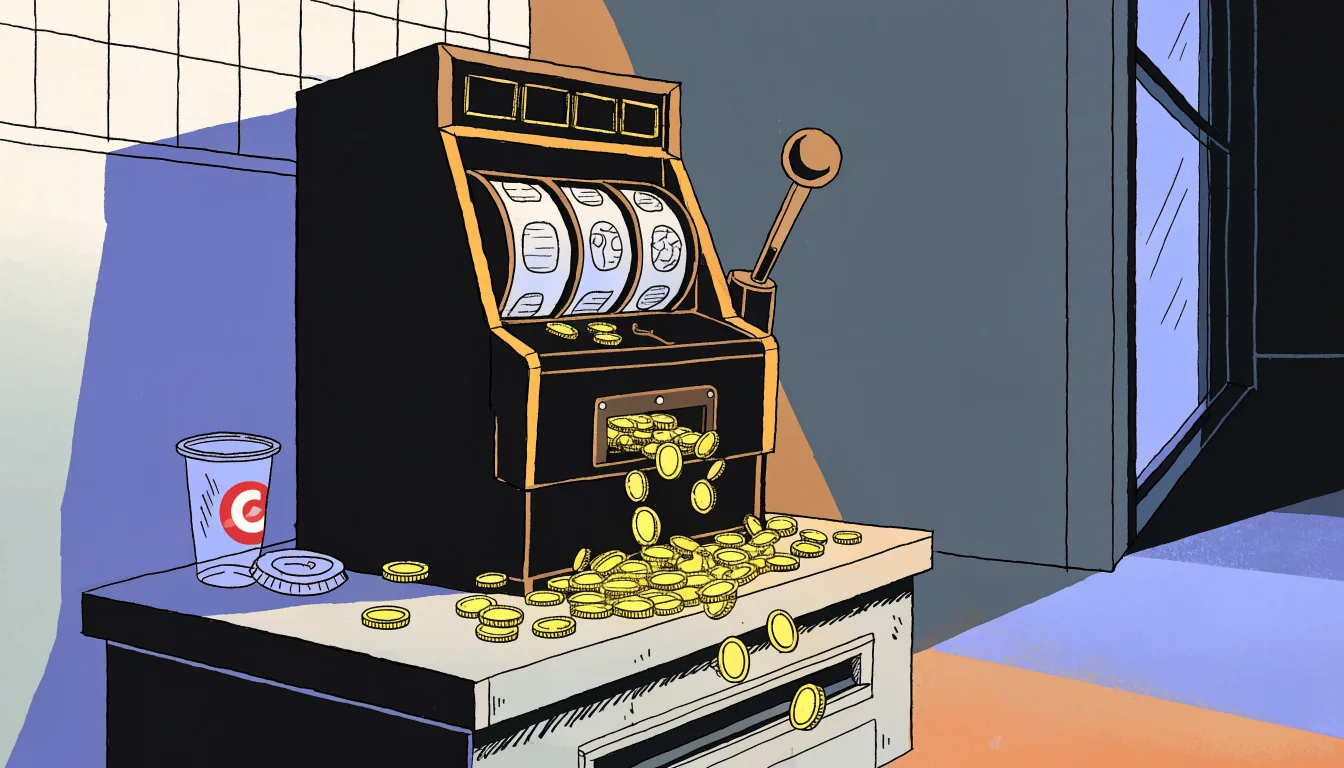
High volatility describes less frequent, more uneven returns and the possibility of larger wins, not what will happen on the next spin.
What High Volatility Actually Means on a Slot
High volatility describes the way a slot tends to distribute its returns. It is not a promise about how much you will win, and it is not a quality mark stamped on a game. It is a description of the payout pattern.
A high-volatility slot tends to produce winning combinations less often, with the possibility of larger individual wins when they do arrive. A low-volatility slot generally spreads its returns across more frequent, smaller wins. That is the basic difference between high and low volatility slots.
The word “possibility” matters. High volatility does not mean a large win is due, waiting behind the next spin. It means the game is built around a less frequent, more uneven pattern. I have made the mistake of reading “high volatility” as “better chance of a big win”. It does not say that. It says more about the shape of the results than about the result of your next spin.
Volatility is about pattern, not prediction
Think of two games with the same player making the same number of spins. One game may show small winning combinations regularly, while the other may produce a longer run with little or nothing before a more substantial hit appears. The second game has the more volatile pattern.
Best Progressive Jackpot Slots: How They Work
That description does not tell you which game will be ahead at the end of a particular session. A high-volatility slot can have a good-looking result early on, just as a low-volatility game can go through a poor spell. Individual spins remain individual events. The label does not turn the game into a schedule.
This is why I am wary of phrases such as “big-win slot” when they are used as if they were instructions. The plain meaning is narrower: wins tend to be less frequent, and the stronger payouts carry more of the game’s return pattern. Nothing in the label promises that you will reach one.
A low-volatility slot takes the opposite approach. Its returns are distributed across many smaller wins. Across most titles, low-volatility games typically produce winning combinations every three to six spins on average. That describes a general pattern across games, not a rule for every short sequence. You can still see several losing spins in a row, and a winning combination may be worth less than the amount being staked.
Video Slots in the UK: How the Games Work
That last point is easy to overlook. A spin can technically win while still leaving you behind on the running balance. “Winning combination” describes what happened on the reels; it does not automatically mean a profitable result for the session.
What very high volatility adds
Very high volatility is an even more pronounced version of the same approach. The game’s returns are concentrated in less frequent results, so the quiet stretches can feel more noticeable and the larger hits can have more influence on the overall outcome.
I would not treat “very high” as a separate promise or a magic category. It is best understood as a stronger point on the volatility scale. The further a game leans in that direction, the more important it is to expect an uneven distribution of wins rather than a steady stream of small rewards.
That changes how the game can look when you play it. A low-volatility title may appear active because the reels produce winning combinations regularly. A very high-volatility title may look unrewarding for longer periods, then change sharply when a feature or stronger combination lands. Neither appearance tells you what the next spin will do.
This is also why a high-volatility slot can be misunderstood after a short test. A few spins are not enough to reveal a reliable pattern. You might see a large hit and assume the game is generous, or see a dry spell and decide it never pays. Both conclusions can be based on a tiny piece of an uneven process.
High volatility and low volatility side by side
The difference becomes clearer when the two styles are placed next to each other:
| Feature | Low-volatility slot | High-volatility slot |
|---|---|---|
| Typical return pattern | More frequent, smaller wins | Less frequent, larger wins |
| Feel of individual results | More regular activity | More uneven results |
| Importance of a larger hit | Spread among many smaller returns | More important to the overall pattern |
| What the label predicts | The style of distribution | The style of distribution |
This table is about tendency, not certainty. A high-volatility game can deliver a small win. A low-volatility game can produce a sizeable one. The categories describe what the game tends to do over its broader design, not a fixed result for every spin.
I also would not use volatility as a substitute for every other piece of information about a slot. It does not tell you whether you will enjoy the theme, understand the bonus rules, or find the pace comfortable. It does not remove the house edge. And it does not make a losing run evidence that a payout is about to arrive.
Is high volatility good or bad?
Neither, by itself. High volatility is suitable for someone who prefers the possibility of larger, less frequent wins and can accept a more uneven run of results. Low volatility may suit someone who prefers smaller wins appearing more regularly, even though those wins are not guaranteed to cover the stakes.
Low-volatility slot
More frequent, smaller wins with regular activity.
High-volatility slot
Less frequent, larger wins with uneven results.
That is a preference about risk and rhythm, not a ranking of games. Calling high volatility “good” because of its larger potential payouts leaves out the quiet stretches. Calling low volatility “bad” because its wins are smaller leaves out the greater regularity of its return pattern.
My own mistake was to look only at the most attractive part of a description. “Larger wins” sounds good until you include “less often”. The two parts belong together. Remove one and the label becomes advertising rather than information.
The same applies to low volatility. “More frequent wins” sounds reassuring until you remember that the wins are generally smaller and may not produce a positive result after the stake is considered. More activity is not the same thing as better value.
Does volatility change the mathematics?
No. Volatility changes how returns are distributed, not the underlying fact that a casino game can be designed with a positive house edge. Every game with a positive house edge has a negative mathematical expectation for the player over enough sessions, whether losses arrive gradually through many small results or more abruptly through longer losing stretches.
That distinction matters because a high-volatility slot can create a dramatic story around a single win. A low-volatility game can create a calmer story around many smaller wins. Neither story changes the mathematical expectation. The path can look different while the long-run advantage remains with the house.
So I separate two questions:
- How might the game distribute its wins?
- What expectation does the game offer over enough play?
Volatility answers the first. It does not overturn the second.
Where high-volatility slots fit online
If you are looking for high-volatility slots online in the UK, the useful starting point is the game information shown by the casino or provider. Look for the volatility description and read it as a tendency, not a forecast. If the information calls a title high or very high volatility, expect fewer winning combinations and a greater reliance on larger individual payouts than you would expect from a low-volatility game.
Do not assume that every game using dramatic artwork or a large advertised maximum win belongs to the same category. The theme is not the volatility. Nor is the size of one memorable payout. The relevant point is the game’s stated return pattern.
It is also worth separating volatility from the number of reels, the number of paylines, and the presence of bonus features. Those details may affect how the machine operates, but they do not automatically tell you whether its volatility is high or low. A slot needs to be assessed on the information given for that particular game.
Stake Limits
Maximum stakes are regulated: £5 for customers aged 25+ and £2 for those aged 18 to 24 per game cycle.
For real money slots, that distinction becomes practical very quickly. A high-volatility design can use up a balance during a quiet run before a larger result appears, and there is no obligation on the game to provide that result within the amount you have chosen to spend. I have learnt not to treat the label as a reason to chase the feature that might be coming.
The cleanest reading is the simplest one: high volatility means fewer, potentially larger wins; low volatility means more frequent, generally smaller wins. Neither label guarantees a profit, predicts the next spin, or turns a house edge into a player advantage.
That is the whole trade-off. Less often, more sharply. Or more often, more modestly.
High-Volatility Slots in Britain: Stakes and Licensing
If you are looking at high-volatility slots online from Great Britain, the first practical point is that the game’s label does not change the stake rules. A slot described as high volatility, very high volatility or simply a game with high volatility is still an online slot for regulatory purposes. The same stake framework applies whether the title is familiar, newly released or offered by a different provider.
A specialist review states that the maximum stake for an online slot game cycle is £5 for customers aged 25 and over. For customers aged 18 to 24, it gives a lower maximum of £2 per game cycle. The age band matters, so this is not something to guess from the game’s appearance or from the amount shown on the betting controls.
“High stakes” is often used as promotional language. In practice, the permitted amount is controlled by the rules applying to online slots, not by the wording on a casino page. A high-volatility game may be presented as a title aimed at players who accept less frequent wins, but that description does not create a separate category with its own stake allowance.
Best RTP Casino Slots UK: How to Read the Numbers
What counts as a legal online slot in Great Britain?
Commercial gambling in Great Britain is regulated by the UK Gambling Commission. It is the sole regulator for commercial gambling in Great Britain, and its role covers gambling activity that includes online casinos. That makes the regulator relevant whether you are comparing ordinary online slots, high-volatility slots or a site offering both casino games and other gambling products.
The important point for remote play is that the operator’s equipment does not have to be physically located in Britain for the rules to matter. The UK Gambling Commission regulates remote gambling offered to consumers in Great Britain regardless of where the key equipment is based. A website’s location, branding or technical setup does not by itself remove the operator from that regulatory scope.
For a player, this means the operator serving you is the part to examine, rather than trying to work out where its servers might be. A British-facing casino offering real-money slots needs the appropriate Gambling Commission operating licence. The Commission issues operating licences to businesses and personal licences to individuals involved in operating gambling activity in Great Britain. Those are different types of licence: one concerns the business, while the other concerns relevant people working within the operation.
I have learned not to treat a polished website as proof of anything. A familiar-looking lobby can still leave you unclear about who is responsible for the gambling service. Before depositing, check the operator’s licence number on the UK Gambling Commission’s public register. That is a more useful check than judging a site by its choice of high-volatility titles or by the size of its game catalogue.
Stake limits and the game cycle
The limit applies to the amount staked in a game cycle. That wording matters because a single spin or play round is not an open invitation to add further money beyond the permitted amount. For customers aged 25 and over, the figure described by a specialist review is £5; for customers aged 18 to 24, it is £2.
Verification Steps
- Confirm the casino has a UK Gambling Commission operating licence.
- Verify the operator’s licence number on the public register.
- Ensure age-verification is completed before depositing.
- Check the applicable age-based stake cap for the game cycle.
These limits are attached to online slots rather than to the volatility setting. Changing from a lower-volatility title to one of the best high-volatility slots online does not create a different legal ceiling. Nor does selecting a feature labelled “high volatility in slots” alter the age-based amount.
The rules also make age verification part of the process before funds can be deposited into a gambling account. In other words, access to real-money slots is not meant to begin with an unchecked deposit followed by verification later. The operator must establish the customer’s age before allowing that deposit.
That is separate from the question of which game suits your budget. You might prefer slots with high volatility because you are interested in their payout pattern, but the permitted stake is still bounded by the applicable customer age group. The title’s risk profile is not a licence to bypass the limit.
What to check before playing
I keep the checks in this order:
- Confirm that the casino serves Great Britain under a Gambling Commission operating licence.
- Find the operator’s licence number and verify it on the UK Gambling Commission public register.
- Make sure the account’s age-verification process has been completed before depositing.
- Check the stake shown for the slot game cycle and keep the applicable age-based cap in mind.
- Treat descriptions such as “best high-volatility slots” as marketing or editorial language, not as a regulatory classification.
That final distinction is easy to miss. “High volatility” tells you how a game is described; it does not tell you that the game has a special legal status. The licence belongs to the operator, and the stake rule applies to the online slot game cycle.
I have made the mistake of starting with the game list and only later checking who was actually offering it. That puts the attractive part first and the important part second. For real-money play in Great Britain, reversing that order makes more sense: establish the licensed operator and the applicable stake limit, then decide whether a particular high-volatility slot belongs in your session at all.
The regulator does not become less relevant because the game is supplied by a well-known studio or because the casino offers a large selection of high-volatility online slots. The service reaching the customer is still remote gambling, and the Gambling Commission’s remit follows that service to British consumers. Fancy graphics do not change the licence. Neither does a louder jackpot banner.
What to Look for in a High-Volatility Slot Machine
When I check a high-volatility slot machine, I start with the layout rather than the headline. “Big wins” is marketing shorthand, not a description of how the screen is built. The useful details are sitting in the reels, the paytable, the symbols and the way a stake is applied to each spin.
That matters because two games can look completely different while using a similar basic arrangement. You may see a traditional five-reel layout, a cluster-style grid or a game where symbols expand after a win. Before choosing, I want to understand what actually counts as a winning combination and where my bet is going.
Start with the reel layout
A five-reel slot is familiar for a reason. Symbols appear in vertical columns, and the game checks the result according to its rules after the spin. In a five-reel slot game, a bet can be applied across all five reels. That does not mean every symbol will form a winning line, nor does it turn every spin into a win. It simply describes how the stake can cover the reel arrangement.
Reel Layout
Reels describe the vertical columns of symbols, while paylines describe the specific patterns the machine checks for wins.
I used to glance at the reels and assume that more visible symbols meant more chances. That was a lazy shortcut. The proper question is how the game evaluates them. Some machines use paylines running across the reels. Others pay for matching symbols next to each other, symbols landing anywhere in a defined area, or groups formed by adjacent icons.
The paytable should explain this without making you decode the artwork. If it does not, I move on.
Read the paytable before spinning
The paytable is the machine’s instruction sheet. It normally shows the value or function of the regular symbols, along with the role of special icons. It should also explain the winning patterns, the direction in which combinations are read and whether a win uses a specific line, a cluster or another arrangement.
This is where I look for the difference between a pretty theme and a usable game. A detailed background, animated character or dramatic sound tells you nothing about the betting structure. The paytable does.
Pay attention to whether only the highest win on a line is paid, whether several wins can land on the same spin and whether the game pays from left to right, in both directions or according to a different rule. Those details change how the result is assessed. They are not minor decoration.
I also check the game’s information panels for the minimum and maximum stake available through the interface. The controls should make the selected stake clear before the spin starts. A fast tap can be expensive when you have not noticed that the setting changed.
Understand the role of special symbols
Wild symbols can substitute for other symbols, but the exact rule belongs to the individual machine. A wild may be restricted from replacing special icons, or it may perform another function during a feature. The paytable should spell that out.
Casino Games: Slots, Live Tables and More
Scatter symbols are often connected with bonus features, free-spin-style rounds or other special events. Again, the name alone is not enough. I want to know what triggers the feature and whether the symbol needs to appear in a particular place. A symbol scattered across the screen may work very differently from one that must land on an active line.
Other features can include multipliers, expanding symbols, sticky symbols, respins or symbols that alter the reel layout. None of these automatically makes a machine suitable for you. They simply change the way the result is built and the amount of information you need to follow.
This is why I avoid treating a complicated screen as a “better” slot. More moving parts can mean more entertainment, but it can also make the rules easier to miss.
Check how the stake is allocated
On a machine with paylines, the selected stake may be divided across the active lines, or the controls may present the total stake for the whole spin. The wording and design vary, so I check both the line settings and the total shown beside the spin button.
A five-reel game may let the bet cover all five reels while still using a particular set of winning routes. The reels are not the same thing as the paylines. Reels describe the columns of symbols; paylines describe the patterns the machine checks. Mixing up those terms made plenty of my early decisions worse than they needed to be.
If the machine offers adjustable lines, I want to know what changes when I alter them. Does the total stake change? Are some wins unavailable? Does the display show the full cost before I confirm? A clear interface should answer those points without sending you through a maze of menus.
Do
- Read the paytable to understand winning patterns.
- Check the total stake shown beside the spin button.
- Verify the role of special symbols like wilds and scatters.
Don’t
- Assume more visible symbols mean more chances.
- Rely on dramatic artwork to understand betting structure.
- Ignore the minimum and maximum stake limits.
Look at the spin and feature controls
The spin button should show the chosen stake and make the next action obvious. I check whether the game includes an autoplay control, but online slots in Britain do not allow autoplay. That means the machine should not be treated as a hands-off system that continues spinning by itself.
I also look for a clear way to open the rules, close a bonus presentation and return to the main game. Some machines bury useful information behind small icons. I have clicked through enough noisy animations to know that a simple layout is worth more than a crowded one.
Finally, I check that the result is easy to follow. Symbols should not disappear before I can see what formed the win, and the game should identify the amount returned or explain the feature that has started. If the presentation is too quick or cluttered, I take that as a practical warning.
A high-volatility slot machine can have an attractive theme, but the structure is what you actually play. Check the reels, the routes, the symbols and the stake display first. The glossy part can wait.
How High-Volatility Slot Games Feel Across a Session
A high-volatility slot can make a session feel quiet for longer than you expect. You press spin, watch the symbols settle, and see nothing that changes the balance in a meaningful way. Then, after a run of ordinary results, one winning combination lands and the whole mood shifts.
That is the defining rhythm: fewer noticeable wins, with the possibility of a larger result when one arrives. It is not a promise that the result will arrive during your session. That distinction matters, especially when the game has been cold for a while.
High-RTP Slots in the UK: What RTP Can Tell You
I have made the mistake of treating a quiet run as a sign that something was “due”. It was not. The next spin had no obligation to repair the previous ones. High volatility changes the shape of the experience, not the rules behind each spin.
Quiet stretches feel longer
With slot games with high volatility, small wins may not appear often enough to keep the session feeling active. A result can technically be a win while still feeling insignificant beside the stake. Several spins may pass without a result that seems worth remembering.
That can create an odd sense of waiting. You are not necessarily bored, because the possibility of a substantial hit keeps your attention, but you are also not getting the steady feedback that makes a lower-volatility game feel busy.
Low-volatility slots generally spread their returns across more frequent, smaller wins. Across most titles, winning combinations typically appear every three to six spins on average. That does not mean every sequence follows that pattern, and it does not mean the balance must rise. It simply helps explain why those games often feel more eventful from spin to spin.
High volatility is more stop-start. Fewer highlights.
One result can dominate the memory
In a lower-volatility session, you may remember a chain of small wins, even when none of them was especially large. The regular activity becomes part of the experience. A high-volatility session can work the other way round: one substantial win may overshadow everything that happened before it.
That is why people sometimes describe the best high-volatility slot games as exciting. The excitement is usually connected to contrast. A result feels more dramatic after a quiet sequence than it would if small wins had been appearing constantly.
Emotional Risk
Attention A quiet run of results does not mean a win is due; high volatility can create long stretches without meaningful returns.
The same contrast can make a losing session feel harsher. If the expected larger moment never arrives, the earlier spins may seem like a long build-up with no release. I have found that this is where the language around “big potential” can become unhelpful. It describes what a game may offer in its winning pattern, not what it owes you today.
The emotional swings are sharper
A high-volatility slot game can produce more noticeable changes in mood than a game built around frequent smaller returns. A quiet spell may bring impatience. A strong win may bring relief, excitement or the temptation to continue while the session feels favourable.
That last reaction caught me out more than once. After a good result, I wanted to see whether the same thing could happen again. After a poor run, I wanted to stay until the game finally gave me a reason to feel better. Both reactions turn the session into a story about correcting the previous result.
The slot does not recognise either story. A win does not make the next spin more likely to win, and a losing sequence does not make a payout more likely. Volatility describes the distribution of results over time; it does not provide a signal during the session.
Very high volatility needs more patience
The phrase “very high volatility slot games” suggests an even more pronounced version of the same experience: longer periods in which little seems to happen, followed by less frequent results that may have greater impact. But the label should not be treated as a forecast for your particular play.
Two people can use the same high-volatility casino game and come away with completely different impressions. One may catch a memorable payout early and call the session thrilling. Another may see only quiet spins and describe it as frustrating. Neither experience proves what will happen next time.
Online Slot Payout Percentages and What They Mean
This is also why a list of the best high-volatility slot games is not a list of guaranteed session experiences. A title can be known for a particular payout pattern, yet the individual sequence in front of you can still be uneventful. The name and reputation of a game do not soften its uncertainty.
Watching the session honestly
I find it useful to separate what happened from how it felt. “There were long gaps between meaningful wins” is an observation about the session. “The game was warming up” is a theory added afterwards. The first statement can be checked; the second is usually just a way of giving random results a storyline.
The same applies when comparing high-volatility slot games in the UK with lower-volatility alternatives. The setting does not change the basic emotional trade-off. High volatility tends to make wins less frequent and more noticeable when they occur. Low volatility tends to make the session feel more active through smaller, more regular winning combinations.
Neither pattern guarantees a profit or protects the balance from falling. A more entertaining rhythm can still be an expensive one, and a calmer rhythm can still end badly. I learned that the hard way.
The useful question is not whether a high-volatility game can create a dramatic moment. It can. The useful question is whether you are comfortable with the long quiet parts that may come before it, without treating a future win as something already promised.
Is High or Low Volatility Better for You?
There is no universal winner between high- and low-volatility slots. The better choice depends on what you want the session to feel like, how you react when results go against you, and whether you can accept that neither style changes the casino’s underlying advantage.
Summary
- Volatility describes the distribution of returns, not the house edge or a promise of wins.
- Choose a volatility pattern that matches your personal risk tolerance and rhythm.
- Always check the operator’s licence and age-based stake limits in Great Britain.
- Treat bonus expiry times as a critical factor when playing high-volatility games.
I used to treat volatility as a ranking. “High volatility” sounded like the serious option, while low volatility seemed a bit tame. That was backwards. Volatility describes the shape of the results, not the quality of the game.
High volatility suits a patient approach
A high-volatility slot tends to produce winning combinations less often, with the possibility of larger individual payouts when they arrive. That can create long quiet stretches followed by a noticeable win. The word “potentially” matters here: a larger payout may be part of the design, but it is never a promise that your spin will deliver one.
This style can suit you if you prefer fewer, more meaningful wins and do not need regular small returns to feel that a session is going well. You may also like the clearer separation between losing spins and winning moments. I understand the appeal. A modest win every so often can feel less memorable than waiting, then seeing a stronger result land.
The downside is emotional as much as financial. A run without a win can make you want to raise the stake, change games, or chase the result you expected. That is where I have made poor decisions. The game did not owe me a larger payout because the earlier spins had been unkind.
A high-volatility slot is therefore not “good” simply because its bigger wins look attractive. It asks you to tolerate more uneven results, and that is not comfortable for everyone.
Three-Reel Slots in the UK: How They Play
Low volatility offers more frequent smaller returns
Low-volatility slots spread their returns across many smaller wins. Across most titles, winning combinations typically appear every three to six spins on average. That pattern can make a session feel more active because something happens more regularly, even when each win is modest.
This may be a better fit if you value regular feedback from the game and find long losing sequences particularly frustrating. Seeing smaller wins arrive can make the pace feel steadier. It does not mean you are more likely to finish ahead, though. A busy-looking session can still lose money.
That distinction caught me out. I once assumed that frequent wins meant I was playing more safely. In reality, the important question was not how often the reels showed a winning combination, but what those wins returned compared with the stakes over time.
Low volatility also has its own trap. Frequent small wins can encourage you to keep spinning because the game appears to be treating you kindly. “Steady” can quietly become “I am doing fine”, even when the balance is moving in the wrong direction.
The house edge comes first
Volatility changes the distribution of results. It does not remove the house edge. If a game has a positive house edge, its mathematical expectation for the player is negative over enough sessions. That remains true whether losses arrive gradually through many small shortfalls or in sharper swings after longer periods without a win.
Is high volatility better than low volatility?
Neither is inherently better; it is a matter of preference regarding the frequency and size of wins.
Does volatility change the mathematical house edge?
No, volatility only changes how returns are distributed; the house edge remains the same.
Can I use autoplay on online slots in Britain?
No, online slots in Britain do not allow autoplay.
This is the part worth keeping separate from personal preference. Choosing low volatility may make results feel less dramatic, while choosing high volatility may offer the prospect of a larger single payout. Neither choice turns the game into a profitable system. Neither gives you a reliable way to recover previous losses.
So, is it better to play high- or low-volatility slots? For me, the honest answer is: choose the pattern you can view without trying to fight it. If a high-volatility slot makes you chase after quiet stretches, it is a poor fit. If low-volatility play makes you mistake frequent small wins for an advantage, that is a warning too.
A simple way to decide
Before playing, I would ask myself:
- Would less frequent wins make me increase my stake?
- Would frequent small wins tempt me to extend the session?
- Am I comfortable with the possibility of a result that feels uneven?
- Can I stop without trying to win back what has already gone?
The aim is not to discover the “best” high-volatility slot or prove that one volatility level beats another. It is to recognise which result pattern is less likely to push you into decisions you did not intend to make.
Volatility is a preference question. The house edge is the mathematical reality underneath it. Keep those two ideas apart, and the choice becomes much less mysterious.
A Bonus Strategy That Starts With the Deadline
A bonus can look generous until you notice the clock. When I am considering a high-volatility game, I start with the expiry time rather than the headline offer. That matters because this style of play can produce longer stretches without a useful return. If the bonus period ends while you are still waiting for the balance to recover, the promotion has become another source of pressure.
Bonus buy slots in the UK: how they work
An affiliate-style specialist review describes bonuses as having a 48-hour lifespan. Treat that as a claim to check against the operator’s own terms, not as a permanent rule for every casino. The important detail is the exact moment the window begins. It may be linked to claiming the bonus, making a qualifying deposit, or another action set out in the offer. I would not guess.
My practical high-volatility casino bonus strategy is simple:
- Read the expiry condition before accepting anything.
- Decide whether you genuinely have time to use the offer within that window.
- Avoid claiming it merely because the banner says “limited” or “exclusive”.
- Stop when the planned session ends, even if the bonus is still active.
That last point is where I have made the stupid mistake. A deadline can turn a recreational session into a race, and a high-volatility slot is a poor setting for hurried decisions. The bonus does not change the game’s underlying behaviour, and it does not make a losing run safer.
For a high-volatility casino bonus strategy in the UK, I would therefore treat timing as a filter, not a target. If the terms require attention I cannot realistically give, I leave the promotion alone. A bonus that expires before I can use it is disappointing; chasing it after the clock becomes the main reason to continue is worse. Know the deadline first. Then decide whether the offer belongs in your session at all.
First-Deposit Bonuses at UK Casinos: What to Check
High-Volatility Slots and the Wider Casino Floor
A casino floor is not just a collection of slots. You may also find table games, with roulette standing out because the result comes from a wheel and ball rather than a reel layout. That difference matters when you are comparing the atmosphere of a high-volatility casino game with other ways to play.
With a slot, you choose the game, set the stake and start a spin. The machine then resolves the result through its own reel and symbol arrangement. Roulette works differently: you place chips on the layout before the ball is released, then wait for the ball to settle into a pocket. There is no reel sequence to watch and no slot-style game structure behind the result.
The wheel design also changes the number of pockets. European-style roulette has 37 pockets, numbered from 0 through 36. American-style roulette has 38: the numbers 1 to 36, plus zero and double zero. That extra pocket changes the layout and the mathematical balance of the game, so the two versions should not be treated as identical.
I have seen people use “high volatility” as if it describes every casino game that can produce a large win. That is too loose. In this context, volatility is language used for the pattern of returns in a slot. Roulette is a separate table game with its own wheel, bets and probabilities. Calling roulette a high-volatility slot does not make the comparison clearer.
So, when browsing the wider casino floor, keep the categories separate. A high-volatility slot is still a slot, even when it sits beside roulette, blackjack or other table games. Different equipment, different rules, different way of resolving a round. Simple distinction.
Our top casino picks for the UK
- JetsetspinsBonus: 200% Bonus + 100 Free Spins + Free Royal Wheel · Payout speed: 1-3 business days
- SlotoSportBonus: 500% up to £ 10 200+ 777 FS · Payout speed: 1-3 business days
- ChanzeBonus: Slots Welcome Bonus #1 200% up to €500 · Payout speed: 1-3 business days
- Revery PlayBonus: 100% up to€1,000+ 100 FS · Payout speed: 1-3 business days
- SpinFormulaBonus: 550% Up To £15,000 + 550 FS · Payout speed: 1-3 business days
- DieselwinBonus: Welcome Pack 250% up to £4000 + 200 FS · Payout speed: 1-3 business days