
Best RTP Casino Slots UK: How to Read the Numbers
 Available in GB
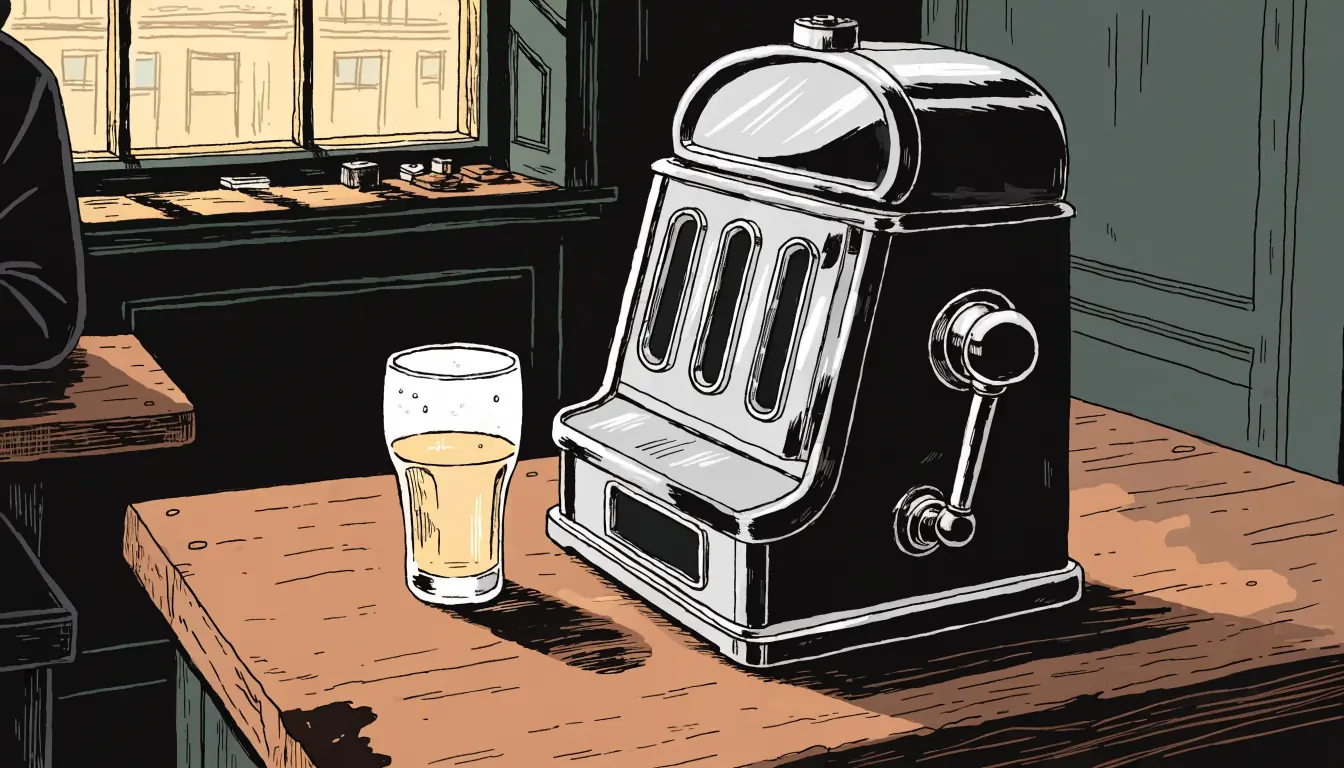
RTP describes theoretical returns over a very large number of plays, while volatility affects how results may unfold in a session.
RTP Looks Clean on Paper. Your Results Won’t.
I used to treat a high RTP figure like a quality stamp. If one slot showed a better percentage than another, I assumed I had found the sensible choice. The logic felt obvious: more of the money supposedly comes back, so my session should have a better chance of ending well.
That is not what the figure promises.
RTP, or return to player, is a statistical measure attached to a game. It describes the portion of all stakes that the game is designed to return over a very large number of plays. The important phrase is “over a very large number”. It is not a forecast of what happens to your balance tonight, during your next run of spins, or even across a particularly long personal session.
That makes the search for the highest RTP online slots slightly less straightforward than it first appears. The figure can be useful when comparing games, but it belongs to the game’s long-term mathematics, not to your individual result.
What a published RTP figure actually tells you
Imagine a slot displaying a published RTP percentage. That number gives you a theoretical average return calculated across the game’s underlying mathematics. It can help show how large the built-in disadvantage is compared with another game, assuming the figures are accurate and the games are being compared on a like-for-like basis.
It does not mean the game returns that proportion every time you play. Nor does it mean that your stake is divided neatly between wins and losses. One player may finish a short session ahead, while another may lose quickly on the same game. Both results can sit comfortably within the game’s statistical behaviour.
I made the mistake of reading RTP as though it were a personal refund policy. It is nothing like that. There is no account ledger quietly keeping track of an amount owed to you because your recent spins have gone badly. A slot does not have to “catch up”, and a good run does not make a bad run more likely to follow.
First-Deposit Bonuses at UK Casinos: What to Check
That last point is where attractive descriptions become slippery. “High RTP” sounds reassuring because it is a comparison. It may indicate a smaller theoretical house edge than a lower-RTP alternative, but it does not turn the slot into a reliable source of returns. Better mathematics is still mathematics.
Why one session can look nothing like the percentage
Short-term outcomes can move far away from a long-run average. A published RTP is not a promise that each group of spins will reproduce the advertised proportion. Random results do not arrive in tidy blocks, and your own play represents only a tiny part of the total used to calculate the theoretical figure.
So a session can end with a substantial loss even when the selected game is described as having high RTP. It can also end with a profit. Neither outcome proves that the published figure is false. The winning session does not show that the slot is generous, and the losing session does not show that the mathematics has failed.
This is why I am wary of phrases such as “best online slots with the highest RTP”. “Best” depends on what you are measuring, while “highest” only addresses one mathematical property. A higher published return may matter when making a careful comparison, but it says nothing certain about the next result on the screen.
The same applies to labels such as “high RTP online slot games” or “online casino slots with the highest RTP”. Those descriptions may help you identify what a listing is trying to compare, but the wording should not be mistaken for a prediction. A headline can make a percentage feel personal. It is not personal.
The house edge is still there
RTP is easier to understand when viewed alongside the house edge. If the game is built with a positive advantage for the casino, its corresponding mathematical expectation is negative for the player. Given enough sessions, that disadvantage remains, even if the losses arrive gradually rather than all at once.
That does not mean every player loses every session. Gambling outcomes do not work that neatly. It means the underlying calculation favours the house over the long run. A win during your own play can be real and significant, but it does not cancel the game’s design. It is one result inside a system that has been built with an edge against you.
DO
- Treat RTP as background mathematics
- Compare games based on their specific configuration
- Verify the operator’s licence on the UKGC register
- Check the game’s information panel for exact figures
DON’T
- Treat RTP as a personal refund policy
- Assume a high RTP guarantees a profitable session
- Rely on promotional slogans or catchy titles
- Ignore the house edge regardless of the percentage
I have had sessions where a supposedly sensible choice looked brilliant for a while. That feeling is powerful. It encourages larger stakes, longer play and the belief that the number on the information panel has somehow validated the decision. Then the result changes, and the clean percentage on the screen offers no protection.
The figure can inform a choice. It cannot make the choice safe.
How I now read the number
When I see a published RTP figure, I treat it as background mathematics rather than a target. It may help me understand the game’s theoretical return and compare its built-in edge with another option. I do not read it as a likely result for my balance, a promise of profit, or evidence that a particular session will be smooth.
That distinction matters whether the wording says “highest RTP slots online”, “high RTP slots online” or simply presents a game as a strong mathematical option. The percentage tells you something about the long-term model. Your session is still governed by individual outcomes, and those outcomes can be unhelpfully different from the neat number in the description.
On paper, RTP looks precise. At the screen, it is only context.
Reading RTP Without Mistaking It for a Guarantee
RTP means return to player. On a slot, it is the published theoretical share of stakes that the game is designed to return over a very large number of plays. That makes it useful when comparing games, but only if you read it as a long-run measurement rather than a promise attached to your next session.
I used to see a high RTP figure and treat it like a quiet recommendation: this one must be the sensible choice. That was too simple. The figure describes the game’s mathematical design. It does not describe what will happen during the handful of spins you make tonight, or whether your balance will be higher when you stop.
Casino Games: Slots, Live Tables and More
The important word is theoretical. RTP is calculated from the rules, symbols, winning combinations, bonus features and other programmed elements of the slot. It represents the expected return across an enormous volume of play. Your own results can sit well above or well below that expectation for a long time.
That is not a contradiction. It is the difference between a statistical measure and a personal result.
What the published figure is actually good for
RTP gives you a way to compare the underlying return built into different games. If two slots are otherwise being considered on equal terms, the one with the higher published RTP has the smaller mathematical edge for the casino. That can matter when you are choosing between games, because the house advantage is part of the design rather than something you can negotiate away through a lucky run.
Still, “higher” does not mean “safe”, and “best” does not mean “will pay”. A slot with a stronger theoretical return can produce an unpleasant session, while another game with a less favourable figure can happen to pay well during your own play. Short-term outcomes do not line up neatly with the order of the RTP figures.
This is where promotional wording can trip you up. “High RTP” sounds like a result. It is not. It is a description of the model behind the game. “Best RTP slots” sounds like a settled league table. It is not, unless the comparison explains which version of each game was checked, where the figures came from and whether the games are actually available to the intended players.
A title can have more than one configuration. The displayed RTP may depend on the version selected by the operator or on the game settings supplied by the provider.
A title can also have more than one configuration. The displayed RTP may depend on the version selected by the operator or on the game settings supplied by the provider. So I would not rely on a number copied from a general list without checking the information shown inside the game itself or in the operator’s published details.
Compare the details, not just the headline
When I check RTP slots now, I look for the figure in a reliable game-information panel rather than accepting a banner or a casual description. I also check that the information relates to the exact game and configuration I am about to play. A familiar title is not enough evidence by itself.
The reels do not tell you the RTP. A five-reel slot may let one wager run over all five reels, but that layout says nothing on its own about the game’s theoretical return. The same applies to the theme, the number of symbols, the artwork and the presence of a bonus feature. They may make a slot memorable; they do not establish its RTP.
A careful comparison should therefore ask:
- Is the stated RTP attached to this exact game?
- Is it presented as a theoretical return rather than a guaranteed payout?
- Does the information come from the game or operator details rather than an unsupported sales claim?
- Are you comparing the same type of configuration across the games you are considering?
Those checks sound dull. They are still more useful than chasing a list with “top” or “best” in its heading.
Why the percentage cannot set your stopping point
RTP does not tell you when a game has “given back” what it owes. A slot does not keep a personal account for you, and it does not become more likely to compensate you because earlier spins went badly. Nor does a good result mean the game has temporarily become generous.
I made both mistakes. After a poor run, I stayed because I thought a better result had to be due. After a good run, I increased my confidence because the slot seemed to be proving its advertised return. Neither conclusion came from the RTP. Both came from me trying to turn a long-run statistic into a short-term signal.
The sensible use of RTP is narrower: treat it as one mathematical comparison point, verify that the figure belongs to the actual game version, and keep its meaning in the long-run frame. It can help you understand the house edge built into a slot. It cannot tell you what your next spins will do.
That distinction is easy to lose when a large percentage is printed beside a game. The number looks precise, so the promise feels precise too. It is not. Clean calculation, messy session.
A High RTP Doesn’t Tell You How a Session Will Feel
RTP and volatility answer different questions, even though casino pages often place them next to each other as if they describe the same thing.
Volatility
Volatility describes how wins are distributed rather than the game’s theoretical long-run return. It defines the shape of results, such as whether they are frequent and small or rare and large.
RTP is about the slot’s long-run mathematical return. It is a percentage used to describe how much of the money wagered would theoretically be returned over a very large number of spins, according to the game’s design. That can help when comparing games with otherwise similar features. It does not tell you what will happen during your visit, or whether your balance will move smoothly, sharply, or not at all.
Volatility is about the shape of those results. It describes how wins are distributed rather than the game’s theoretical long-run return. A slot can have a high RTP and still produce an awkward session, with long gaps, sudden wins, or a balance that swings more than you expected. A lower-volatility game can feel more active without having a better mathematical return.
That difference caught me out. I once treated a strong RTP figure as if it also meant a calmer ride. I read the number, saw the word “high”, and assumed the game would give something back often enough to keep the session comfortable. That was me quietly adding information that the figure never contained.
What volatility changes
Imagine two slots with the same RTP. Their long-run theoretical return could be identical while their individual spins feel completely different.
Video Slots in the UK: How the Games Work
One may spread its returns across many smaller wins. The balance can rise and fall in modest steps, although those wins may still fail to cover the stakes. Another may pay less often, but offer larger wins when a suitable combination appears. Between those moments, the balance can drop quickly.
Those are different volatility profiles. Neither one changes the RTP by itself.
Low-volatility slots distribute returns through many smaller wins, while high-volatility slots tend to pay less frequently and in larger amounts. The wording matters: “smaller wins” does not mean profitable spins, and “larger amounts” does not mean a better chance of ending ahead. It describes the pattern of payouts, not a promise about the result.
A win can also be technically a win while leaving you below where you started. If the payout is smaller than the stake, the reels may flash and the game may announce success, but your balance still takes a step backwards. Counting winning combinations without considering their size gives a distorted impression of how a session is going.
The same RTP can produce different moods
This is why the highest RTP slots are not automatically the most comfortable games to play. The RTP figure may look attractive on a comparison page, yet the session can still feel quiet and tense if the game’s volatility is high. You may see no meaningful return for a while, then receive a larger payout that changes the pace without changing the underlying disadvantage.
Understanding the difference
An RTP figure describes the long-run mathematical model, while volatility describes the rhythm of your actual session.
A lower-volatility slot may feel busier because smaller returns appear more regularly. That can make the balance look less dramatic, especially at the start. But a smoother sequence is not the same as a safer one. If the game has a positive house edge, its mathematical expectation remains negative over enough sessions. The losses may arrive gradually rather than in obvious jumps.
That is the part advertising tends to blur. “Frequent wins” sounds reassuring, but frequency says nothing by itself about the value of those wins. “High RTP” sounds like a session guide, but RTP does not describe when payouts arrive. “Big potential” points in the other direction, towards larger and less frequent results, without telling you how long the quiet stretches may feel.
I now read the two labels separately:
- RTP: the game’s theoretical long-run return.
- Volatility: the way wins are distributed during play.
- Session experience: what actually happens to your balance over the spins you take.
The third line cannot be calculated from the first alone. You need to consider volatility as a separate characteristic, and even then, a label cannot predict your particular run.
Why the distinction matters
When comparing online slots in the UK, a published RTP can be useful as one part of the picture. It should not be treated as a comfort rating, a forecast, or evidence that a game will repay losses during a short session. Volatility adds context, but it does not remove uncertainty.
I have had sessions with plenty of small returns that felt active but still ended badly. I have also seen a quiet game produce a sudden result that changed the balance for a moment. Neither experience proved anything about the next spin.
That is the honest use of these terms: RTP helps describe long-run mathematics, while volatility helps describe payout distribution. Put them together, and you understand the slot more clearly. Keep them separate, and you are less likely to mistake a headline figure for a description of how the next session will feel.
Our top casino picks for the UK
- JetsetspinsBonus: 200% Bonus + 100 Free Spins + Free Royal Wheel · Payout speed: 1-3 business days
- SlotoSportBonus: 500% up to £ 10 200+ 777 FS · Payout speed: 1-3 business days
- ChanzeBonus: Slots Welcome Bonus #1 200% up to €500 · Payout speed: 1-3 business days
- Revery PlayBonus: 100% up to€1,000+ 100 FS · Payout speed: 1-3 business days
- SpinFormulaBonus: 550% Up To £15,000 + 550 FS · Payout speed: 1-3 business days
- DieselwinBonus: Welcome Pack 250% up to £4000 + 200 FS · Payout speed: 1-3 business days
Where to Play—and What “Safe” Actually Means
When I look for a casino offering high-RTP slots, I start with the operator rather than the game lobby. A polished site can display attractive figures and still leave you unclear about who is responsible for the gambling service. In Great Britain, the useful first check is whether the business holds a current operating licence from the UK Gambling Commission.
The Commission regulates remote gambling offered to people in Great Britain, even when the operator’s key equipment is located elsewhere. It is the sole regulator for commercial gambling in Great Britain, and it issues operating licences to businesses as well as personal licences to individuals working in the industry. That gives you a clear place to check instead of relying on a badge copied into a footer.
Three-Reel Slots in the UK: How They Play
Check the licence before you play
Do not stop at a logo saying “licensed”. Open the UK Gambling Commission’s public register and verify the operator’s licence number there before creating a real-money account. Check that the registered business name matches the casino’s terms and contact details. If the site gives you only a trading name, or the licence information is difficult to find, I treat that as a warning sign.
This matters whether you are looking for low-volatility, high-RTP slots or simply comparing online slots for real money. A casino cannot make an unverified game claim trustworthy by placing it beside a familiar-looking brand. The operator’s legal status comes first; the game information comes after it.
I also read the responsible-gambling pages before depositing. A UK-licensed casino must provide tools such as self-exclusion, and new customers must be prompted to set a financial limit before their first deposit. Account-level limit controls should remain accessible afterwards, not be hidden behind a maze of menus. I have ignored those settings in the past because I thought they were an annoyance. That was a poor decision, especially during a session that had already gone longer than planned.
A properly licensed operator must also provide an internal complaints process and access to an approved Alternative Dispute Resolution service. Those details are not exciting, but they tell you whether the casino has a defined route for handling a problem. “Safe” should mean accountability and usable controls—not a promise that every spin will behave kindly.
Safety Checklist
- Verify the operator’s licence with the UK Gambling Commission
- Confirm the game’s specific RTP and volatility in the info panel
- Set personal financial limits before depositing
- Check the permitted maximum stake for your age group
Know the slot stake rules
The permitted stake depends on the customer’s age. A specialist review reports that the maximum for an online slot game cycle is £5 for customers aged 25 and over, while customers aged 18 to 24 face a £2 maximum. Because gambling rules can change, check the operator’s current information and the regulator’s guidance rather than trusting an old article.
These limits apply to online slots, not every casino game. Roulette and blackjack are outside this particular slot-stake rule, so do not assume that a limit shown in a slot lobby covers the whole site. The casino should make the applicable rules clear before you play.
Age verification is another basic protection: operators must confirm a customer’s age before allowing funds to be deposited into a gambling account. If a site appears willing to let you bypass that process, leave it alone.
For me, the sensible order is simple: verify the licence, confirm the protections, understand the slot limit, then inspect the individual game information. A high RTP may influence which slot I consider, but it does not make an unsafe casino worth using. Controls first. Claims second.
Game Names Aren’t Proof of a High RTP
A slot title can sound confident without telling you much about its mathematical return. “Golden”, “Diamond”, “Mega” and “Jackpot” are branding choices, not evidence that a game belongs among the highest RTP slots. I have made that mistake myself: I saw a familiar name repeated across casino pages and treated the repetition as confirmation. It was only repetition.
The same problem appears with labels such as “best RTP slot games” or “high RTP slots”. Those phrases may describe a publisher’s marketing, a review writer’s opinion, or a search category. They do not, by themselves, establish the game’s RTP. A title has to be matched with a clear figure and an indication of where that figure comes from.
What to check beside the title
When you open an individual game, look for its help, information or rules panel. The useful details are normally attached to the game rather than hidden in its name. A proper description should make clear:
- the published RTP setting;
- whether the displayed figure applies to that version of the game;
- the game’s rules, paylines and available features;
- who produced the game, where that information is shown.
That does not turn a published percentage into a promise about your session. It simply gives you something more substantial than a slogan to compare. If the only claim is “high return” and there is no supporting game information, I would treat it as an untested sales line.
Be careful with lists copied from one page to another. A “slot games RTP list” can look authoritative because it contains many titles, yet a list is only as useful as its underlying details. Game versions, settings and presentation can matter. If a page gives a title but no traceable figure or explanation, adding it to a shortlist of the best RTP slot games online is premature.
Familiar names can still mislead
A game may be well known, widely available or heavily advertised and still tell you nothing through its name about its return. Even a title that sounds traditional does not automatically share the mathematical characteristics of another game with a similar theme. Theme, reel layout and visual style are not substitutes for game information.
Branding
Do not mistake a game’s title or theme for evidence of its mathematical return; names like ‘Mega’ or ‘Jackpot’ are marketing choices, not RTP guarantees.
I also avoid treating a provider’s reputation as a shortcut. A recognised developer may produce games with different designs and different mathematical settings. The name above the game is not a guarantee for every title underneath it.
The sensible approach is boring: identify the exact game, open its information, record the stated RTP, and compare like with like. If those details are not available, leave the title unclassified rather than filling the gap with confidence.
One more point gets lost in the hunt for the “highest” figure. RTP is not a refund promise, and a game with a positive house edge still carries a negative mathematical expectation over enough sessions. The loss may arrive gradually, but gradual is not the same as safe.
Names attract attention. Numbers need checking.
The 98% Question: RTP and Volatility Are Separate
A slot advertised with RTP of 98% or more and low volatility is making two different claims. I used to treat the first as if it explained the second. It does not.
RTP is a mathematical return figure. It describes the proportion of stakes a game is designed to return over a sufficiently large number of plays, not the shape of the individual results. A figure near 98% may sound reassuring, but it cannot tell you whether wins arrive regularly, whether they tend to be small, or whether long stretches pass without a useful hit.
Bonus buy slots in the UK: how they work
Volatility describes that distribution instead. A low-volatility slot generally spreads its returns across more frequent, smaller wins. A high-volatility game tends to leave more space between winning outcomes while making the occasional payout larger. Those descriptions concern the rhythm and size of results, not the percentage used in the RTP calculation.
So a claim combining high RTP with low volatility needs support for both parts. A published RTP figure is not evidence that the game is low variance. Equally, a “gentle” or “steady” volatility label does not prove that the RTP reaches the claimed level. The two characteristics should be checked separately in the game information, provider documentation, or another dependable source.
There is another detail that advertising often leaves in the small print: a high RTP still incorporates the house edge. If that edge is positive, the mathematical expectation remains negative for the player when enough sessions are considered. It makes no difference whether the losses arrive abruptly or are softened by many modest wins. Smoother is not the same as favourable.
That is why I would be wary of any page presenting “98% RTP and low volatility” as a ready-made promise. Before accepting the description, I would look for a stated RTP and a separately stated volatility classification, then treat both as long-run characteristics rather than a forecast for tonight’s balance.
Two labels. Two checks.
Understanding 98% RTP
RTP is a mathematical return figure describing the proportion of stakes a game is designed to return over a large number of plays. It does not predict the shape or frequency of individual results.
Volatility describes the distribution of those results, such as whether a low-volatility slot provides many small wins or a high-volatility slot provides fewer but larger wins.
Low Volatility Can Mean More Small Wins, Not Less Risk
Low volatility changes the rhythm of a slot, not the underlying risk. Instead of long quiet stretches followed by occasional large payouts, a lower-volatility game tends to spread its returns across more modest wins. Across most titles, winning combinations may appear every three to six spins on average. That can make a session feel active, especially when you are watching the balance move up and down in small steps.
I have fallen for that feeling myself. A run of little wins looks reassuring because the balance does not immediately collapse. But a win is not automatically a profitable result. Several small payouts can still return less than the total staked over those spins. More action is not the same as better value.
What low-volatility slots often look like
There are some recurring design features, although they are not proof that every game with them has the same risk profile. Low-volatility slots commonly use:
- five reels;
- twenty-five or more paylines;
- fixed jackpot amounts instead of progressive prize pools;
- bonus rounds that apply multipliers to wins already collected.
These mechanics support a steadier distribution of payouts. A fixed jackpot does not grow through a shared pool, while multiplier-based features can add modest boosts to accumulated wins rather than relying entirely on rare, dramatic hits.
That is why comparing casino slot RTP and volatility requires looking at both labels separately. RTP describes the long-run return built into the game. Volatility describes how that return is spread through play: frequently in smaller amounts, or less often in larger ones. One measure cannot stand in for the other.
The quiet danger of frequent wins
A low-volatility slot can be easier on the nerves than a high-volatility one, but it is not automatically kinder to your bankroll. If the game has a house edge, its expected result remains negative when play is extended over enough sessions. The loss may arrive gradually, hidden among frequent small payouts, rather than appearing as one obvious bad run.
So when you see claims about slots with RTP over 97% and low volatility, treat them as two separate characteristics to check. The volatility label may explain the session’s pace; it does not cancel the edge. A smoother ride is still heading in the wrong mathematical direction.
Best Progressive Jackpot Slots: How They Work
Real-Money Play: Check the Terms Before You Deposit
A free-play demo can look almost identical to a real-money slot. The balance is still there, the reels still turn, and the win messages still flash. The difference is decisive: the balance uses fake money, and demo play pays nothing. It is useful for learning the controls, not for testing whether you can withdraw winnings.
For real-money slots, I check the account terms before choosing a game. The operator must verify your age before allowing you to deposit, so be ready to provide the requested details. I also look at the name on the payment method, deposit limits, withdrawal rules and any conditions attached to a bonus. “Instant” is often advertising shorthand for “the deposit appears quickly”; it says nothing about how long a withdrawal review may take.
A new customer must be prompted to set a financial limit before making a first deposit, with account controls available for changing that limit. I prefer setting mine before browsing games, because it is easier to make a calm decision before the reels are running.
Credit cards cannot be used for gambling with remote operators. That restriction also covers credit-card funding passed through a money service business, and wallets that let credit-card funds reach gambling transactions. A debit-card or bank-payment option still deserves a careful check: confirm the account holder details and understand where the money is going before approving anything.
Can you find a slot with 99% RTP?
A 99% claim may exist, but you should verify the figure in the game’s actual information panel. Without traceable evidence, such claims should be treated as advertising.
Does high RTP mean a safer session?
No. A high RTP only indicates a smaller theoretical house edge; it does not provide protection against the natural variance of a session or guarantee profit.
What are the slot stake limits in the UK?
For customers aged 25 and over, the maximum for an online slot game cycle is typically £5, while customers aged 18 to 24 face a £2 maximum.
Stake rules matter too. A specialist review reports a maximum of £5 for each online slot game cycle for customers aged 25 and over, and £2 for those aged 18 to 24. I would still check the operator’s current terms rather than relying on an old review, especially if the game displays several ways to stake.
The practical test is simple: real balance, real deposit, clear limits, and payment terms you understand. If one part is vague, I leave the account unfunded. No spin is that urgent.
RTP Above 97% Still Doesn’t Predict Your Next Spins
A slot advertised with RTP above 97% and low volatility can sound like the sensible middle ground: a relatively high long-run return paired with frequent, modest wins. I understand the appeal. I have also watched that description create expectations the game was never designed to meet.
The RTP figure and the volatility label answer different questions. RTP is a long-run mathematical measure. It does not say what will happen during your next spins, or even during one complete session. A figure above 97% may look attractive beside a lower figure, but it is not a forecast of your personal result.
Low volatility describes how returns are commonly distributed. These games tend to spread payouts across more frequent, smaller wins, while high-volatility slots tend to produce wins less often, with larger amounts when they arrive. That can make the balance move more gradually. It cannot turn an uncertain result into a predictable one.
The two labels also do not combine into a short-term promise. “High RTP” does not mean that a win is due. “Low volatility” does not mean that winning combinations will appear on demand. A run of spins can still produce little back, or nothing useful, before the pattern suggested by the label becomes visible in the long-run mathematics.
There is another uncomfortable part. If the game has a positive house edge, its mathematical expectation remains negative over enough sessions, even when losses arrive gently and small wins appear regularly. A smoother experience is not the same as a favourable one.
So when you see claims about slots above 97% or above 98% with low volatility, treat them as separate characteristics to verify, not as a combined outcome forecast. Check what each label actually describes, then keep your stake and expectations modest. The headline is not a sat-nav.
Can You Find a Slot with 99% RTP?
A slot advertised with 99% RTP sounds like the obvious answer if you want to keep the house edge as small as possible. But the percentage alone is not enough reason to attach that label to a particular game. I would want to see the figure in the game’s information panel, rules, or another dependable source before treating it as genuine.
I have learned not to trust a title, badge, or casino description just because it looks precise. A game may have different settings, and a promotional description may leave out the version or configuration being discussed. Without that detail, naming a specific 99% RTP slot would be guesswork dressed up as a recommendation.
Even when the figure is accurate, RTP describes a long-run mathematical expectation, not a personal refund. It does not mean that you receive 99% of your stake back during an evening, or that a losing run is about to correct itself. Your results can be far better or far worse over a short session.
The useful question is therefore not simply whether a slot displays 99% RTP. Check what the figure refers to, whether it belongs to the exact game version you are playing, and whether the information comes from a source you can verify. Treat “near-perfect return” as advertising language until the underlying detail is clear.
There is another uncomfortable part. Any game with a positive house edge still has a negative mathematical expectation over enough sessions. A high RTP can make that disadvantage smaller, but it does not turn the game into a reliable way to make money. A neat percentage is still only a percentage.
That is the honest answer: a 99% claim may exist, but I would not name a game or promise a list without evidence tying the figure to that exact slot. Specificity matters.