
Three-Reel Slots in the UK: How They Play
 Available in GB
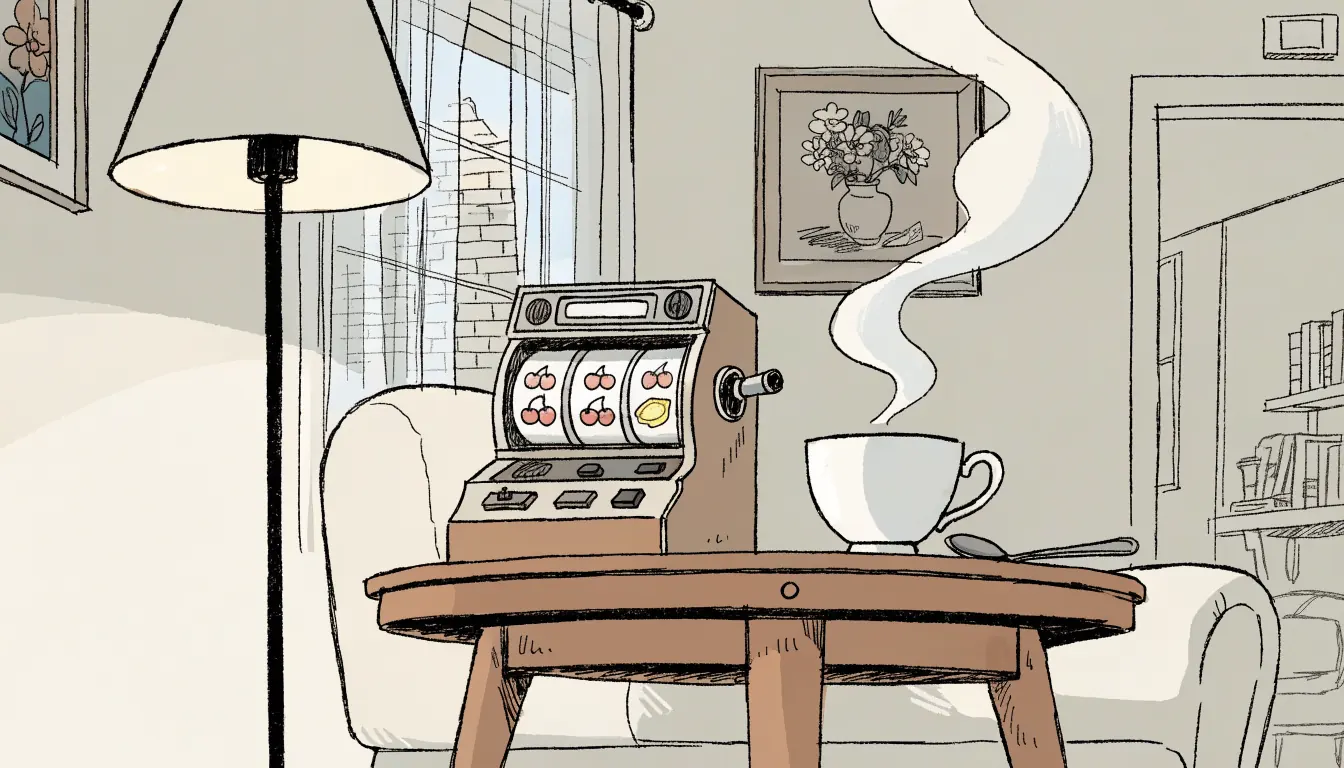
Three reels keep the focus on familiar symbols and quick-to-read results, while the game mechanics and stakes still deserve attention.
What Makes a Three-Reel Slot Feel Different?
A three-reel slot has a different rhythm from the busy video slots that fill most online casino lobbies. You see fewer moving parts, fewer distractions and a layout that is easier to understand at a glance. The old symbols do most of the talking: fruit, bells, bars, lucky numbers and sevens. Nothing is trying particularly hard to explain a story before you spin.
That simplicity is the main attraction. When I first moved from physical fruit machines to online games, I expected the smaller format to feel thin. Instead, I found it easier to settle into. A three-reel game gives you a narrow field to watch, so the result arrives without a pile of animations competing for attention. You can see what matters quickly. Then you decide whether the next spin is worth your attention.
That does not make the format automatically better. It makes it more focused.
Why the format still appeals
Many players are not looking for a cinematic experience. They want a slot that resembles the machines they remember, with familiar symbols and a clear result. Classic three-reel slots provide that feeling without requiring you to learn a complicated feature system first.
There is also a kind of visual honesty to them. A modern slot may surround each result with characters, sound effects, bonus meters and dramatic transitions. A classic design tends to put the reels in the centre and leave the rest alone. If you like knowing where to look, that restraint can be refreshing.
High-RTP Slots in the UK: What RTP Can Tell You
The format can also feel more deliberate. With fewer symbols and less visual noise, each spin stands out. You notice a near miss, a matching pair or a winning line immediately. I used to think this made the games easier to read in a useful way. It does. It just does not make the outcome easier to predict.
That distinction matters.
Simple does not mean generous
A traditional appearance says very little about the underlying mathematics. A slot can look basic while still having a positive house edge. In that case, the mathematical expectation is negative for the player over enough sessions, even if losses arrive slowly and occasional wins keep the experience feeling lively.
That is the part I ignored when I was younger. I treated a quiet, old-fashioned design as though it were somehow less demanding than a flashy video slot. It was still gambling. The symbols were familiar, but familiarity did not change the balance of the game.
So when you compare the best three-reel slots in the UK, do not use the word “best” as a promise of profit. It can mean the clearest presentation, the most enjoyable theme or the closest match to the classic style you want. It cannot, by itself, turn a game with a house edge into a favourable long-term bet.
Casino Games: Slots, Live Tables and More
Plain, not harmless.
The appeal of fewer distractions
Three-reel slots suit players who prefer a short learning curve. You do not need to understand a large collection of special symbols before the basic idea becomes clear. The visual language is usually familiar, and the result is presented in a compact way.
That can be useful if you are returning to slots after a long break. You can concentrate on the feel of the game rather than trying to decode a screen full of instructions. It may also appeal if you dislike games that constantly interrupt the main action with side features.
I have found that this simplicity changes how long a game feels. A three-reel slot can be easy to follow, but it can also become repetitive quickly. There is less variety on the screen, which is precisely why some people enjoy it and others lose interest. You are not being carried from one event to another. The central action remains much the same.
You either like that repetition or you do not.
What the format leaves out
The compact design has limits. Players who enjoy layered bonus features, changing scenes and frequent animations may find classic three-reel slots too spare. There is less room for a game to build a fictional world or introduce a long sequence of additional activities.
The format also should not be judged by appearance alone. Reels are only one visible part of a slot. The way symbols are arranged, the available winning possibilities and the rules attached to a game all affect the experience. A small number of reels does not tell you whether a game will suit your budget, your patience or your preferred level of excitement.
The reel layout is not a secret indicator of a mathematical advantage. A three-reel design is a choice of style, not a guarantee of profit.
That is why I would not pick a three-reel slot simply because it looks traditional. I would first decide what I actually want from it: a recognisable style, a calmer screen, quick results or a break from feature-heavy games. Those are reasonable preferences. Expecting the reel layout to reveal a secret advantage is not.
Online versions and the classic feel
Online three-reel slots can preserve the visual character of the old machines while making the format available on a screen. The design may be cleaner, the controls more polished and the presentation more consistent, but the basic appeal remains familiar: a small set of reels, recognisable symbols and a result that is easy to read.
That makes them a natural starting point for anyone searching for classic three-reel slots or trying to find the best 3-reel slots for their own taste. The important word is “taste”. There is no universal winner hidden in the format. One player may value a stripped-back design; another may find it dull after a few rounds.
My own view is less romantic than it used to be. Three-reel slots can be enjoyable because they are direct, familiar and uncluttered. They can also encourage you to keep repeating the same action because there is so little else on screen. The old-fashioned look may reduce the noise, but it does not remove the risk or alter the long-term mathematics.
That is what makes the format feel different: not a guaranteed edge, but a simpler surface over the same basic gambling decision.
Three-Reel Games and the Machine Behind Them
When people talk about a three-reel slot, they may mean two rather different things. One is the physical machine that once stood in a pub, betting shop or amusement arcade. The other is a digital game displayed in a browser or casino app. They can look related, but they are not the same object.
Bonus buy slots in the UK: how they work
I remember the old machines as much for their presence as for the game itself. There was a cabinet, a screen or glass window, a lever or button, and the unmistakable sound of reels moving into place. The machine occupied space. You stood in front of it, pressed a control and watched the symbols settle in a fixed area. That physical relationship is a big part of the classic appeal.
An online version borrows the visual language without needing any of the hardware. The reels appear on your screen, usually in a compact central panel. Symbols are arranged in vertical columns, with controls beneath or beside them. A spin button starts the round, while other buttons may open the paytable, sound settings or game information. On a phone, the same layout is adapted to touch rather than a lever.
That is why the phrase “3 reel slot machines” can be slightly misleading online. A website can show a digital imitation of a machine, but you are not operating a mechanical cabinet in your room. The software is presenting the game through an interface. The images, sounds and animations create the impression of reels turning; the screen is not necessarily showing physical reels moving behind glass.
What stays the same on screen
The basic visual arrangement is easy to recognise. Three columns sit side by side, with symbols moving vertically during a spin before stopping in their visible positions. A traditional design may use fruit, bells, bars, sevens or other familiar symbols. A newer game can use the same three-column structure while giving it a different theme, sound package and style of animation.
High-Volatility Slots in the UK: Payout Patterns
The display also usually includes a paytable. This explains what the symbols mean and how combinations are treated within that particular game. I make a point of opening it rather than guessing from the pictures. A shiny seven may look important, but appearance alone tells you very little about how a game is configured.
Other 3 reel slot features can be almost invisible until you look for them. The information panel may explain the available lines, the symbols used, special icons and the way wins are displayed. Some games keep the screen deliberately plain. Others add flashing effects, music, banners and animated backgrounds around a very simple reel layout.
That contrast matters. Two games can both be described as three-reel slots while offering completely different presentations. One may imitate an old cabinet closely, with restrained graphics and a short spin animation. Another may place the reels inside a bright digital scene that feels more like a video game. The reel count describes the layout, not the whole personality of the product.
From cabinet to browser
Physical machines were built around dedicated controls and a particular location. Online games have to work across laptops, tablets and phones, so their controls are designed for a range of screens. A button that is easy to press with a finger may look oversized on a desktop. Menus may slide open, and the paytable may appear as a separate panel instead of a printed label on the cabinet.
UK Gambling Casino Sites and Slots: What to Check
This also changes how you notice the machine. In a pub, the cabinet, lights and sounds announce themselves before you touch anything. Online, the game sits among menus, account panels and other pages. It can be opened directly, resized with the browser window or viewed in a compact mobile layout. The digital setting is less tactile, but it is more adaptable.
The software can also present several visual versions of the same basic format. A three-reel game may be labelled classic, retro or arcade-style, yet those labels describe presentation rather than a guaranteed playing experience. I have been caught by that distinction myself: a familiar-looking cabinet theme made me assume I knew how everything worked. I did not.
So, when you see three-reel games online, think of them as digital slot interfaces designed to recreate a recognisable machine layout. The screen supplies the cabinet’s appearance, controls and atmosphere, while the physical weight, buttons and surroundings are gone. Similar silhouette. Different machine.
Our top casino picks for the UK
- JetsetspinsBonus: 200% Bonus + 100 Free Spins + Free Royal Wheel · Payout speed: 1-3 business days
- SlotoSportBonus: 500% up to £ 10 200+ 777 FS · Payout speed: 1-3 business days
- ChanzeBonus: Slots Welcome Bonus #1 200% up to €500 · Payout speed: 1-3 business days
- Revery PlayBonus: 100% up to€1,000+ 100 FS · Payout speed: 1-3 business days
- SpinFormulaBonus: 550% Up To £15,000 + 550 FS · Payout speed: 1-3 business days
- DieselwinBonus: Welcome Pack 250% up to £4000 + 200 FS · Payout speed: 1-3 business days
Playing for Real Money: Keep the Stakes in View
Real-money play means the balance on screen represents actual funds. You add money to an account, place a stake, and any result is settled in that account according to the game’s rules. That is very different from opening a demo version of a three-reel slot. In free play, the balance is fictional, no cash payout is awarded, and a long winning session does not create money you can withdraw.
That distinction sounds obvious, but the buttons and graphics can look almost identical. I have clicked through a few “free” versions that felt convincing enough to forget the important part: the coins were only counters. They were useful for learning the controls and seeing how a game behaves, not for making a claim on winnings. No cash. No hidden balance.
Financial Risk
Every spin with real money carries financial consequences. A familiar appearance does not remove the risk or the house edge.
With real money 3 reel slots, every spin has a financial consequence. The amount you choose, the number of lines or ways the game uses, and the result of that spin all matter. A small stake can still become a meaningful total after repeated play, particularly when the game encourages quick, continuous rounds. The old-fashioned appearance does not make the risk old-fashioned or harmless.
The stake limit depends on age
For online slots in Great Britain, the permitted stake per game cycle is tied to the customer’s age. A specialist review reports a ceiling of £5 for players aged 25 and over, while the limit is £2 for those aged 18 to 24. These are limits on a single game cycle, not a promise that a session will remain affordable.
That difference matters. A permitted stake is not a recommended stake, and reaching the legal maximum on every spin can still put a sizeable amount through the game over time. The limit also does not turn a slot into a low-risk product. It simply restricts how much can be committed in one cycle.
I used to treat the maximum as a kind of permission slip: if the system allowed it, I assumed it must be reasonable. That was a poor shortcut. The sensible question is not only whether the stake is allowed, but whether losing it repeatedly would interfere with money needed elsewhere.
What “best” can and cannot mean
People often look for the best real-money 3 reel slots as though one title must be the safe choice. “Best” is doing a lot of work there. It might mean a layout you understand quickly, a pace you can tolerate, familiar symbols, or a stake size that fits your limit. None of those descriptions guarantees a favourable financial result.
The central point is mathematical rather than visual. A game with a positive house edge is built so that its expected result for the player is negative over enough sessions. It does not matter whether losses arrive slowly through many modest spins or appear in sharper bursts. The expectation remains negative. A run of wins can happen, but it does not erase the underlying advantage held by the game.
That is why a three-reel slot should not be judged by a short lucky session. I have had stretches where a machine seemed generous, followed by the less exciting reality of the balance going down. The previous result does not make the next spin “due”, and a near miss is not evidence that a payout is getting closer.
Keep free and paid modes separate
Free online play has a legitimate use. You can test whether the interface is clear, watch how the reels operate, and decide whether the style suits you without risking a deposit. Searches for no-registration access often reflect that wish to look around first. But free play remains a simulation: the displayed money is fake, and no payouts are awarded.
Moving from that mode to real-money play changes the decision completely. The same symbols and sound effects may remain, but the balance is no longer pretend. A cash win is possible only within the paid gambling arrangement, and a loss is real as well.
So I would treat free play as a demonstration, not a rehearsal for guaranteed profit. For paid play, keep the stake in view, remember the house edge, and do not let a traditional three-reel presentation disguise what is happening: you are wagering against a game designed with a mathematical advantage.
Best Low-Volatility Slots in the UK: What to Know
Free Online Play and the Old-Fashioned Slot Feel
There is a useful way to try classic-style games online without turning the session into a money decision: open the free-play version. The balance shown on screen is fictional, no deposit is involved, and no cash prize is awarded. Any win is only part of the demonstration.
That sounds obvious, but it is easy to forget when the reels stop on a familiar-looking combination and the game flashes a cheerful message. I have caught myself treating a practice balance as if it were a small bankroll. It is not. The number can rise, fall or disappear without changing anything outside the screen.
Why use free play?
For me, the main attraction is getting a feel for the presentation. Old-fashioned 3 reel slots tend to put the symbols and the reel movement in the foreground rather than surrounding the game with layers of animation. Fruit symbols, bells, bars and sevens create the atmosphere people often associate with a pub machine or an older arcade cabinet.
Free online 3 reel slots can be a simple way to decide whether that style still appeals to you. You can watch the reels turn, listen to the sound design and see how clearly the game explains a winning combination. None of that requires a deposit.
It also gives you time to notice the less glamorous details. Is the stake control easy to understand? Does the game show what each symbol means? Can you pause and read the information panel without hunting for it? A short practice session can answer those questions before money enters the picture.
Practice, not a route to winnings
The word “free” is sometimes made to sound like a bargain. In this setting, it means no financial stake and no payout. It does not mean a concealed way to build a balance for later withdrawal. The coins, credits or points are there to operate the demonstration only.
That distinction matters when comparing free classic 3 reel slots. One game may give you a generous-looking starting balance, while another may offer fewer practice credits. Neither is paying you. The display is part of the interface, not evidence that one title is more profitable.
I also would not use a demo result to claim that a game is a “high payout” 3 reel slot. A run of wins in free mode is just a run of simulated results. It cannot establish what would happen with real stakes, and it says nothing reliable about the quality of future spins.
What can you learn?
You can learn how the game behaves as a piece of software. You can check whether the traditional layout suits you, whether the symbols are readable on a phone and whether the pace feels comfortable. You can also practise stopping rather than continuing automatically because the previous spin happened to win.
That last point helped me more than expected. When nothing is at risk, it becomes easier to observe your own habits: chasing a near miss, increasing a fictional stake after a loss, or assuming a winning symbol is “due”. Those thoughts can feel persuasive, but free play does not make them true.
So, how to win on 3 reel slots in demo mode? You can produce winning combinations on the screen, but you cannot turn them into money. The useful result is understanding the game and your reaction to it, not finding a secret method.
The old-fashioned feel can be enjoyable on its own. Keep it in that lane: a no-payout trial of a classic presentation, with pretend funds and no cash outcome. That is the honest version.
Honest View
Free play is a simulation for testing mechanics, not a way to win real money.
Before Your First Deposit
Before you play 3 reel slots for real money, I would treat the deposit screen as a checkpoint, not as the beginning of the entertainment. I have rushed past it before, keen to get spinning, and only later noticed that I had not properly checked who was taking the payment or what controls were available. Five quiet minutes here can save a much more irritating problem later.
Check the operator first
For online gambling offered to people in Great Britain, the relevant regulator is the UK Gambling Commission. It oversees remote gambling even when the operator’s key equipment is located elsewhere. It is also the sole regulator for commercial gambling in Great Britain.
A legal online casino serving British customers must hold a current operating licence. Do not rely only on a licence badge in the footer. Open the UK Gambling Commission’s public register and verify the operator’s licence number there before depositing. Check that the business name matches the site you are using. A familiar-looking design, a large game selection or a promise of classic 3 reel slots online does not prove anything about the operator.
The Commission grants operating licences to gambling businesses and personal licences to individuals working in relevant roles. For you as a customer, the operating licence is the important starting point. If the details are unclear, missing or inconsistent, I would stop there.
Expect an age check
Operators must verify your age before allowing you to deposit funds into a gambling account. That check may involve personal details or identity documents. It is not an optional formality, and a site that lets you fund an account without completing the required verification deserves caution.
Online gambling in the UK is legal for players aged 18 and over when the operator holds a UK Gambling Commission licence. Do not try to work around the check with someone else’s details. Apart from creating account and withdrawal complications, it means the account information no longer reflects the person actually gambling.
Set the brakes before the car moves
Remote operators must ask new customers to set a financial limit before the first deposit. They must also provide accessible account-level controls, so look for these before adding money rather than searching for them after a bad session.
The useful question is not whether a site calls its tools “smart” or “responsible”. It is whether you can set a limit clearly, find it again and change your gambling behaviour without having to argue with a sales team. Self-exclusion should be available at UK-licensed casinos as well. GAMSTOP is another option for excluding yourself from participating online with participating operators.
Credit cards cannot be used for gambling at UK-licensed casinos. Wallet payments are also not acceptable where the wallet allows credit-card funds to be used for gambling. If a payment route seems designed to hide the original funding source, I would leave it alone.
Finally, check what help exists if something goes wrong. UKGC-licensed casinos must offer an internal complaints process and access to an approved Alternative Dispute Resolution service. That does not make every dispute pleasant, but it gives you a defined route instead of a dead end.
Only after these checks would I decide whether to play classic-style or newer three-reel games online. The reels can wait.
Best Progressive Jackpot Slots: How They Work
Fruit Machines, Paylines and What the Odds Can Tell You
“Fruit machine” is the old British name many people still use for a slot. The fruit symbols are the giveaway: cherries, lemons, oranges, bells and bars, usually arranged in a deliberately simple-looking display. Online, the same style may be presented as a classic slot or a three-reel game. The label changes; the underlying maths does not.
I used to assume that a smaller game must be easier to understand, and therefore easier to judge. That was my mistake. A compact layout can make the rules look obvious while leaving the important details in the paytable and game information.
What paylines actually describe
A payline is a route across the reels on which matching symbols may form a winning combination. On a traditional three-reel machine, that route may be a straight line through the centre. Some games offer additional lines or ways to win, but the screen alone does not tell you what each one is worth.
The phrase “three-reel slot machine paylines” sounds precise, yet it covers several different arrangements. One game may have a single visible line, while another may allow multiple lines across the same three reels. The player may be able to select the number of active lines, or the game may apply them automatically. Those rules affect the cost of a spin and the combinations that can win.
A five-reel slot can also have a bet applied across all five reels. That does not automatically make it better or worse than a three-reel machine. It simply means there are more reel positions involved in the possible patterns and the betting structure may be broader.
Why reel count is not the odds
Reel count is a description of the layout, not a probability statement. It does not reveal how often a particular symbol appears on each reel, how winning combinations are weighted, or how much each combination pays. Two three-reel games can look almost identical and still produce very different results over time.
The same warning applies to the number of paylines. More lines can create more possible winning patterns, but they can also change the amount staked on each game cycle. Fewer lines do not automatically mean better odds, and a busy display is not proof of generous payouts.
When I check a game, I look past the fruit graphics and count the actual rules: which symbols can land, which combinations qualify, what each combination pays, whether the stake covers one line or several, and whether any feature changes the calculation. That information is more useful than calling a title “classic” or “simple”.
Reading claims about odds
A provider or casino may describe a game as having favourable odds, frequent wins or a straightforward design. Those phrases need translating. “Frequent wins” might refer to small combinations rather than a profitable result. “Simple” might only mean that the screen has fewer reels and symbols.
The relevant mathematical information is normally found in the game rules, paytable and published return information, where provided. Even then, a return figure describes long-run mathematics rather than a promise about your next session. It cannot tell you when a winning spin will arrive.
That is why I treat three-reel fruit machines as a format, not a shortcut to better chances. The appearance can be familiar, and the payline layout can be easy to follow. The odds still come from the underlying design. Familiar does not mean favourable.
More about odds
Paylines and reel counts describe the layout, not the probability of winning. A complex display does not guarantee better payouts.
No-Download Play, Deposits and the Video-Slot Difference
A browser-based slot needs no installation. You open it on a compatible device, wait for the game to load, and play inside the casino page. That is what people generally mean by free 3 reel slots with no download: the old-style layout is available without adding software to your computer or phone.
The important word is free. In this mode, the balance is fictional. You are not risking money, and you cannot turn a win into a withdrawal. No payouts are awarded. I used this kind of play to get a feel for the reels and the button controls, but it is better understood as a demonstration or practice session than as gambling.
“No deposit” can describe something slightly different. A casino may let you open a game without making a payment first, but that does not automatically mean the game pays real money. Often, no-deposit access simply means you can try the slot in its free-play mode. If you later add funds and choose the cash balance, you have moved into real-money play. The screen may look almost identical; the financial meaning is not.
That distinction is easy to miss when the game loads instantly in a browser. A play balance with no value can still rise, fall and trigger winning animations. I have watched a pretend balance climb and caught myself treating it as progress. It was only a display. A useful check is whether the game clearly identifies the balance as practice credit and whether its terms explain withdrawals. If there is no route to a cash payout, it is not a real-money win.
The phrase “video slot” usually points to a broader digital presentation rather than one exact reel count. Video slots often add more visual effects, extra symbols, feature screens or bonus mechanics. A classic three-reel layout may be much plainer, with the reels doing nearly all the talking. Neither label, by itself, tells you what a session will return.
Reel count also does not describe the whole betting structure. A 5 reel slot game can have a bet applied across all five reels, creating a different layout and way of forming combinations from a compact three-reel design. That is one reason not to judge a game simply by whether it looks classic or modern.
For me, no-download access is mainly about convenience, while no-deposit play is about how the balance is funded—and whether it can ever be paid out. Those are separate questions. Keep them separate.
A Three-Reel Slot, Without the Sales Pitch
A three-reel slot is a slot game built around three vertical reels. Each reel carries symbols, and a spin stops them in a new arrangement. The aim is simple: match the right symbols in the right places according to the game’s rules.
That is the whole idea, stripped of the casino language.
You may also see this format described as a classic slot, fruit machine or old-style slot. Those labels usually point to a straightforward layout rather than a promise about results. The screen may show familiar fruit, bells, bars, lucky sevens or other traditional symbols, but the artwork does not change the underlying maths.
I used to read “simple” as “easy to understand and kinder to the bankroll”. That was my mistake. Simple describes the presentation. It does not tell you whether a particular game offers better value, how often it will produce a win or how large a return might be.
The number of reels is only one part of the design. The symbols, winning combinations, rules, volatility and house edge also matter. Two games with three reels can therefore feel similar while working differently behind the display. Reel count alone cannot tell you the likely return.
Best RTP Casino Slots UK: How to Read the Numbers
The phrase best 3 reel slots UK 2026 can sound as if there is one obvious formula waiting to be uncovered. There is not. “Best” depends on what you want from the format: a familiar look, uncomplicated rules, a slower pace or merely a break from feature-heavy video slots.
My useful translation is less glamorous: a compact slot format with traditional visual language and fewer moving parts on screen. That can be appealing. It is not a shortcut around the odds.
Plain, not magical.
The Classic Three-Reel Slot: Familiar, Not Foolproof
“Classic” is one of those casino words that sounds more informative than it really is. In a three-reel game, it normally points to the old-school presentation: a compact layout, recognisable symbols and a straightforward spin that feels closer to a traditional fruit machine than a feature-heavy video slot.
I understand the attraction. The first classic three-reel slot I tried felt refreshingly uncluttered. There were no busy screens competing for attention and no long explanation before the reels would move. You could see what the game was trying to be immediately. That simplicity is the selling point.
It is not a promise about the result.
A familiar appearance does not make a game generous, fairer or safer for your bankroll. Nor does the word “classic” tell you what the mathematical return will be. Those things depend on the individual game and its rules, not on whether the artwork looks traditional or the reels are presented in an old-fashioned style.
The important bit is the house edge. Where a game has a positive house edge, its mathematical expectation for the player is negative over enough sessions. That remains true whether losses arrive in obvious drops or are softened by occasional wins. A slow leak is still a leak.
I made that mistake myself, treating a simple interface as if it meant simple risk. It does not. A clean display can make the play easier to follow, but it cannot change the underlying calculation.
So, when you see a classic three-reel slot, read the label as a description of presentation and atmosphere. Enjoy the familiar look if that is what brings you to it, but do not attach a financial promise to the nostalgia.
Traditional does not mean foolproof.
Classic Slots vs Video Slots: Reel Count Is Only One Difference
When I compare classic slots with video slots, I start with the screen rather than the number of reels. Classic games tend to keep the presentation stripped back: familiar symbols, straightforward spin controls and little visual noise. Video slots usually build a larger experience around the reels, with animated scenes, sound effects, extra features and more going on between spins.
That does not make one category automatically better. “Classic” can sound like a promise of honesty or better value, but it is really a description of style. A video slot can be simple, while a traditional-looking game can still have rules and settings worth checking. Neither label tells you what the return will be.
Reel count matters because it changes how a game is arranged, not because more or fewer reels settle the financial outcome. A five-reel slot, for instance, may let one wager cover combinations running through all five reels. That creates a different layout from a compact three-reel design, where the action is easier to read at a glance. The extra reels do not, by themselves, make the game more generous or more expensive.
I made the mistake of treating the old-fashioned look as a kind of safety signal. It was just decoration. The same applies to bright video presentation: a busy screen can make a game feel more exciting without changing its underlying mathematics.
So, when weighing classic slots vs video slots, I would separate appearance from structure. Look at how the reels operate, what the stake applies to and which features are included. Then consider whether you actually enjoy following the game. The style may influence your experience; it cannot guarantee a better result. Familiar is not favourable.