
High-RTP Slots in the UK: What RTP Can Tell You
 Available in GB
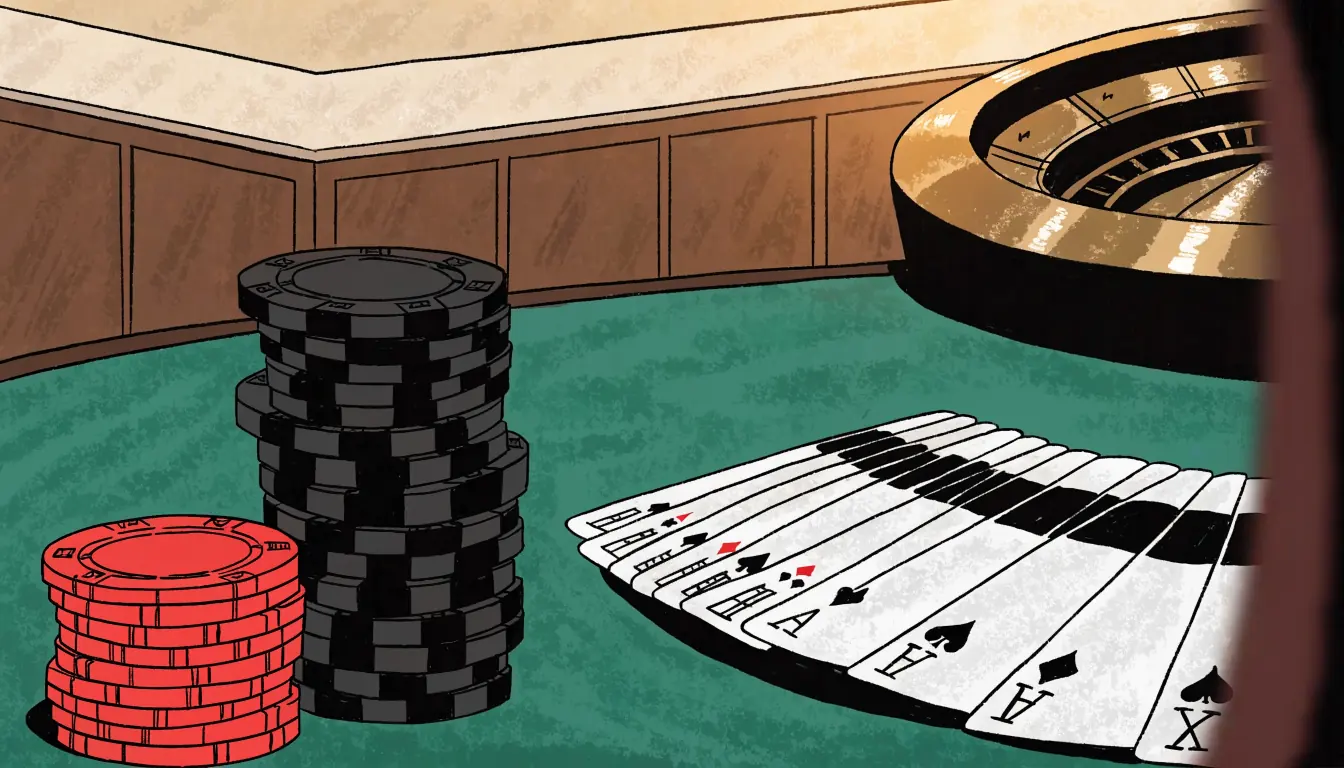
RTP offers a theoretical basis for comparing slots, while volatility and game features help explain how play can vary.
What RTP Can—and Can’t—Tell You About a Slot
RTP is the number people usually reach for when they ask about the best highest RTP slots UK 2026. Fair enough. It gives you one useful way to compare games. The trouble starts when that number gets treated like a promise attached to your next spin.
I made that mistake myself. I saw a published return figure and read it as though the game had agreed to hand something back during my session. It had not. RTP is a long-run mathematical measure, not a personal result waiting to happen.
RTP is about the game, not your visit
A slot’s RTP describes the proportion of staked money that the game is designed to return over a sufficiently large body of play. That description belongs to the game’s mathematical model. It does not describe the result of one person’s evening, one deposit, or one short run of spins.
Those are different things.
If you search for the highest RTP online slots UK players can access, you are really looking for games with a more favourable theoretical return than others. That can be a sensible comparison. It still cannot tell you what will happen to your balance in the next few minutes.
A game may pay several wins close together. It may also go through a stretch where nothing useful lands. Neither stretch, by itself, proves that the published RTP is wrong. A long-run figure is not required to appear neatly inside every small sample of play.
That was the part I used to ignore. I wanted the number to act like a forecast. It is closer to a description of the rules underneath the game.
Read the figure as an expectation
The word “expectation” sounds more encouraging than it is. In this context, it means a mathematical average across enough sessions, not an amount you should expect to receive personally.
Suppose a game has a positive house edge. The casino has the mathematical advantage built into the game, so the player’s mathematical expectation is negative over enough sessions. That remains true whether the losses arrive sharply or are softened by a series of small wins.
Keno Online Casinos in the UK: How to Compare Sites
The second part matters. A slot can feel gentle because it keeps producing modest returns. Your balance may fall slowly rather than disappear in one ugly run. The experience can seem more manageable, but the underlying expectation has not changed merely because the losses are spread out.
Put bluntly: slower pain is still pain.
RTP does not remove the house edge. It helps describe how large that edge is in the game’s long-run mathematics. A higher published RTP can therefore look preferable when comparing otherwise similar choices, but it does not turn the game into a positive-expectation opportunity for the player.
Why a short session can look “wrong”
Short sessions are noisy. A player can finish ahead on a game with a house edge, just as another player can lose heavily during the same kind of play. Those results do not rewrite the game’s mathematical design.
This is why personal stories are weak evidence for finding slots with the highest RTP UK players might consider. Someone saying that a slot paid well yesterday has told you about one result, not established the game’s long-run return. Someone else describing a cold session has not disproved the published figure either.
I have had both kinds of session. The winning one made me feel as though I had spotted something. The losing one made me blame the timing, the stake, and nearly the game itself. Neither reaction was a reliable calculation.
The sensible question is narrower: what does the published RTP say about the game’s theoretical return over enough play, and what does it leave completely unknown about this session?
Published does not mean guaranteed
The word “guaranteed” is where many explanations go off the rails. A published RTP is not a minimum return for each player. It is not a promise that every deposit will be treated fairly in the everyday sense of receiving something back. It is not a target the slot must hit before you stop playing.
Think of it as a property of the game’s design. The game may contain different outcomes, and those outcomes do not have to arrive in a tidy order. A run of wins does not mean the slot owes you losses afterwards. A run of losses does not mean a win is now due.
RTP is not a guarantee
Nothing in RTP says that a run of losses means a win is now due or that the slot owes you anything.
That last idea is especially dangerous. I have watched myself think, “It has taken enough, so something must be coming.” Nothing in RTP says that. The number does not keep a running personal account for you.
Comparing games without overreading them
When you compare casino slots with the highest RTP, keep the comparison in its lane. RTP can help distinguish the theoretical return built into one game from that of another, assuming the figures are presented accurately and refer to the version being played. It cannot rank your likely personal results with certainty.
Nor does it tell you whether you will enjoy the game, how long your balance will last, or whether a particular session will finish ahead. Those are separate questions. A high RTP may reduce the mathematical disadvantage compared with a lower-RTP alternative, but it does not erase that disadvantage when the house edge remains positive.
So, when I see “best” attached to high-RTP online slots, I mentally remove the sales gloss. The useful part is the comparison of long-run theoretical returns. The misleading part is any suggestion that the number predicts an individual outcome.
That is what RTP can tell you. The rest is guesswork dressed up as certainty.
Our top casino picks for the UK
- JetsetspinsBonus: 200% Bonus + 100 Free Spins + Free Royal Wheel · Payout speed: 1-3 business days
- SlotoSportBonus: 500% up to £ 10 200+ 777 FS · Payout speed: 1-3 business days
- ChanzeBonus: Slots Welcome Bonus #1 200% up to €500 · Payout speed: 1-3 business days
- Revery PlayBonus: 100% up to€1,000+ 100 FS · Payout speed: 1-3 business days
- SpinFormulaBonus: 550% Up To £15,000 + 550 FS · Payout speed: 1-3 business days
- DieselwinBonus: Welcome Pack 250% up to £4000 + 200 FS · Payout speed: 1-3 business days
Checking the UK Casino Behind the Game
When I’m looking at a casino because it advertises a strong slot selection, I start with the casino itself. Not the banner, not the wording about “premium” games, and not a bright list of supposed favourites. The first practical question is whether the operator is authorised to offer online gambling to people in Great Britain.
That check matters because a slot can be presented attractively while the account behind it gives you a completely different level of protection. I have made the mistake of treating a polished website as evidence that everything was in order. It is not. A professional-looking homepage proves very little about the company running the gambling service.
Video Slots in the UK: How the Games Work
Who regulates online casinos in Great Britain?
The UK Gambling Commission is the regulator responsible for commercial gambling in Great Britain. Its work covers remote gambling offered to consumers in Great Britain, so the relevant question is not where the casino’s servers, offices or other important equipment happen to be located. An operator selling remote gambling into this market still needs the appropriate authorisation.
That is useful when a casino tries to make its location sound like the main issue. The equipment may be elsewhere, but the service is still being offered to British customers. The regulator’s role is tied to the gambling activity and the market being served, not simply to the address displayed in a footer.
The same regulator also covers online casinos as part of the wider gambling sector. In practical terms, this means you should not treat a casino licence as a decorative trust badge. It is the legal foundation for the operator’s service in Great Britain.
The Gambling Commission is the sole regulator for commercial gambling in Great Britain. That gives you a clear place to begin rather than leaving you to judge an operator by its own claims. A casino may mention oversight in several places, but the useful check is whether the business appears in the regulator’s public information and whether the details match the account you are considering.
What licence should you look for?
The Gambling Commission grants operating licences to businesses and personal licences to individuals who work in relevant operating roles in Great Britain. For you as a player, the business operating licence is the important starting point. It indicates that the company providing the gambling service has been authorised for that activity.
Do
- Check the operator’s legal name
- Compare the licence number with the UK Gambling Commission’s public register
- Verify the listed business corresponds with the casino you intend to use
Don’t
- Assume a professional-looking homepage proves the company is regulated
- Treat a casino licence as a decorative trust badge
- Rely solely on a brand name without checking the legal entity
I would check the operator’s legal name, not only the brand name shown across the website. Those two names may be different. If the site displays a licence number, compare it with the entry on the UK Gambling Commission’s public register before depositing. Check that the listed business corresponds with the casino you intend to use and that the licence is current.
This is a small step, but it prevents a common error: assuming that a logo or licence number printed on a webpage is automatically genuine, current or connected to that particular operator. Copy can be copied. Register details are the better reference.
The check is also worth doing when you arrive through a page discussing the best online casino slots with high RTP. The advertised games may be the reason you opened the site, but they should not decide whether the operator is suitable. I keep those questions separate: first establish who is legally providing the service, then look at the games available there.
Do not confuse a provider with a casino
A game provider and an online casino are not the same business. A provider may create or supply games, while the casino accepts your account, handles your deposits and provides the gambling service. Seeing a familiar provider name in a game lobby therefore does not confirm that the casino itself is authorised.
Three-Reel Slots in the UK: How They Play
That distinction becomes especially important when several sites display similar titles or the same supplier logos. The familiar part of the screen can create a false sense of security. I have found it easy to recognise the game and forget to identify the operator. Wrong order.
Before I put money into an account, I look for the operator’s legal identity, its UK Gambling Commission licence details and the matching entry on the public register. If those details are unclear, inconsistent or difficult to verify, I stop there rather than letting a promising slot list make the decision for me.
This approach does not rank games or settle which online slot has the highest RTP. It answers the more basic question first: who is offering the gambling service, and are they authorised to offer it to customers in Great Britain? Without that foundation, a game comparison is not much of a safeguard.
Slot Games Aren’t All the Same Shape
When I first started comparing slot games, I treated the reels as decoration. Five columns on the screen, symbols dropping into place, a button underneath — I assumed the important difference was simply which pictures appeared and how often they paid. That was too lazy. The layout tells you something about how a spin is built, including where your stake is being applied.
A five-reel slot can have one bet spread across all five reels. That does not mean you are choosing one reel and ignoring the others. The game can treat the complete five-reel arrangement as the playing area for the spin, with the selected stake covering the reels together.
Bet setup
A five-reel slot can treat the complete arrangement as the playing area, where one selected stake covers all reels together.
That is a small detail, but it changes how I read a game screen. I used to see five separate columns and imagine five separate decisions. In practice, the betting setup may be much simpler: select the stake, start the spin, and the game evaluates the result across its full reel layout according to its own rules.
Read the bet line before the artwork
The attractive part of a slot is usually the least useful part for understanding the setup. Themes, animations and sound can make two games feel completely different, even when the basic screen arrangement looks familiar. I now look for the information panel before getting attached to the design.
The useful questions are straightforward:
- Does the chosen stake apply to the whole five-reel game?
- Does the game describe the bet as covering all reels?
- Does the paytable explain how symbols must appear for a win?
- Is the amount shown for the complete spin, rather than for one visual column?
The first point matters because a five-reel layout does not automatically explain the betting arrangement by itself. The game’s own help screen does that. The reels show where symbols land; the paytable and bet display explain what your selected stake does.
That distinction is easy to miss when the interface is designed to keep everything moving. I have clicked through a new game, watched the symbols spin, and only afterwards realised I had not properly read the betting information. The screen looked familiar, so I assumed the rules were familiar too.
They were not.
One layout, different ways to evaluate a result
A five-reel game can use the complete reel set when checking a spin. The visible result is therefore not just a single symbol or one isolated column. The arrangement across the reels is part of what the game evaluates.
That does not tell you whether the game is generous, suitable for a particular budget or attractive from a mathematical point of view. It only tells you to separate the visible shape of the game from the way the stake is handled. A game can look busy while having a simple betting control. Another can look plain while presenting more information in its paytable.
Check the interface
- Open the information or paytable panel
- Confirm how the stake is applied to the five reels
- Check which symbols and arrangements count as winning combinations
- Look at the amount shown before starting the spin
- Make sure the displayed rules match the game you intended to play
This is also why I would not use the phrase “best slot” as if it described one universal format. Someone looking for the highest RTP slot games in the UK may focus on the published return figure. Someone else may care more about whether the bet display is clear and whether the five-reel layout is easy to understand. Those are different checks.
The reel count alone cannot answer the wider question. It cannot establish which slot has the highest RTP, and it cannot turn a familiar layout into a recommendation. It simply gives you a practical starting point for reading the game correctly.
What to check before spinning
I keep the process deliberately boring:
- Open the information or paytable panel.
- Confirm how the stake is applied to the five reels.
- Check which symbols and arrangements count as winning combinations.
- Look at the amount shown before starting the spin.
- Make sure the displayed rules match the game I intended to play.
That last check has saved me from treating a new interface as though it were an old one. Names and artwork can suggest familiarity, but the actual game screen has the final say about its setup.
A five-reel slot is not five separate games running at once. It is a game whose bet may cover the full reel arrangement in one spin. Once that is clear, the screen becomes easier to read, and the search for an online slot with a high published RTP can stay separate from the more basic question of how the game takes your stake. Small distinction. Worth making.
Online Slots: The Rules That Change a Session
When I first started looking at the highest RTP online slot in the UK, I treated the game screen as if it contained the whole deal. It does not. The rhythm of a session is also shaped by rules around stake size, spin speed and account controls. Those details are less glamorous than a “big win” banner, but they affect how quickly money can leave an account.
Stake limits depend on age
For online slots in Great Britain, the maximum stake is tied to the customer’s age:
- Customers aged 18 to 24 can stake no more than £2 per game cycle.
- Customers aged 25 and over can stake no more than £5 per game cycle.
A specialist review reports these limits, and they are also reflected in the current British gambling framework. I would still check the operator’s own terms before depositing, because rules and implementation can change. The important point is that the cap applies to the whole game cycle, not merely to whichever individual line or symbol catches your eye.
That matters when a slot presents several ways to adjust a wager. A larger-looking total may be made up of several lines, reels or feature selections, but the amount staked for that cycle still has to remain within the applicable age-based limit. Seeing a small value beside one part of the interface is not enough; look for the total stake shown before confirming the spin.
The cap also changes the way people compare real money slots. Someone searching for an online slot with the highest RTP may imagine that the only meaningful choice is the published return figure. In practice, the permitted stake affects the amount exposed on every cycle. A game’s label cannot override the limit.
Every spin takes time
Online slot spins in Britain must last at least 2.5 seconds, measured from the start of one game cycle until the next cycle can begin. That prevents the instant-fire rhythm I used to chase when I was annoyed with a losing run. You press the button, wait, see the result and only then can the next cycle start.
Bonus buy slots in the UK: how they work
The pause is not a promise that the game is kinder. It simply places a floor under the speed of play. A high-RTP online slot does not become more favourable because the reels move slowly, and a lower-RTP game does not become worse because the animation feels quicker. The timing rule concerns the session’s pace, not its mathematical return.
Autoplay is banned for online slots in Britain. Each cycle therefore requires an active action rather than a setting that keeps the game running while you watch something else. I find that distinction useful. It gives you a moment to notice the stake, the balance and whether you still want to continue, although no rule can make somebody use that moment sensibly.
Check the screen before pressing spin
Before starting a session, I look at three things: the total stake for the cycle, the age-related limit that applies to me and whether the next spin can begin only after the required interval. If the interface makes any of these unclear, I do not treat that as a minor design quirk. Confusion at the point of wagering is a good reason to stop and read the terms.
Age limits
Attention Ensure you are aware of the age-based stake caps: £2 per game cycle for those aged 18–24, and £5 for those aged 25 and over.
Operators must verify a customer’s age before allowing funds to be deposited into a gambling account. That is separate from the stake cap: being old enough to open an account does not mean every available stake setting is permitted. The account should apply the relevant limit to the customer’s age group.
I also set an account limit before playing rather than relying on how disciplined I feel after a bad result. Remote operators must prompt new customers to set a financial limit before their first deposit and provide accessible controls for changing account-level limits. That is a practical checkpoint, not a feature that improves the return of any slot.
So, when comparing claims about the best online casino with the highest RTP, I would first ask whether the session conditions are clear: what can be staked, how quickly a cycle can repeat and what controls are available. The headline number can wait.
Slot Machines and the Details Behind Their Features
When I look at a slot, I try to separate its visible machinery from the claims attached to it. Reels, paylines, jackpots and bonus rounds are the parts you can inspect on the game screen. They tell you how the slot is built. They do not, by themselves, prove that it is the best choice for a particular session.
That distinction matters when you are comparing casino slot machines said to have the highest RTP in the UK. A published return figure may attract attention, but the game’s structure still determines how a spin is arranged, which symbols can connect and what the larger features are designed to do. I have learned not to treat a bright bonus icon as evidence of anything beyond the presence of a bonus feature.
Fruit Machine Slots in the UK: Online Play Explained
Reels and the basic layout
Low-volatility slots commonly use five reels. These are the vertical columns of symbols that stop after each spin. The familiar arrangement gives the game room for several symbol combinations, while keeping the result easy to read: you watch the reels settle, then check which lines have connected.
That five-reel format is not a guarantee of a particular return or a ranking among the highest RTP slot machines. It is simply a common design choice. Two games can share the same reel count and still feel completely different because their symbols, winning routes, jackpot arrangements and bonus rules are not alike.
The reel layout is therefore a starting point, not a verdict. I check what the game actually counts as a win before getting interested in its advertised percentage.
Paylines and winning routes
A payline is a route across the reels on which matching symbols may form a winning combination. Low-volatility games typically have twenty-five or more paylines. That gives the screen many possible lines to inspect, rather than relying on a single central route.
The important detail is that a larger number of paylines does not automatically mean a better slot. It describes how the game organises winning combinations. You still need to understand whether the lines are fixed, how symbols must appear, and whether the displayed stake covers all available lines. Otherwise, the word “more” starts doing sales work it has not earned.
I once saw a game with an impressive-looking payline panel and assumed the extra lines made it safer. They did not. They only made the game’s layout busier.
Fixed jackpots instead of progressive pools
Another feature associated with low-volatility slots is a fixed jackpot. The amount is set within the game rather than rising through a shared progressive pool. That makes the jackpot mechanism easier to distinguish from a networked prize that changes as other players contribute to it.
Fixed jackpot
The amount is set within the game rather than rising through a shared progressive pool.
“Fixed” does not mean guaranteed, and it does not establish a superior RTP. It describes the jackpot setup. If a game advertises a large prize, I look for the rules explaining which combination triggers it and whether the prize belongs to the ordinary paytable or to a separate feature.
Bonus rounds and multipliers
Bonus rounds are another common part of the design. In this group of slots, they typically use multipliers applied to wins accumulated during the feature. The round may change the presentation, but its practical role is still defined by the rules: qualifying symbols or events begin the feature, wins are recorded, and a multiplier affects the stated result.
That sounds straightforward until the symbols start flashing and the game begins calling everything “enhanced”. I read the bonus instructions before spinning. A multiplier is a rule applied inside a feature, not proof that the slot has the highest RTP or that the next spin will pay.
These details help you compare how a game is constructed. RTP remains a separate mathematical question. Different subjects, easily blurred.
Low Volatility, Smaller Wins, and Longer Sessions
Volatility describes the shape of a slot’s results, not whether the game offers the highest RTP. I used to treat “low volatility” as a quiet version of a good deal. That was my mistake. It tells you how returns tend to arrive; it does not, by itself, tell you the game’s long-run mathematical value.
Best Low-Volatility Slots in the UK: What to Know
A low-volatility slot spreads its returns across more frequent, smaller wins. Across most titles, winning combinations typically appear every three to six spins on average. That can make the balance look less jumpy, with small wins arriving often enough to interrupt a run of losing spins.
It is easy to read that pattern as safety. I have done it myself: a few small wins appear, the session feels steady, and the game starts to seem “gentle”. But frequent winning combinations are not the same as a profitable session. A small return may only cover part of the stake, or it may briefly delay the point at which the balance drops.
High-volatility slots take the opposite route. Winning combinations arrive less often, but the returns, when they appear, are larger. That creates a rougher session: longer stretches without a meaningful win, followed by a result that can change the balance more noticeably. Some players prefer that sharper pattern; others would rather see smaller results arrive more regularly.
Neither style is automatically better for a search for a high-RTP, low-volatility slot. Volatility and RTP answer different questions. Volatility concerns the distribution and timing of returns. RTP concerns the game’s stated long-run return expectation. Reading one as a substitute for the other is how a neat label turns into a poor decision.
There is another part that advertising tends to leave in the small print. If a game has a positive house edge, its mathematical expectation is negative over enough sessions, whether losses arrive in a slow trickle or in sudden drops. Low volatility can make the decline feel less dramatic, but it does not remove that underlying disadvantage.
So I would use low volatility as a description of the ride, not a promise about the destination. Smaller wins and more regular combinations may suit the way you want a session to feel. They do not turn the slot into a guaranteed earner. Slower losses are still losses.
Volatility explained
Volatility describes the distribution and timing of returns, not the game’s long-run mathematical value.
Looking at Pragmatic Play Slots Without the Sales Pitch
Pragmatic Play is a game provider, not a guarantee attached to every title carrying its name. I understand why people look for the highest-RTP Pragmatic Play slots in the UK: a familiar provider feels like a useful shortcut. I have made that shortcut myself. It is neat, quick, and not reliable enough.
The important detail is the individual game’s published RTP setting. The provider name alone does not tell you that figure, and it does not establish how the game will behave during your session. Two games from the same studio can have different mathematics, features and volatility. Even the same title may be offered with different RTP settings, depending on the version made available by an operator.
That makes broad claims about a single “best” Pragmatic Play slot rather shaky. A provider-wide ranking needs current, title-by-title information, not a catchy label. Without that check, calling one game the highest-RTP choice would turn a guess into advice. I would rather leave the crown empty than dress up an unverified list.
There is another trap in the word “highest”. A published RTP describes a long-run theoretical return, not the result of your next session. If a game has a positive house edge, its mathematical expectation is negative over enough sessions. That remains true whether losses arrive in a slow drip or are interrupted by occasional attractive wins. The pace can feel very different; the underlying expectation does not become favourable.
So when comparing Pragmatic Play games, treat the provider as an identification label, not as evidence of value. Open the game information, check the RTP setting shown for that version, and keep the figure in its proper place: a statistical description rather than a promise. “High RTP” sounds reassuring. It is still only a model.
I would also avoid quietly substituting another provider while answering this question. Searches for Hacksaw Gaming or other studios may lead to similar claims, but a different brand does not solve the same verification problem. The sensible comparison is always between clearly identified games and their stated terms, not between marketing reputations.
That is less exciting than a polished ranking. It is also more honest.
When You Ask for the Single Highest-RTP Slot
The short answer is that there is no single slot I can responsibly label as the highest-RTP choice for every player in the UK.
That sounds less satisfying than a neat winner in bold. I get it. I have clicked plenty of “best” lists expecting one clear answer and found that the headline often hides the important bit: the return belongs to a particular game configuration, not to a casino name or a provider’s reputation.
A casino itself does not have one RTP. Its individual slots have their own mathematical settings. Even then, a published return is not a promise attached to your next spin, or even to a short run of spins. It describes the game’s long-run design under the relevant conditions.
That is why phrases such as “the slot with the highest RTP” need handling carefully. They may refer to a title selected from a particular catalogue, a version with a particular setting, or a list that was correct when it was written. Without checking those details, naming one game as the winner would be more confident than useful.
Is there a single highest-RTP slot?
There is no single slot that can be responsibly labeled as the highest-RTP choice, as returns belong to specific game configurations, not a provider’s reputation.
Does a casino have a single RTP?
No, casinos host many individual slots, each with its own mathematical settings and theoretical returns.
What does a positive house edge mean?
Any game with a positive house edge has a negative mathematical expectation for the player over enough sessions.
The same applies to requests for the UK casino with the highest RTP. Casinos host games; they do not turn every game into a single house return. A casino may offer a slot with a comparatively high published RTP, while another game on the same site has a different mathematical profile. The operator’s name alone cannot settle the question.
There is also a harder truth behind the percentage. Any game carrying a positive house edge has a negative mathematical expectation over enough sessions. It makes no difference whether the losses arrive in sharp drops or seem to creep away through many small results.
So the honest answer to “what is the highest RTP slot?” is not a made-up champion. Look at the RTP attached to the specific game and configuration, then treat it as a long-run measure rather than a session forecast.
No magic title.
Slots Versus Roulette: A Useful Reality Check
When I started looking for the highest-RTP slot, I eventually widened the question to other casino games. That is where roulette often appears in the same conversation. It is worth keeping the comparison clean, though: roulette is a table game, not a slot with reels, paylines or a bonus round.
What the roulette wheel contains
European and French roulette use the same basic wheel layout: 37 pockets in total, made up of a green zero and the numbers 1 to 36. You place your bet before the ball is released, then the winning pocket determines which wagers are paid.
The simplest wager is a straight bet on one number. If that number wins, the payout is 35:1. Other bets cover groups of numbers or colours, but the important point is that the layout stays the same: one zero and the numbered pockets from 1 to 36.
That makes roulette easier to describe than a collection of online slots. With slots, the title, version, reel setup and selected configuration can all affect how the game behaves. Roulette has a fixed wheel layout for the style being played. Different bet types still create different outcomes, so “roulette” is not one single wager.
Why this does not answer the slot question
A roulette payout is not an RTP figure, and a winning payout is not the same thing as a long-run return measure. I would not use the 35:1 straight-bet figure to declare roulette better than a slot, or to identify which casino game offers the highest RTP. They describe different parts of the game.
The same caution applies when a slot is advertised as “highest RTP”. That label points to a mathematical setting, while roulette works through bets placed against a wheel layout. Putting both under one ranking can make the comparison look tidier than it really is.
I have made that mistake myself: treating every casino game as if one number could settle the choice. It cannot. Different games, different mechanics.
A High RTP Still Isn’t a Session Guarantee
The hunt for the highest RTP slot can make the decision sound simpler than it is. A published return figure describes a mathematical expectation over a large enough body of play, not a result reserved for your next session. It cannot tell me what will happen between opening a game and closing it.
I have made that mistake myself. I treated a favourable-looking RTP as if it were a kind of cushion, then read a short losing run as evidence that the game had somehow failed. Neither conclusion held up. The figure does not promise a win, a steady stream of returns or even a satisfying session.
The important distinction is between expectation and experience. A session can finish ahead, behind or somewhere that feels completely unrelated to the advertised percentage. Over enough sessions, however, every game with a positive house edge carries a negative mathematical expectation. That remains true whether losses arrive sharply or seem to drain away gradually.
So, if you are choosing a highest RTP slot, treat the figure as one piece of information rather than a verdict. It may help compare published game mathematics, but it cannot turn a real-money spin into a predictable outcome.
That is the honest answer: high RTP can matter in the long run, while your individual session remains uncertain.